Abanilla
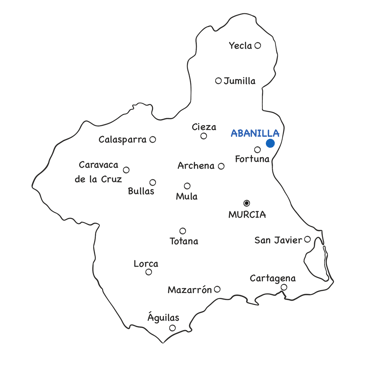
Abanilla is a municipality located in the Northeast region of Murcia, in the easternmost part of the autonomous community. It borders the province of Alicante to the east, Jumilla to the north, and Fortuna to the west and south, which has historically made it a transitional and border territory.
It has an approximate area of 236 km² and a population of around 6,300 inhabitants. The town center is situated at an average altitude of approximately 222 meters above sea level, although the municipality exhibits significant topographical contrasts.
The municipality is structured around the main town center and several outlying villages, including Barinas, Macisvenda, Mahoya, El Cantón, Cañada de la Leña, El Salado, Balonga, and Casa Cabrera. These villages maintain a strong rural identity and constitute an essential part of Abanilla's human and agricultural landscape.
The origin of the name comes from the Islamic term Al-Banyla, reflecting its Andalusian past and the profound mark that the Middle Ages left on its urban and cultural configuration.
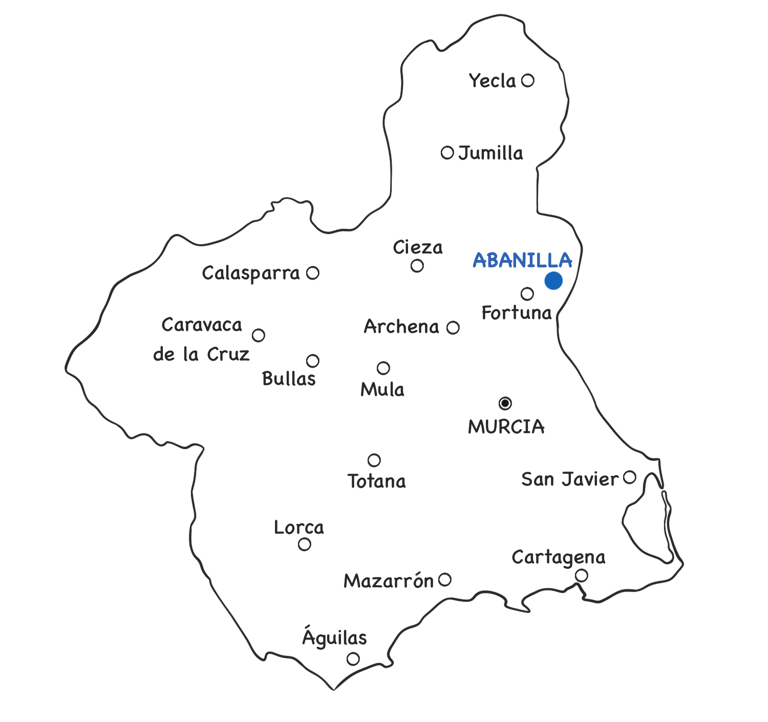
Geography and Natural Environment
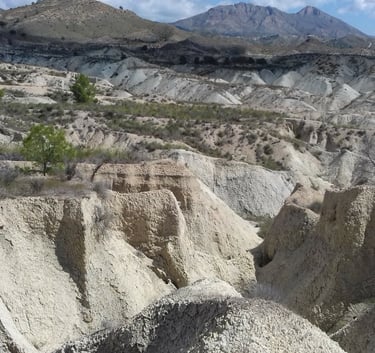
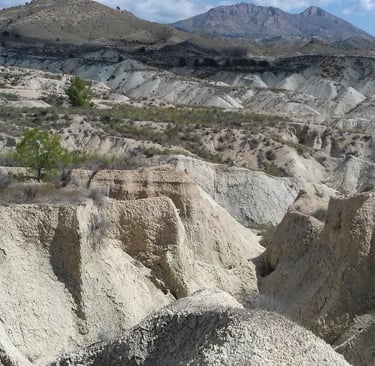
The landscape of Abanilla is one of the most characteristic and unique in the Region of Murcia. The municipality's terrain has been intensely shaped by water erosion, resulting in extensive ravines and gullies known as badlands, which create an almost lunar landscape.
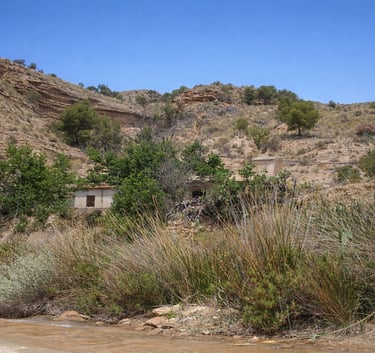
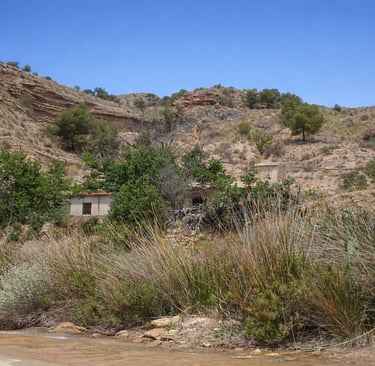
The only permanent watercourse is the Chícamo River, which originates near the hamlet of Macisvenda. Its upper reaches offer areas of great beauty, such as the river's source and the spectacular Cajer Canyon, located in the hamlet of La Umbría. The other watercourses in the municipality are seasonal dry riverbeds (ramblas) which, although they only carry surface water occasionally, maintain a high water table.
The predominant biome is semi-arid Mediterranean. The vegetation is adapted to the scarcity of rainfall and to the marl and clay soils. Among the most representative plant species are: esparto grass (Stipa tenacissima), albardín (Lygeum spartum), tamarisk (Tamarix sp.), oleander (Nerium oleander), dwarf palm (Chamaerops humilis), the only native European palm, and Aleppo pine (Pinus halepensis), often the result of reforestation efforts. Near the source of the Chícamo River, you'll find elms (Ulmus minor), reeds, rushes, and riparian vegetation. The fauna includes species such as the common frog, the European pond turtle, the ocellated lizard, and various grass snakes. Common birds include the European bee-eater, the hoopoe, and numerous birds of prey such as the Eurasian eagle-owl, the golden eagle, Bonelli's eagle, and the common kestrel. As for mammals, notable species include rabbits, hares, foxes, wild boars, and the confirmed presence of squirrels in areas such as the Atienza spring.
Notable natural areas:
- Sierra de Quibas, of enormous paleontological importance. Dating from the Lower Pleistocene (between 1.3 and 1 million years ago), it is one of the most significant Quaternary sites in southeastern Spain.
- The area around the Chícamo River and the Cajer Canyon.
- Landscapes of ravines and badlands, one of the municipality's most distinctive features.