Tour "The Best of Murcia"
The tour with everything you can't miss in Murcia. An itinerary of two hours ideal for small groups. With an official tourist guide.
Church of Mercy (Murcia)
The Church of Mercy was the temple of the convent of the Mercedarian Order, established in Murcia in the 16th century. Although the first conventual church was built around the mid-1500s, most of the preserved elements today correspond to significant reforms made between the 17th and 18th centuries.
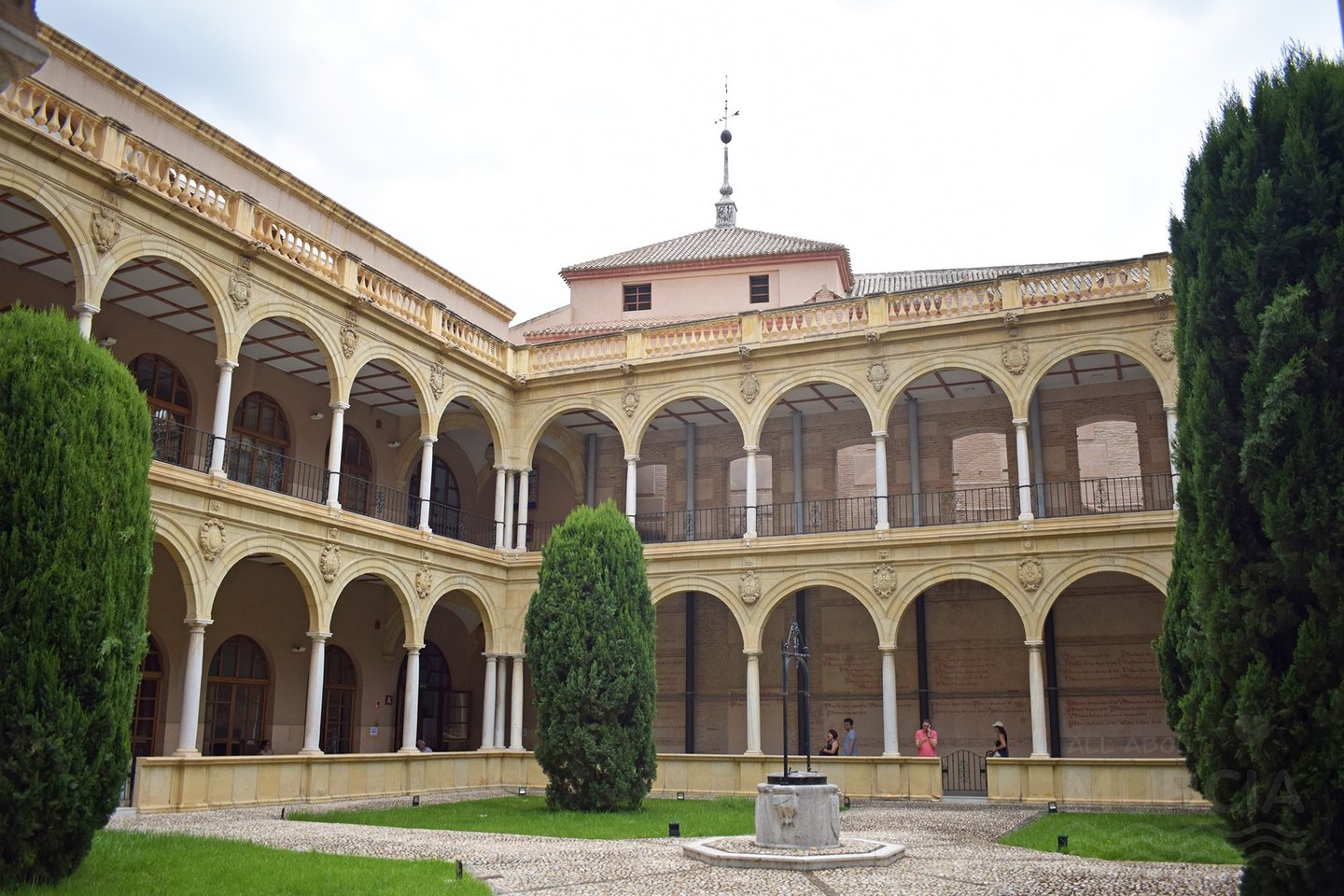
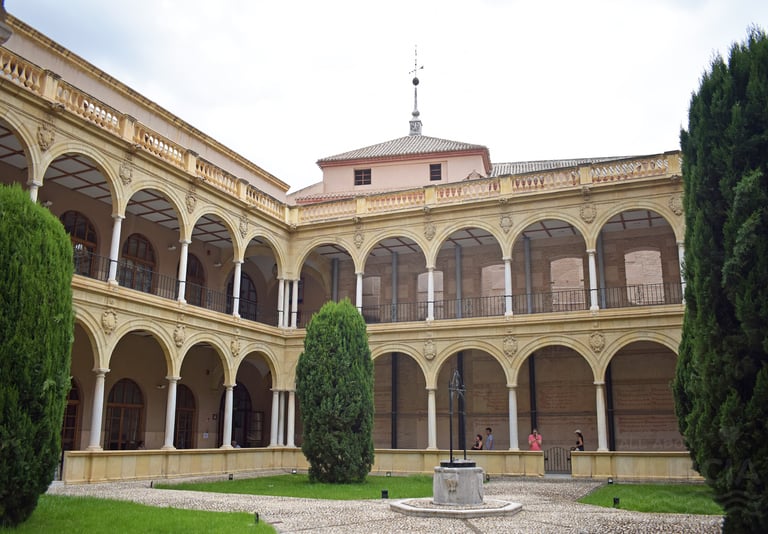
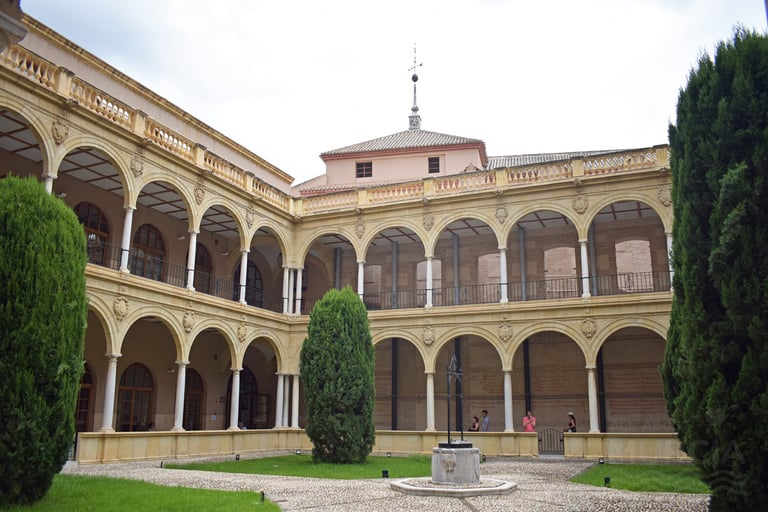
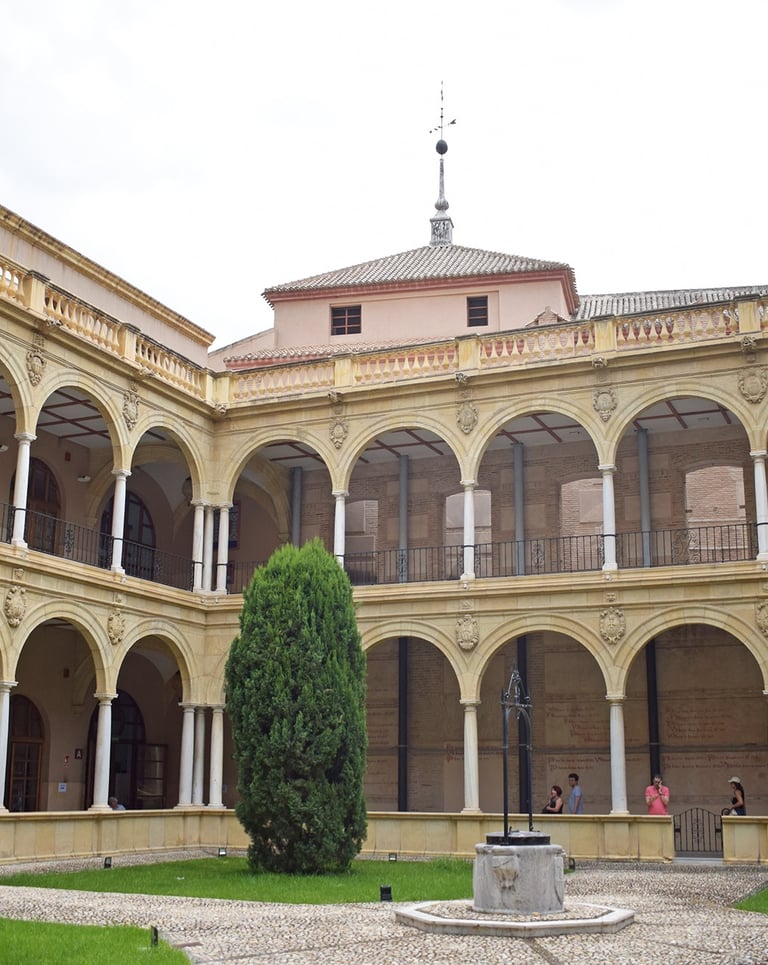
One of the most valuable spaces of the complex is the old cloister, built between 1604 and 1628 and now preserved as the central courtyard of the Faculty of Law at the University of Murcia. It is a work of great sobriety and compositional balance, organized through porticoed galleries that articulated the daily life of the Mercedarian community. Its integration into the university building has allowed for the preservation of one of the main testimonies of the historical conventual architecture of the city.
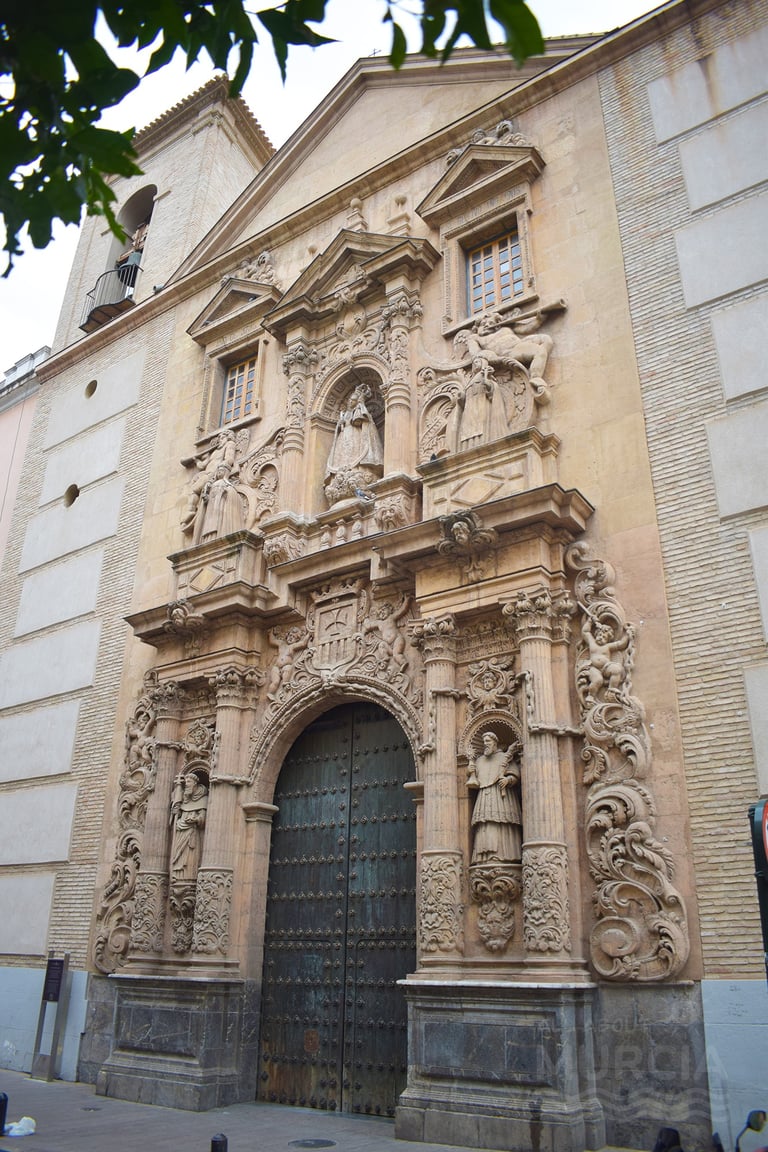
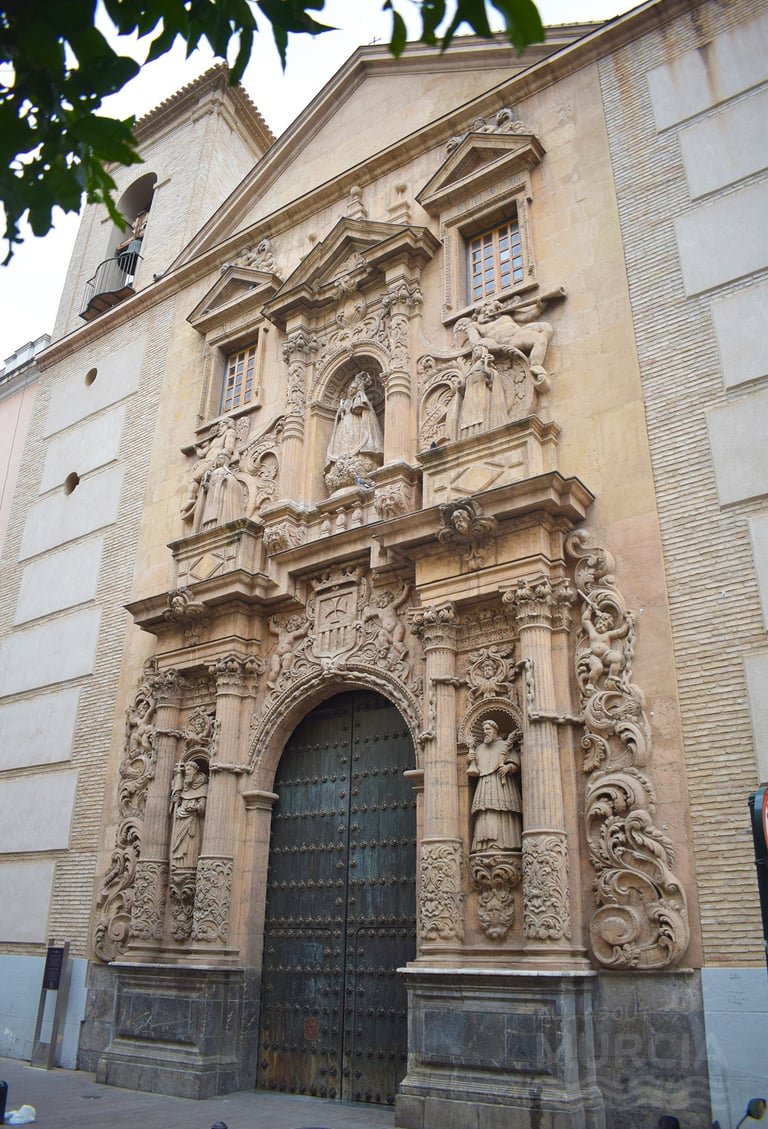
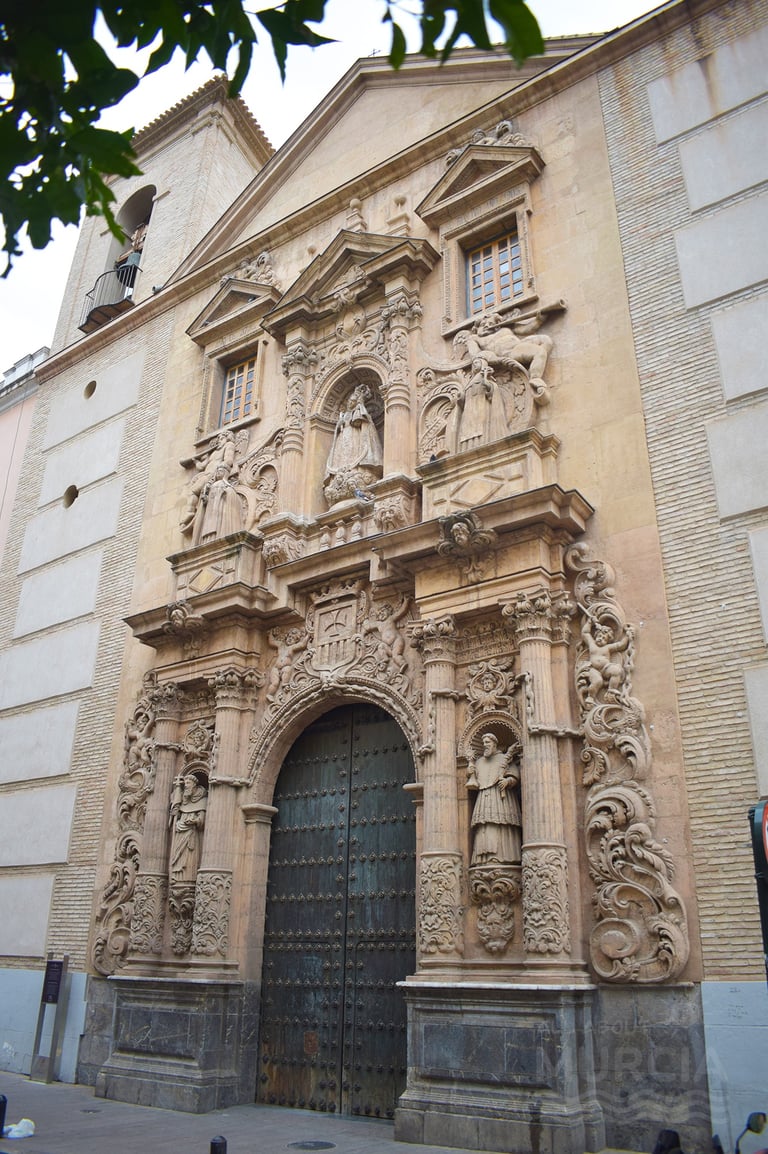
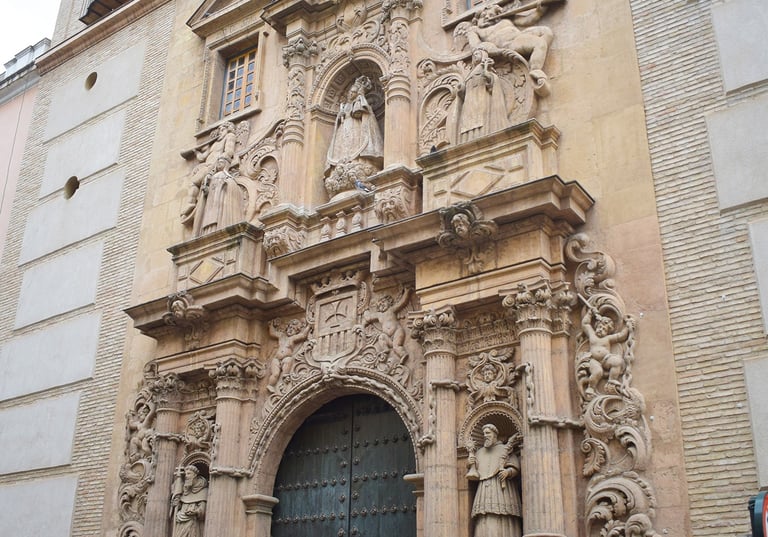
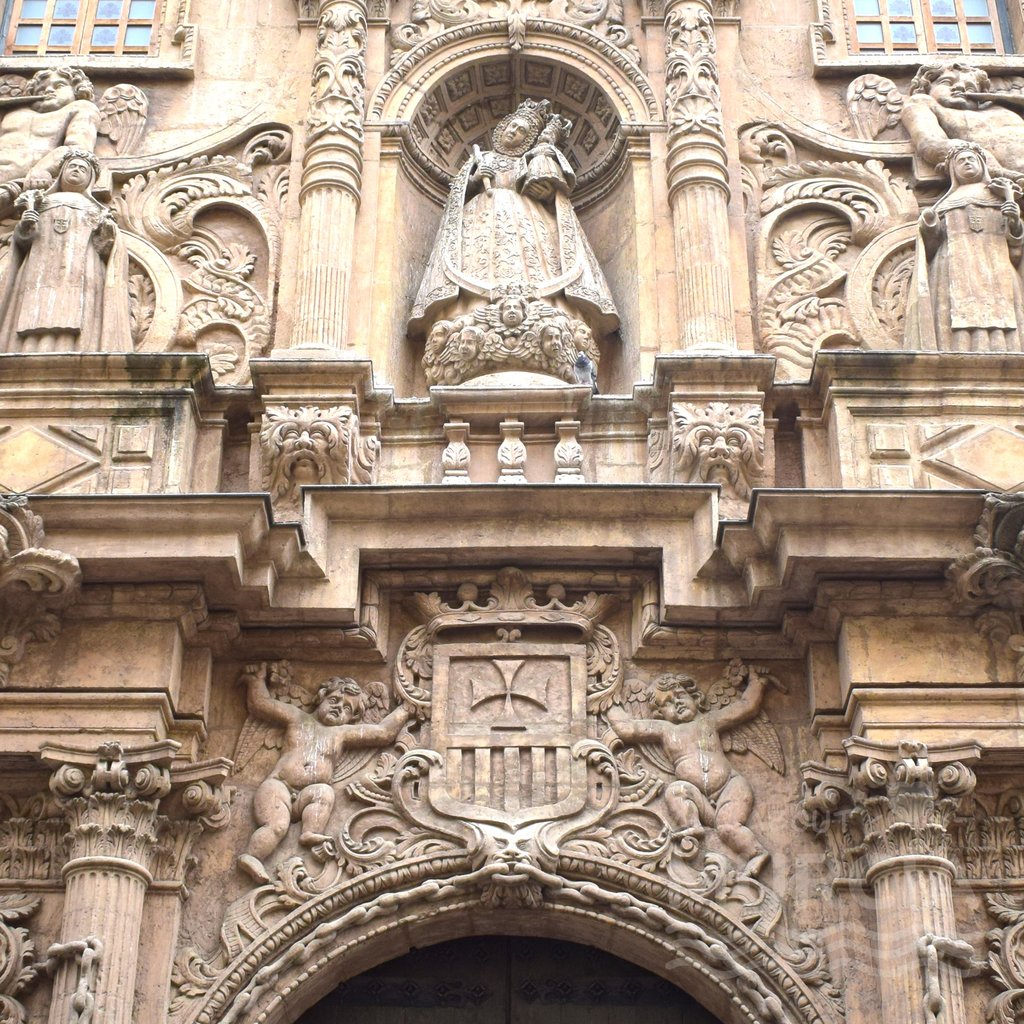
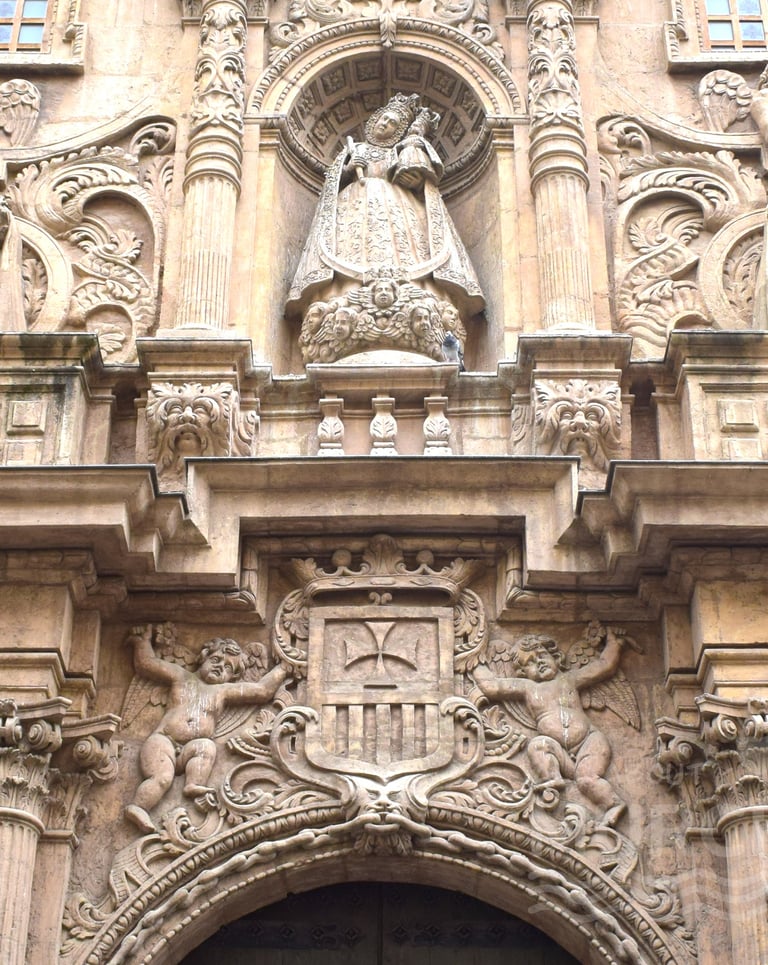
The current church began to be built in 1705, due to the ruinous state of the old temple, while its Baroque façade began in 1711. The exterior is notably marked by this entrance, considered one of the most singular realizations of the early Baroque of the 18th century in Murcia. It is presided over in its main niche by the Virgin of Remedies. On the first body, on both sides of the door, we find Saint Peter Nolasco and Saint Ramón Nonato, while on the upper body, on both sides of the Virgin, are Saint Mary Cervelló and Blessed Mary of Jesus. Also referring to the Mercedarian order is the shield located above the entrance arch and the chains that cross the façade. These refer to the rescue of Christian captives in North Africa, a pious task mainly undertaken by the religious of this order. The entrance draws attention for its profuse vegetal decoration, among which numerous cherubs intertwine.
As a whole, the entrance gives the impression of wealth and exuberance characteristic of the time. Some authors have even pointed out a certain similarity with works of Hispanic-American Baroque. However, it is also true that the style and proportions of the figures show a lesser refinement than in other works of the 18th century in Murcia.
The interior follows the characteristic model of the large conventual churches in Murcia. It presents a Latin cross plan, a main nave with lateral chapels, a transept covered by a dome, and a high choir at the feet. The plasterwork, chromatic effects, and abundant decoration contribute to creating a space of strong scenographic character, fully in line with the ideals of Baroque.
The main altarpiece was inaugurated in 1760 and clearly shows the influence of the forms of the main façade of the cathedral, just as occurs in the church of San Miguel. From this church comes another beautiful altarpiece from 1725 with rich vegetal decoration. It holds in its niche a sculptural group representing Saint Francis of Assisi embracing Christ, inspired by the famous painting by Murillo on this theme which is preserved in the Museum of Fine Arts in Seville.
Among the numerous works of sculptural heritage in the church, we can highlight a Jesus Nazarene, known as Nazarene of Mercy (Nazareno de la Merced), a highly emotional work attributed to Nicolás Salzillo. Also noteworthy is the Gothic sculpture of the Virgin of Remedies, made of sandstone in the 14th century, one of the few images of this style in Murcia. It is very characteristic for its sinuous posture and the inclination of its neck. It has some mutilations because in the 17th century it was adapted as a dressable image. At that time, it was one of the most popular devotions among the Murcians.
Tour "The Best of Murcia"
The tour with everything you can't miss in Murcia. An itinerary of two hours ideal for small groups. With an official tour guide.
Church of la Merced (Murcia)
The church of la Merced was the temple of the convent of the Mercedarian Order, settled in Murcia in the 16th century. Although the first conventual church was built in the mid-1500s, most of the preserved elements today correspond to the significant renovations carried out between the 17th and 18th centuries.
One of the most valuable spaces of the complex is the ancient cloister, built between 1604 and 1628 and preserved today as the central courtyard of the Faculty of Law at the University of Murcia. It is a work of great sobriety and compositional balance, organized through porticoed galleries that articulated the daily life of the Mercedarian community. Its integration into the university building has allowed the preservation of one of the main testimonies of the historical conventual architecture of the city.
The current church began to be built in 1705, due to the dilapidated state of the old temple, while its baroque façade began in 1711. From the outside, this façade stands out precisely, considered one of the most singular realizations of the early 18th century Murcian baroque. It is presided over in its main niche by the Virgin of Remedies. On the first tier, on both sides of the door, we find St. Peter Nolasco and St. Ramón Nonato, while on the upper tier, on both sides of the Virgin, are placed St. María Cervelló and Blessed María de Jesús. Referencing the Mercedarian order is the shield located above the entrance arch and the chains that cross the façade. These refer to the rescue of Christian captives in North Africa, a pious task mainly entrusted to the religious of this order. The façade draws attention for its profuse vegetal decoration, intertwining numerous cherubs.
As a whole, the façade gives the impression of wealth and exuberance so characteristic of the era. Some authors have even pointed out a certain similarity with works from the Hispanic-American Baroque. However, it is also true that the style and proportions of the figures show a lesser refinement than in other works of the 18th century in Murcia.
The interior corresponds to the characteristic model of the large conventual churches of Murcia. It presents a Latin cross plan, a main nave with side chapels, a transept covered by a dome, and a high choir at the feet. The plasterwork, chromatic effects, and abundant decoration contribute to creating a space of strong scenographic character, fully in line with Baroque ideals.
The main altarpiece was inaugurated in 1760, and there one can clearly see the influence of the forms of the main façade of the cathedral, as occurs in that of the church of San Miguel. From this church comes another beautiful altarpiece from 1725 with a profuse vegetal decoration. It houses in its niche a sculptural group representing St. Francis of Assisi embracing Christ, inspired by the famous painting by Murillo on this theme that is preserved in the Museum of Fine Arts of Seville.
Among the numerous works of sculptural heritage of the church, we can highlight a Jesus Nazarene, known as Nazarene of la Merced, a work of great emotion attributed to Nicolás Salzillo. Also very interesting is the Gothic carving of the Virgin of Remedies, made of sandstone in the 14th century, one of the few images of this style in Murcia. It is very distinctive for its sinuous posture and the inclination of its neck. It has some mutilations because in the 17th century it was adapted as a vestment image. At that time it was one of the most popular devotions among the Murcians.