
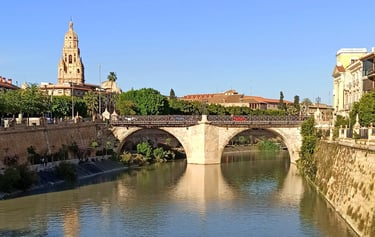
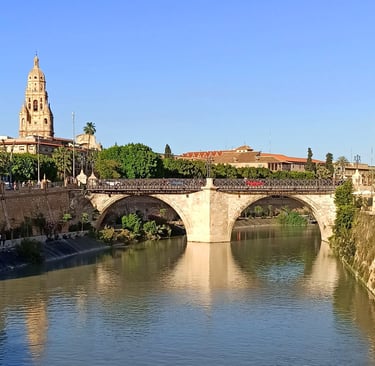
Tour "The Best of Murcia"
The tour with everything you can't miss in Murcia. An itinerary of two hours ideal for small groups. With an official tour guide.
Former Church of El Salvador (Murcia)
The former church of El Salvador, now desacralized, is the only preserved vestige of the old convent of Verónicas, a community founded by Franciscan nuns in the 16th century. The original monastic dependencies had to be successively renovated due to frequent floods. The current temple was built during the baroque period after the serious damage caused by the San Calixto flood of 1651 and the structural problems that affected an earlier church built in 1727. The final structure began in 1746 and was completed in 1755, coinciding with one of the moments of greatest architectural splendor of the city.
From an architectural point of view, the church responds to the characteristic model of Murcian conventual temples of the 18th century. It has a Latin cross plan with lateral chapels connected, a dome-covered crossing, elevated tribunes, and large spaces intended for the closure of the religious community. However, its most singular element is found on the outside.
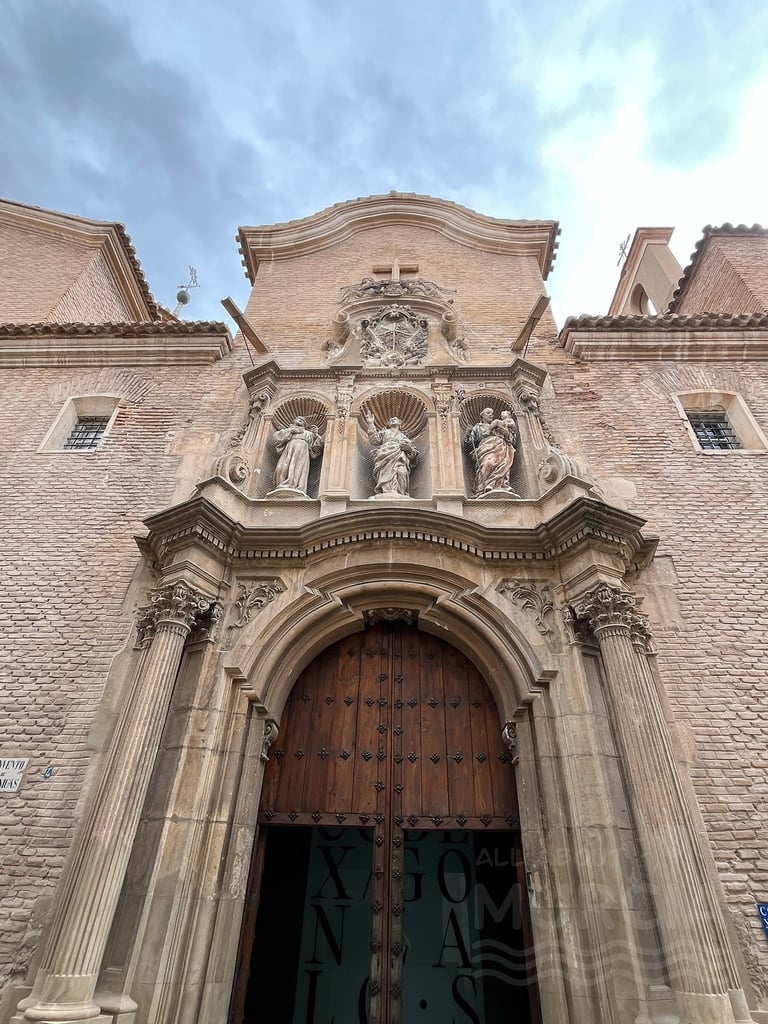
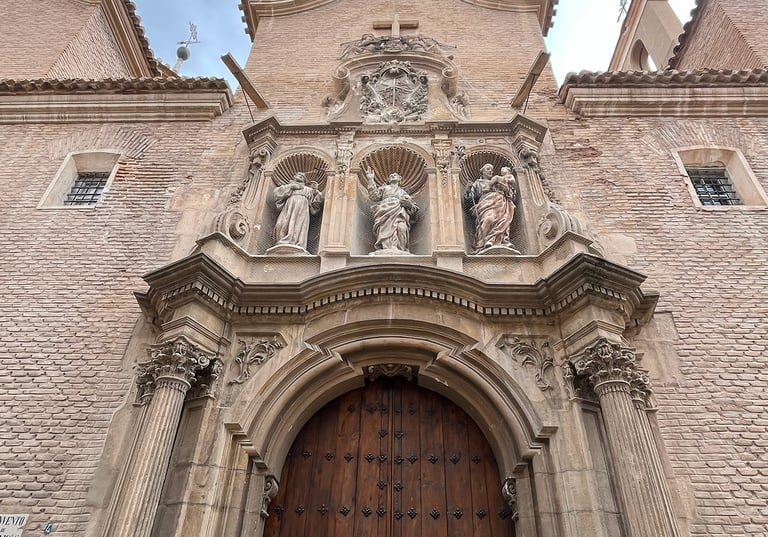
The main façade is one of the most original creations of Murcian Baroque. Adapted to a narrow street and conditioned by the limited urban space, it projects towards the viewer through a dynamic play of volumes, oblique columns, and curved moldings. Access is organized through a mixed-line arch of pronounced movement, while the upper body adopts the form of a stone altarpiece crowned by niches with images of the Savior, Saint Joseph, and Saint Francis. The whole culminates with a relief of the Holy Face, alluding to the popular name of the Verónicas.
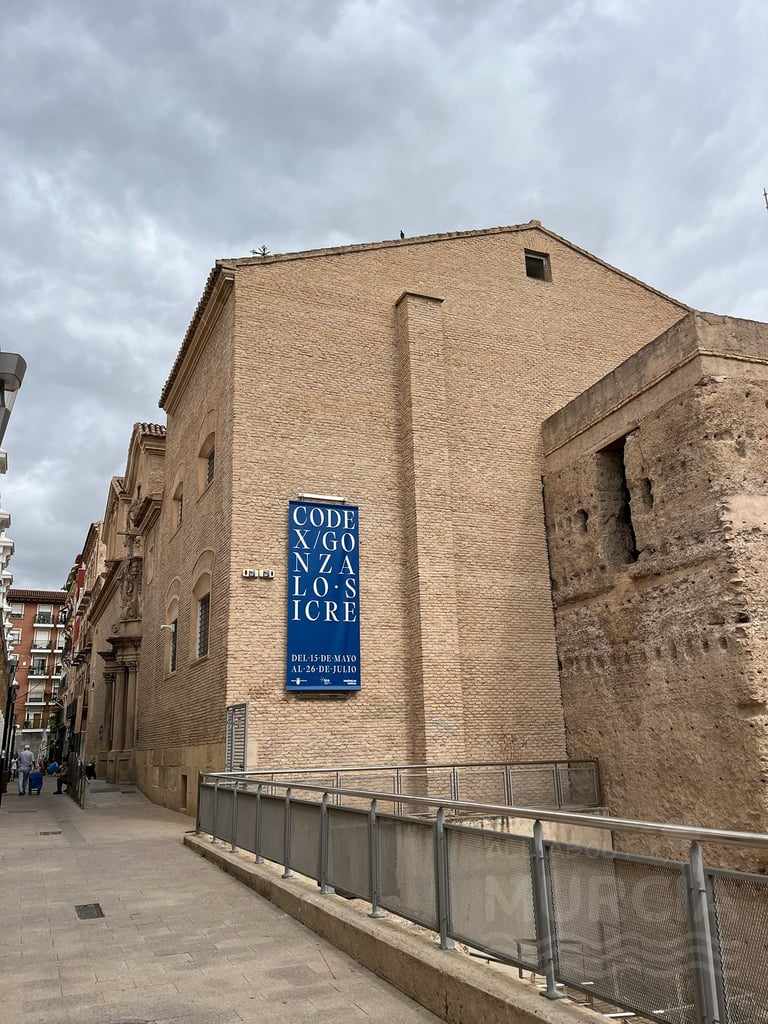
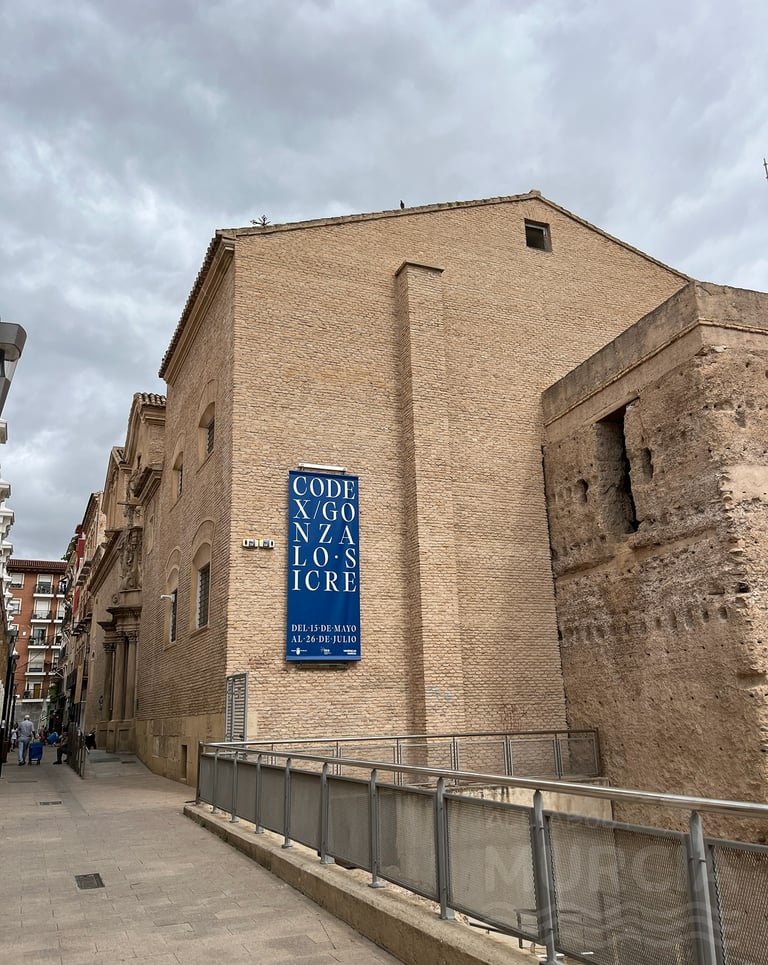
It is noteworthy that the church is located adjacent at its back to one of the towers of the Islamic wall of Murcia, which has one of its few visible sections today in the place that occupied the ancient convent. When it was built, the walls of the old wall were used to suspend several of the new monastic dependencies.
After the disappearance of the convent in 1985, the wall section that we can see today was recovered and the church was restored by the Autonomous Community as an exhibition hall. The space is known as Sala Verónicas and offers the great interest of the contrast and dialogue between the contemporary artworks of the temporary exhibitions it houses and the splendid baroque framework that embraces them.
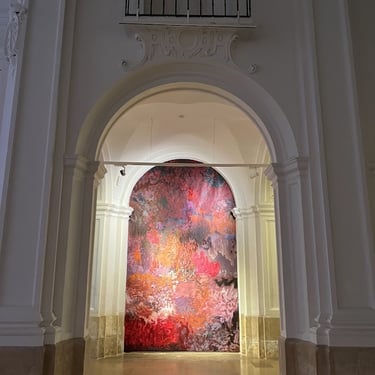
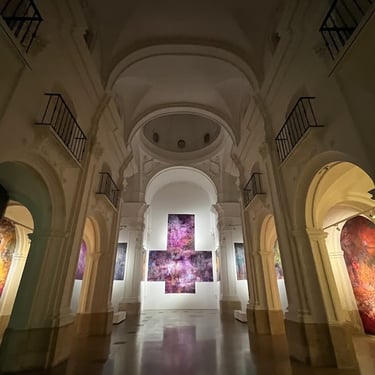
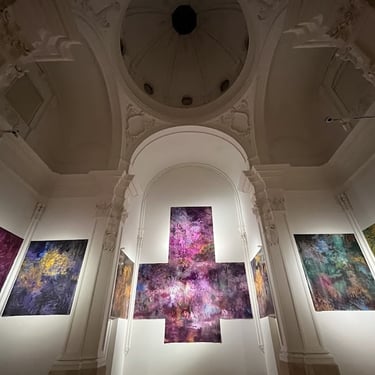
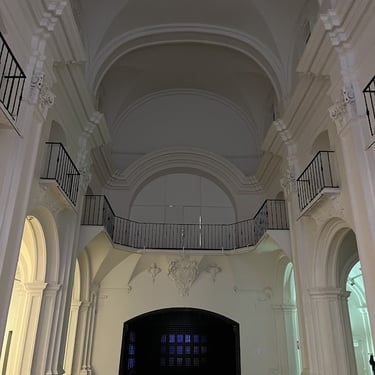
Images of the interior of the old church in May 2026 during the "Codex" exhibition by Gonzalo Sicre.
Tour "The Best of Murcia"
The tour with everything you can't miss in Murcia. A two-hour itinerary ideal for small groups. With an official tour guide.
Former Church of El Salvador (Murcia)
The former church of El Salvador, now desacralized, is the only surviving vestige of the old convent of Verónicas, a community founded by Franciscan nuns in the 16th century. The original monastic dependencies had to be successively renovated due to frequent floods. The current temple was built during the Baroque period after the serious damage caused by the flood of San Calixto in 1651 and the structural problems that affected an earlier church built in 1727. The definitive construction began in 1746 and was completed in 1755, coinciding with one of the moments of greatest architectural splendor of the city.
From an architectural point of view, the church responds to the characteristic model of the Murcian conventual temples of the 18th century. It presents a Latin cross plan with connected lateral chapels, a crossing covered by a dome, elevated tribunes, and wide spaces intended for the closure of the religious community. However, its most singular element is found on the exterior.
The main facade is one of the most original creations of Baroque Murcia. Adapted to a narrow street and conditioned by the reduced urban space, it projects towards the viewer through a dynamic play of volumes, oblique columns, and curved moldings. Access is organized through a mixed-curve arch of marked movement, while the upper body takes the form of a stone altarpiece crowned by niches with images of the Savior, Saint Joseph, and Saint Francis. The ensemble culminates in a relief of the Holy Face, alluding to the popular name of the Verónicas.
It so happens that the church is adjacent at its rear to one of the towers of the Islamic wall of Murcia, which has one of its few visible stretches today in the place occupied by the old convent. When this was built, the walls of the old wall were used to support several of the new monastic dependencies.
After the disappearance of the convent in 1985, the stretch of the wall that we can see today was recovered, and the church was restored by the Autonomous Community as an exhibition hall. The space is known as Sala Verónicas and offers the great interest of the contrast and dialogue between the contemporary artworks of the temporary exhibitions it houses and the splendid Baroque framework that hosts them.
Images of the interior of the old church in May 2026 during the "Codex" exhibition by Gonzalo Sicre.


