
Quibas Paleontological Site
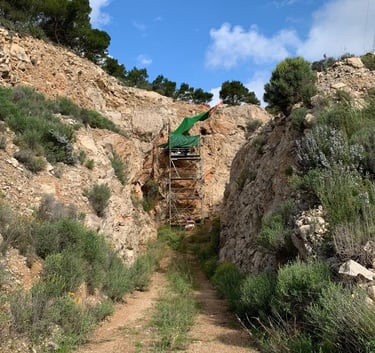
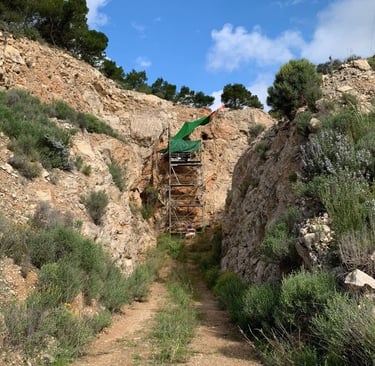
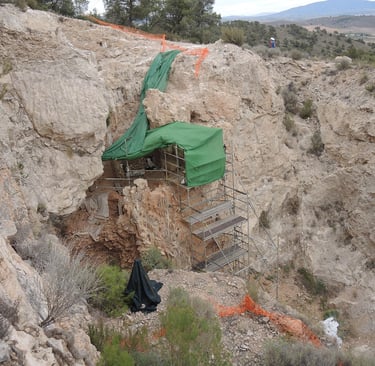
The Quibas Paleontological Site, located in the Sierra de Quibas mountain range, within the municipality of Abanilla (Region of Murcia) and very close to the hamlet of Cañada de la Leña, is one of the most important paleontological sites in southeastern Spain. It is situated in an old, abandoned quarry where a system of karst cavities filled with Lower Pleistocene fossil-rich sediments was exposed, dating back approximately 1.1 to 0.9 million years.
This site offers an exceptional opportunity to study the fauna and environment of the early Quaternary period in southern Europe. Its fossil record allows for the reconstruction of the ecosystems that existed in the region during a key period in the continent's climatic and biological evolution.
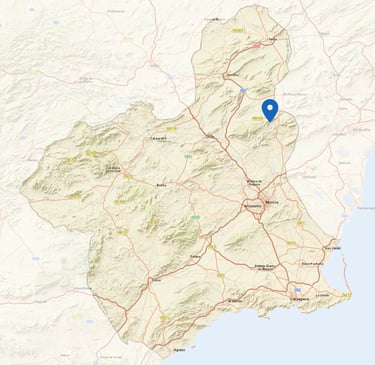
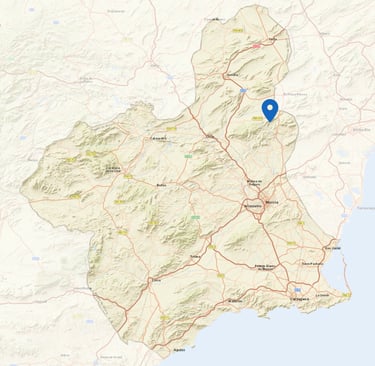
Quibas stands out for preserving a continuous sequence of terrestrial vertebrates dating from between 1.1 and 0.9 million years ago, something extremely rare in Europe. This chronology places it at an intermediate point between some of the continent's major paleontological sites, such as Orce (Granada) and Atapuerca (Burgos), contributing to a more complete understanding of the fauna that inhabited Western Europe during the Early Pleistocene.
The scientific importance of the site stems from both its age and the diversity and quality of preservation of the fossils. More than 80 species of vertebrates and invertebrates have been identified at the site, allowing for a highly detailed reconstruction of the ecosystems of southeastern Spain during that period.
Furthermore, the study of its sedimentary layers has revealed up to seven different climatic phases, corresponding to glacial and interglacial cycles of the Pleistocene, making Quibas a key reference point for analyzing how these environmental changes affected European fauna.
📷 Ppninero - Wikimedia
Geological Formation of the Site
The site was formed in a complex of karst cavities developed in Jurassic dolomites, later filled by Quaternary sediments rich in fossil remains. These cavities were exposed when a quarry was exploited for the extraction of false agate, allowing observation of the cross-section of the deposits.
The system is mainly composed of two connected structures:
Quibas-Sima, with seven stratigraphic levels (QS-1 to QS-7)
Quibas-Cueva, with six levels (QC-1 to QC-6)
The oldest levels, dated to around 1.1 million years ago, have yielded most of the vertebrate remains.
The accumulation of sediments in these cavities occurred gradually through the deposition of detrital materials, boulders, and clays that filled the interior of the galleries.
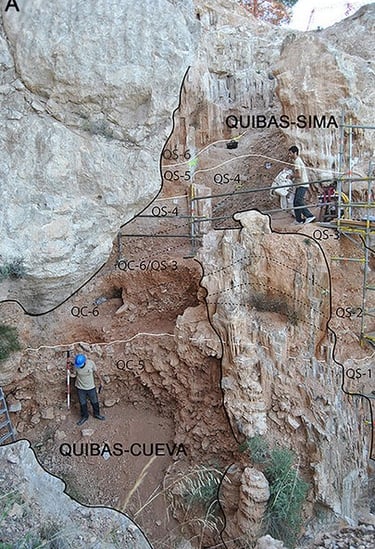
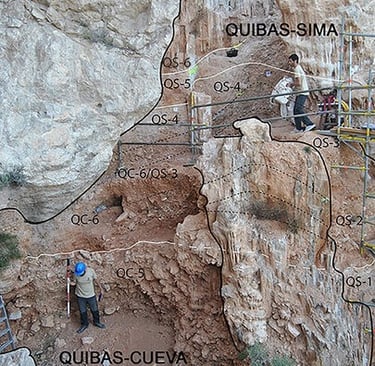
📖 "Claves de la evolución climática durante la transición pre-Jaramillo a Jaramillo en Europa a partir del análisis mineralógico del yacimiento paleontológico de Quibas"

An exceptionally diverse fauna
The collection of fossils recovered at Quibas reveals a highly diverse ecosystem that included large mammals, small vertebrates, birds, reptiles, amphibians, and invertebrates.
Among the large herbivorous mammals are species such as primitive horses (Equus altidens), the Etruscan rhinoceros (Stephanorhinus etruscus), bison, fallow deer, and wild goats. Also noteworthy is the presence of the ancestor of the musk ox, of which Quibas has yielded one of the most important known fossil collections for this period.
The carnivore fauna includes emblematic Pleistocene species such as the saber-toothed tiger (Megantereon), the primitive wolf (Canis mosbachensis), the Iberian lynx (Lynx pardinus), and the red fox (Vulpes alopecoides).
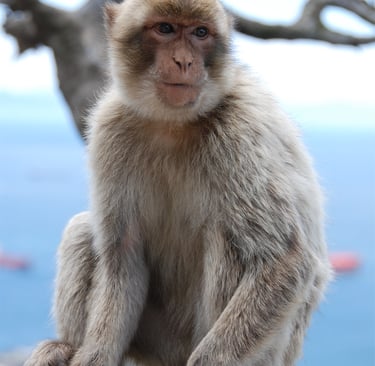
One of the most striking discoveries is the abundance of remains of the Barbary macaque (Macaca sylvanus), a primate now restricted to North Africa and Gibraltar. Quibas is the European site that has yielded the largest number of fossils of this species.
Furthermore, the site has allowed for the description of species new to science, such as the vole Manchenomys orcensis and the legless lizard Ophisaurus manchenioi, the latter considered evidence that the southeast of the Iberian Peninsula acted as a refuge for European subtropical species during certain climatic periods.
The Barbary macaque is one of the most common animal species at the Quibas site. Currently, it is only found in the Atlas Mountains and on the Rock of Gibraltar. 📷 Wikimedia
Discovery and Scientific Research
The site was discovered by chance in 1994 when hikers found fossil remains in an abandoned quarry in the mountains. The materials were given to the Elche Paleontological Cultural Group “Cidaris,” which reported the find to university researchers.
After the first surveys and preliminary studies carried out in the late 1990s, the scientific importance of the site led to its designation as a Site of Cultural Interest (BIC) in 2000.
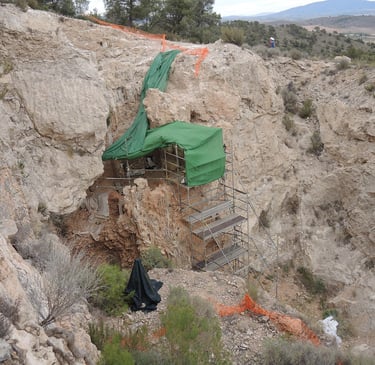
Since then, various universities and research centers have participated in the study of Quibas. After a period of inactivity between 2009 and 2014, research resumed with new scientific projects led by teams specializing in paleoecology and human evolution.
Image of the Sierra de Quibas site during the 2023 excavation campaign. 📷 Wikimedia
A Scientific Heritage of Great Value
The Quibas paleontological site represents one of the most important Lower Pleistocene fossil assemblages in Western Europe. Its stratigraphic sequence, the diversity of documented species, and the continuity of its climate record make it a key reference point for understanding:
the evolution of European ecosystems a million years ago
the adaptations of fauna to Pleistocene climate changes
the environmental context in which the first humans expanded in Europe
Thanks to these factors, Quibas has become a fundamental site for paleontological research in southern Europe and one of the most unique elements of the Region of Murcia's scientific heritage.
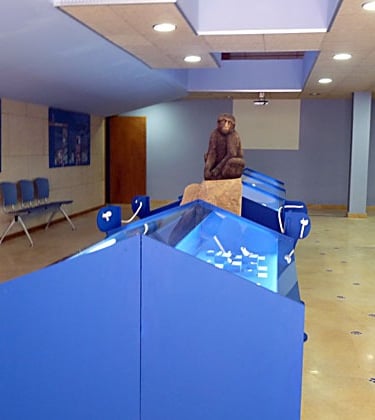
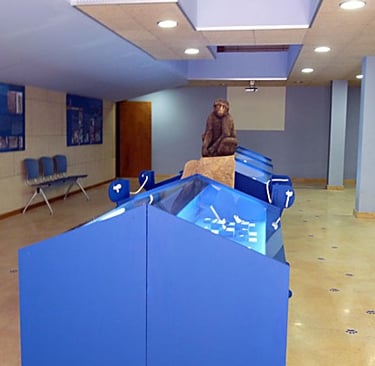
The site is not open to the public, but the Abanilla Town Council has created an interpretation center, where its history and importance are explored in an educational way. It is located in the lobby of the Abanilla Auditorium -view the location on Google Maps.-


