Real Casino de Murcia
Located on Trapería Street, in the heart of the historical center, the Real Casino de Murcia is one of the most representative civil buildings in the city and an exceptional testimony of the architecture and society of Murcia in the 19th and 20th centuries. Its salons were for generations a stage for gatherings, dances, meetings, and cultural activities. Its current configuration is the result of a long process of expansions and renovations, a circumstance that explains its marked eclectic character and the coexistence of environments inspired by styles as diverse as neobaroque, Neo-Moorish orientalism, or classical architecture. In 1983, the building was declared a national historical-artistic monument and is currently protected as a Cultural Asset of Interest.
Origins and history of the Real Casino de Murcia
The emergence of casinos in 19th century Spain was closely related to the development of liberal society and the growing prominence of the urban bourgeoisie. Far from the current meaning that often associates the word "casino" with gambling, these institutions were recreational and cultural societies where their members gathered to converse, read the news, attend dances and gatherings, or participate in discussions. At the same time, they functioned as important spaces for relationships among economic, professional, and political elites of the cities.
The Casino de Murcia was born in this context. The society was constituted in 1847 and initially had its headquarters in a small palace belonging to the Marquis of Vado, located on what is now Radio Murcia Street, where the current back entrance to the Casino is. There, the original germ of the building was constructed. The growth of the institution led to the progressive incorporation of different properties until forming the current architectural complex, which extends to Trapería Street, where the main facade is located.
This evolution explains why the building does not correspond to a single project or a single architect. Its configuration developed over decades and involved the participation of different professionals. Among them stands Pedro Cerdán Martínez, a fundamental figure in Murcia's architecture at the end of the 19th and beginning of the 20th centuries, whose intervention was linked to important reforms of the ensemble. Another figure of enormous importance in the history of the Casino is Manuel Castaños, responsible for a large part of the splendid sculptural decoration found in various rooms of the building.
During this period, the Casino also consolidated itself as one of the main stages of the cultural life of Murcia. In 1883, on the occasion of the first centenary of the death of Francisco Salzillo, its salons hosted an exhibition of sculptures from private collections and a literary and musical evening dedicated to the artist, an example of the cultural dimension that the institution came to achieve.
The building and its main rooms
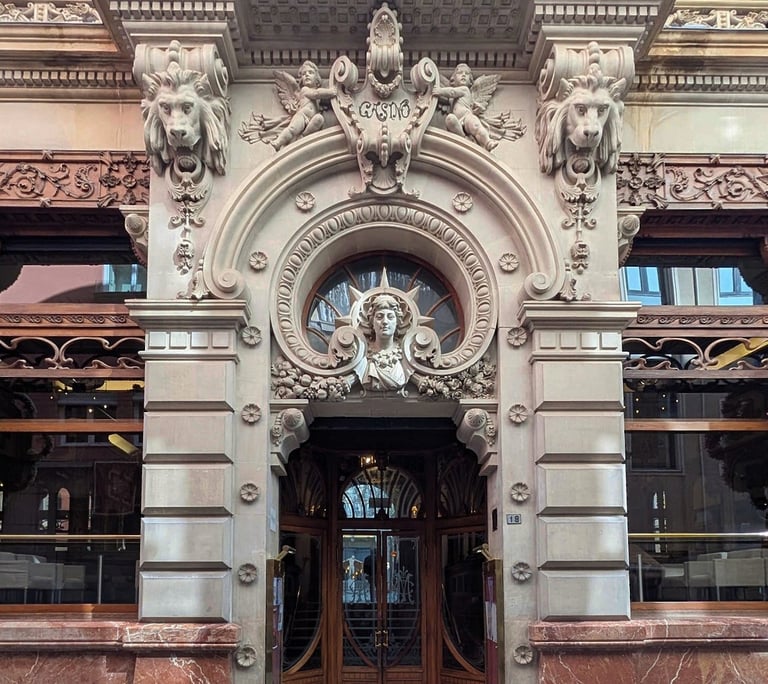
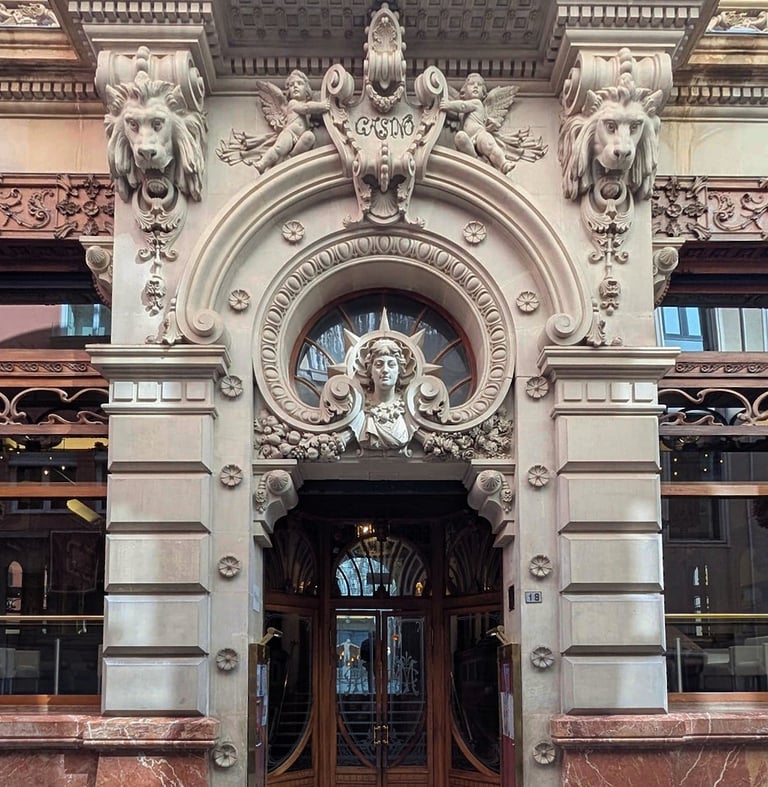
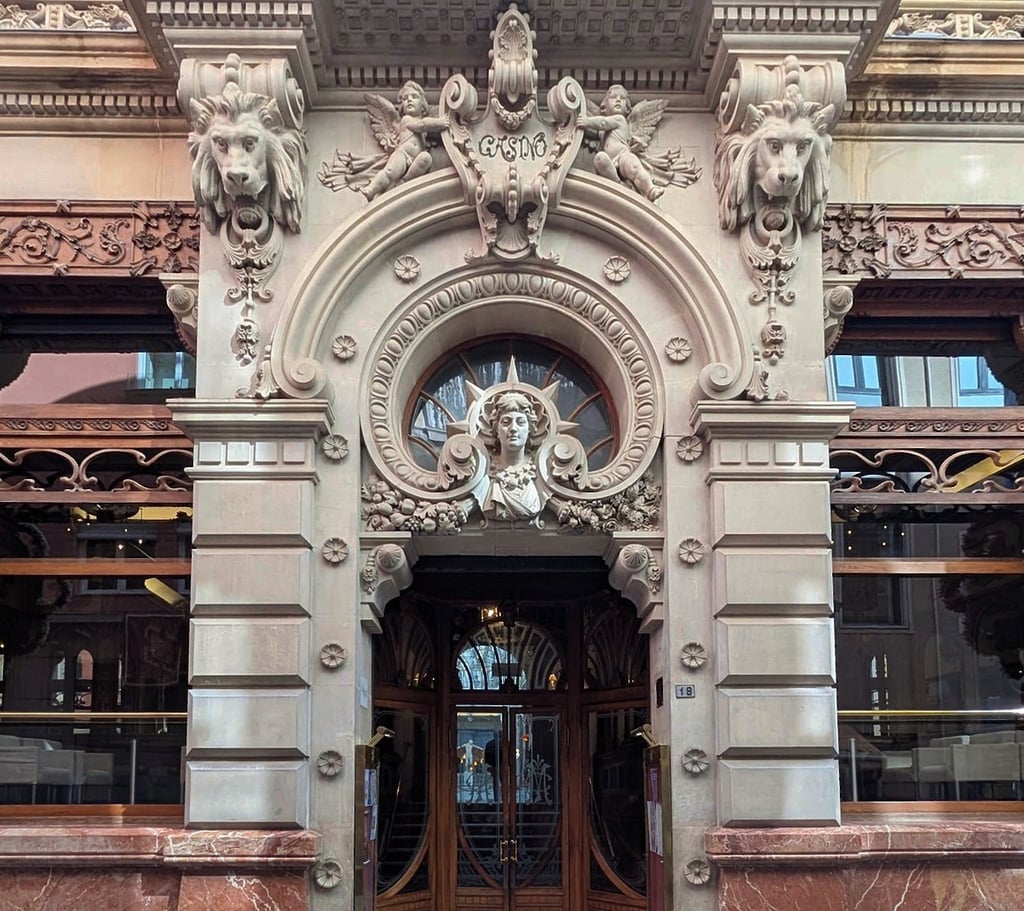
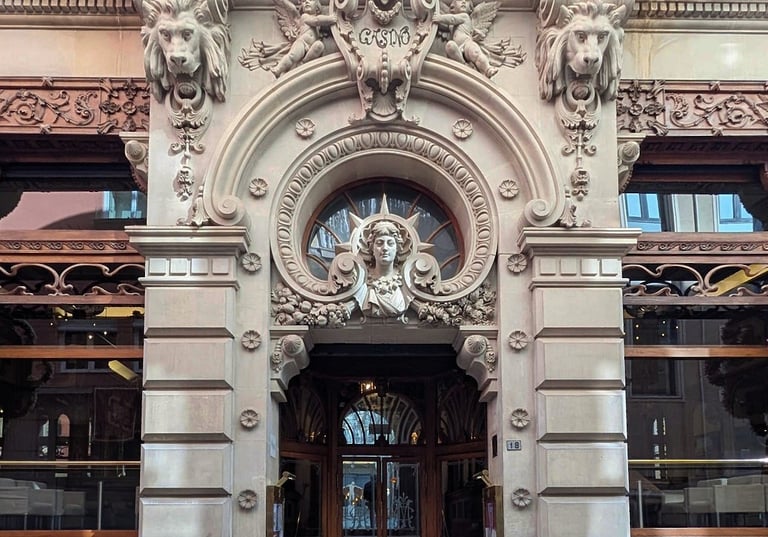
The main facade, facing Trapería Street and dated 1902, constitutes the most recognizable image of the Real Casino. Architecturally linked to Pedro Cerdán and decoratively to Manuel Castaños, it presents an eclectic composition in sandstone over a red marble base from Cehegín. The monumental entrance anticipates the ornamental richness that characterizes the interior.
On both sides of the entrance are the popular Peceras, two discussion salons equipped with large windows from which members could observe the movement of Trapería Street. Their layout perfectly reflects one of the traditional functions of the Casino as a place of meeting and conversation, halfway between the privacy of the institution and the daily life of the city. They are places both to see and to be seen, as frequenting the Casino was a way of making clear one’s belonging to the socioeconomic elite of the city.
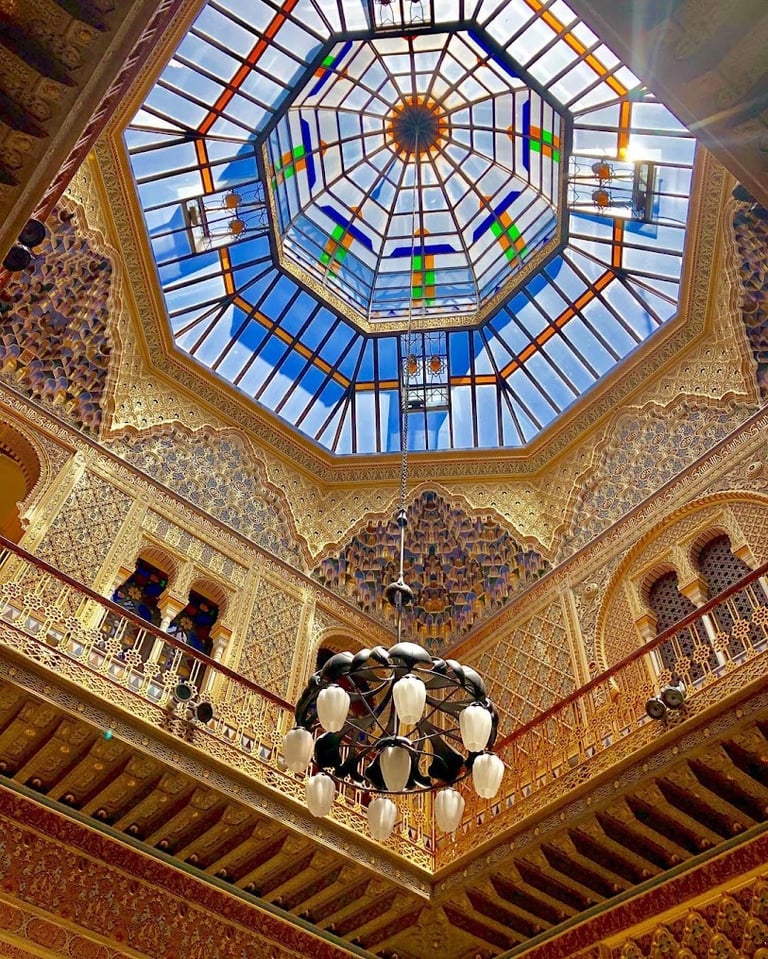
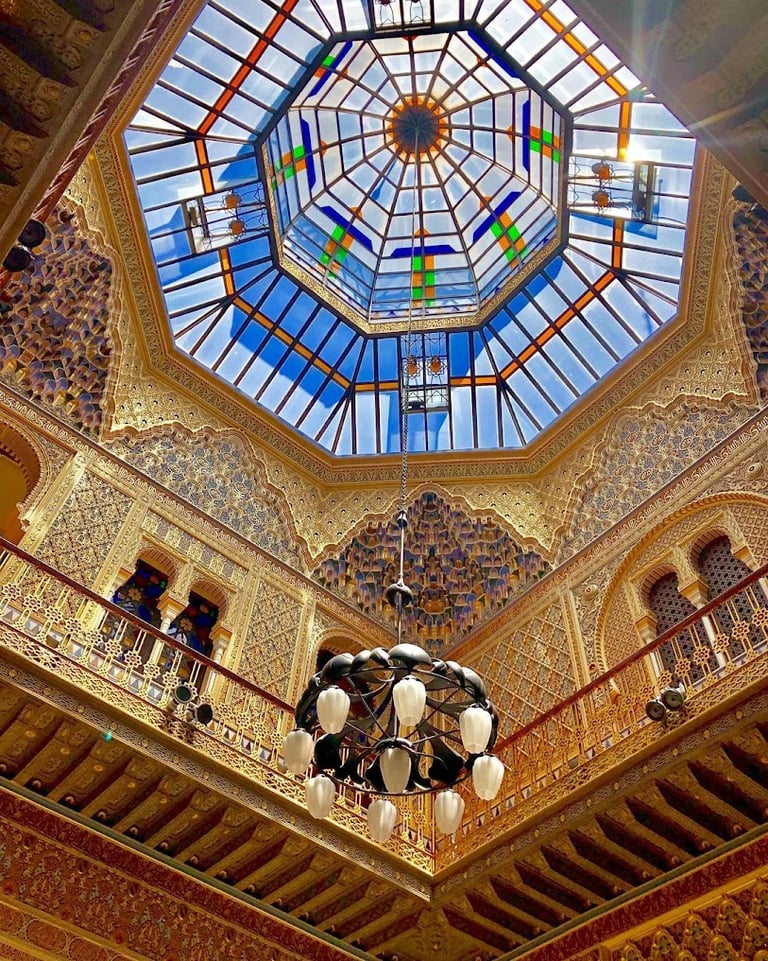
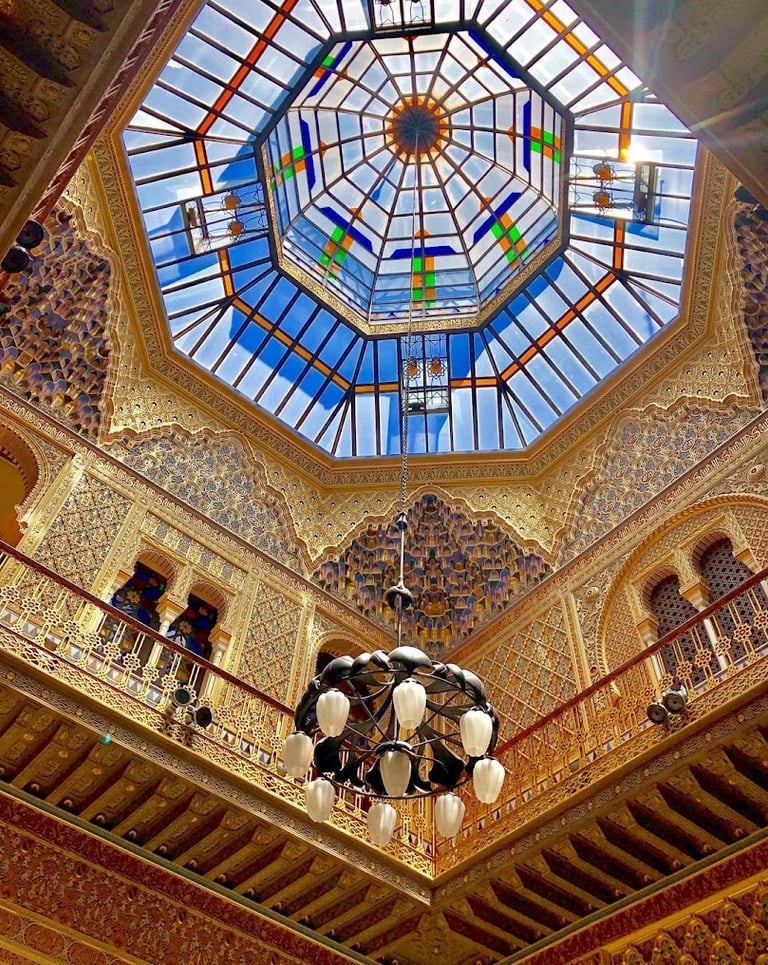
Behind the entrance is the spectacular Patio Árabe, decorated by Manuel Castaños following Neo-Moorish models inspired especially by the Alhambra. Arches, plasterwork, and abundant golden decoration create one of the most singular environments of the building, covered by a large iron and glass structure that allows natural light to enter.
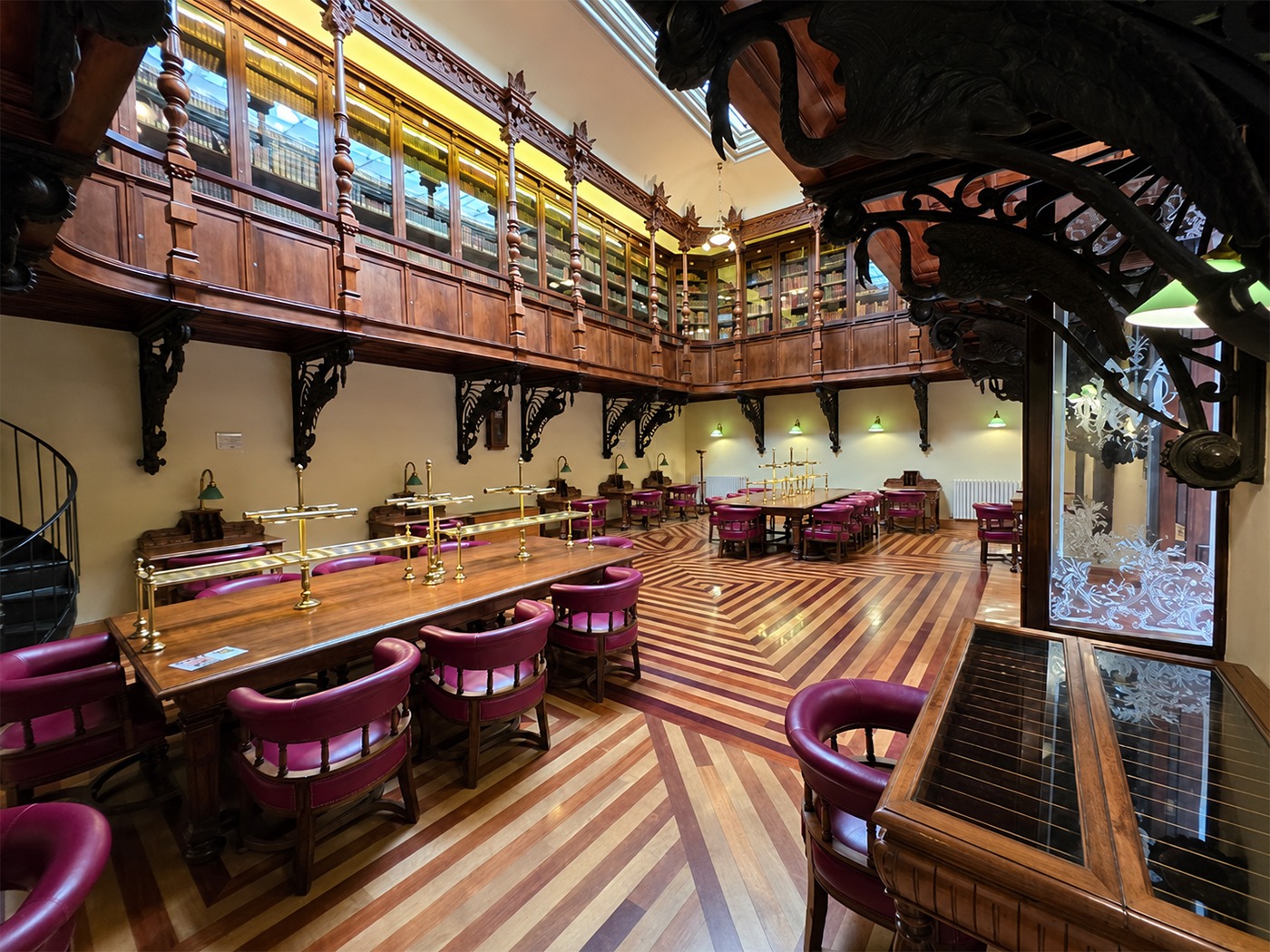
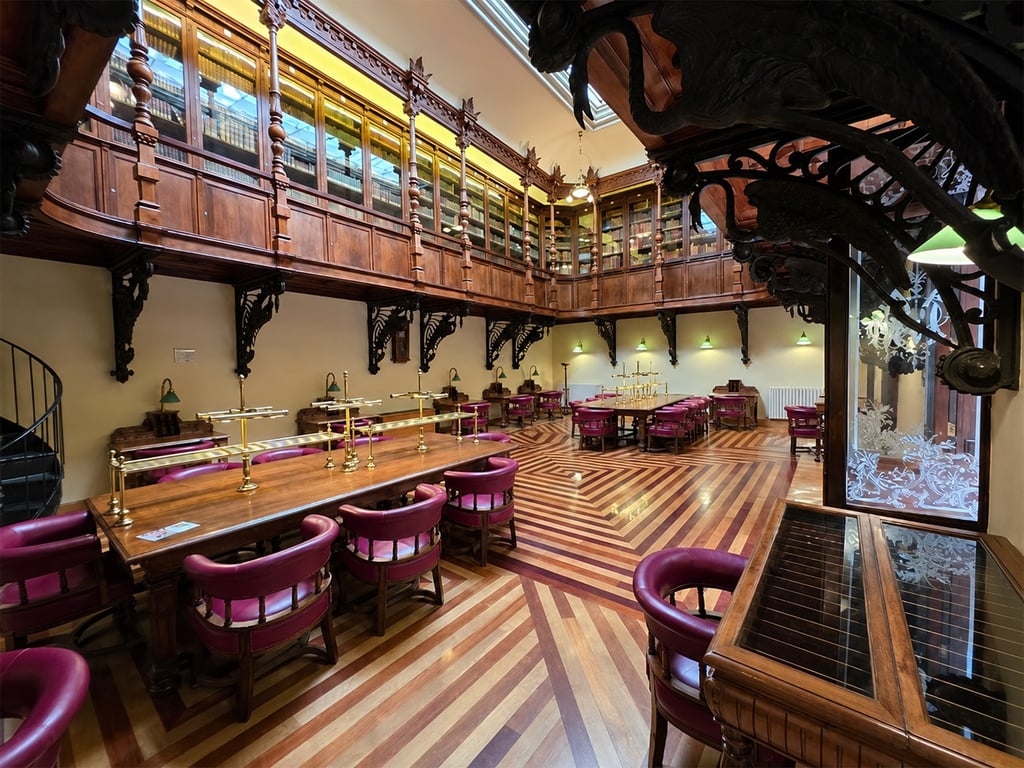
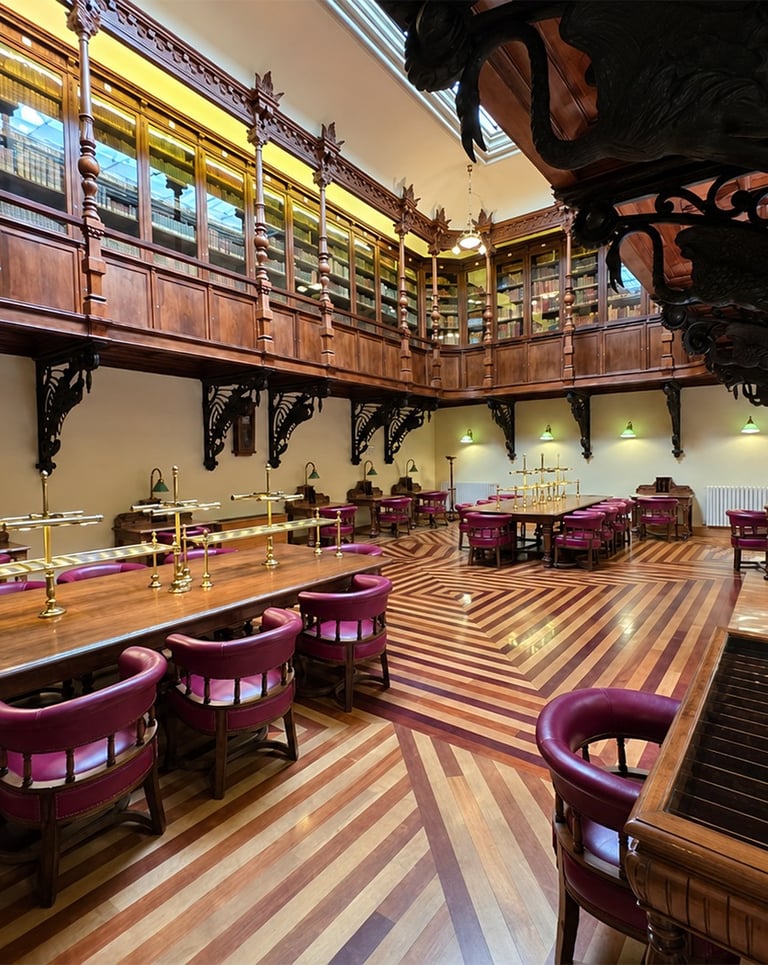
The Biblioteca Inglesa offers a completely different atmosphere. Initially created from designs by Pedro Cerdán and later remodeled according to a project by the British firm Waring & Gillow, it is characterized by the predominance of wood and a superior gallery that runs through the room. Its significant bibliographic holdings recall the role that reading and culture played in the lives of 19th-century casinos.
Opposite it is the Congresillo, a traditional meeting place for prominent members of the social, economic, and political elites of Murcia. Its name precisely alludes to the discussions and conversations that took place there and to the influence that some of its participants were popularly attributed in the city's public life.
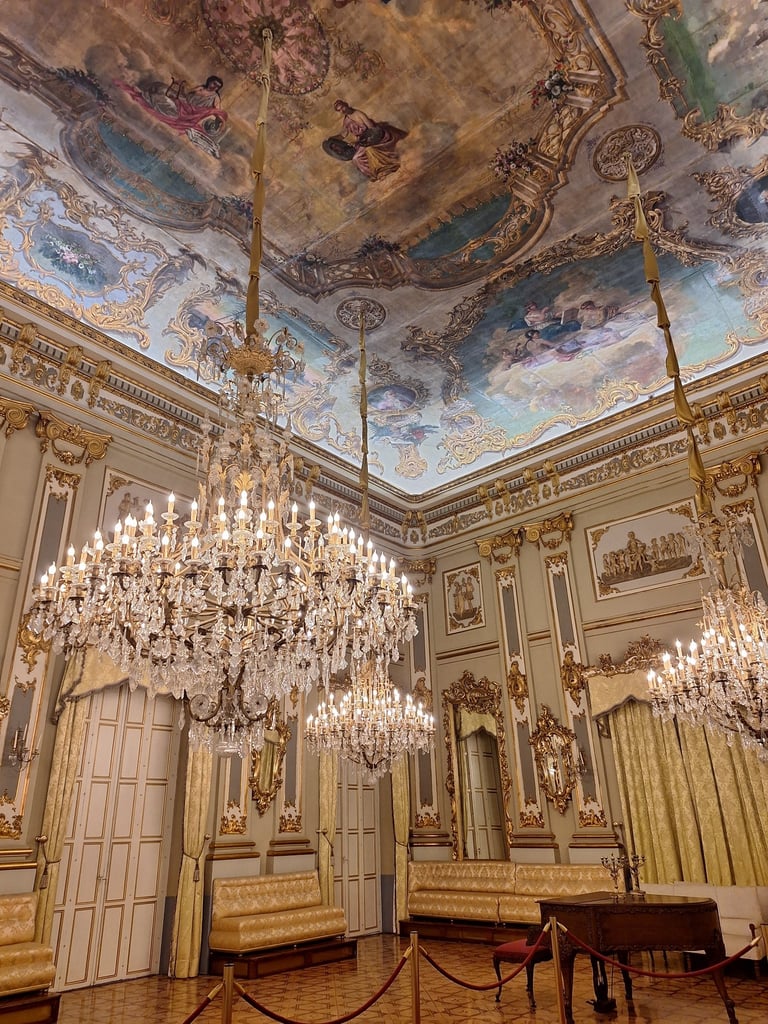
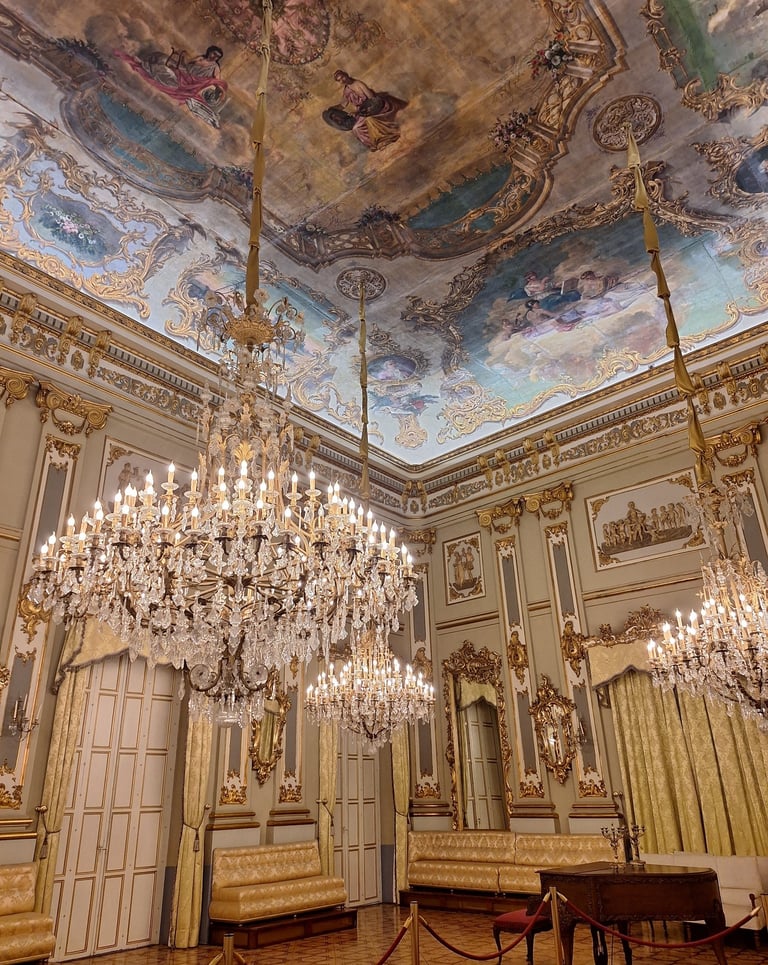
The most monumental space of the complex is the Salón de Baile, built between 1870 and 1875 under the direction of José Ramón Berenguer. Its sumptuous neobaroque decoration, large mirrors, golden moldings, and spectacular bronze and crystal chandeliers set the stage for the main dances and social celebrations organized by the institution.
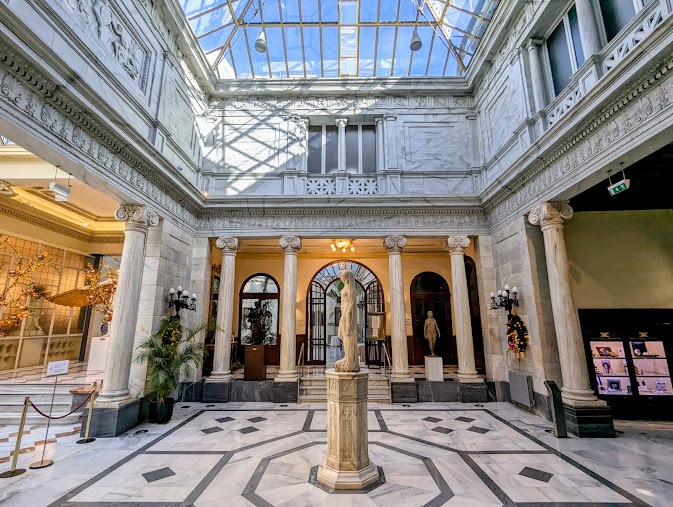
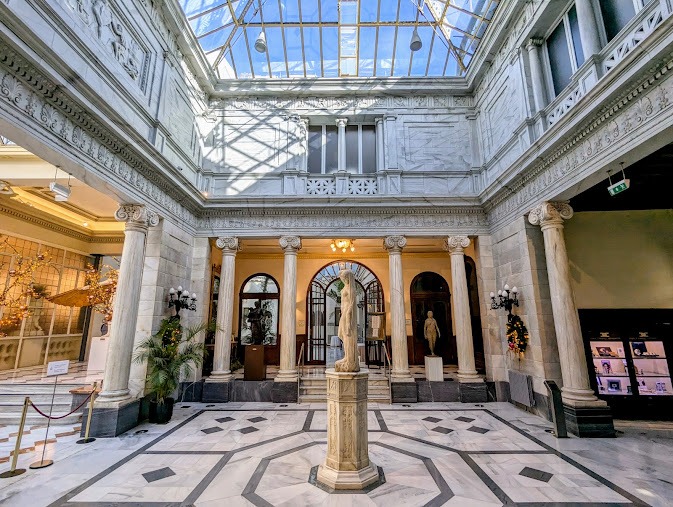
The Patio Pompeyano, configured in 1893, shows another facet of the eclecticism of the building. Its Ionic order columns and sculptural decoration evoke classical antiquity and the fascination that archaeological discoveries in Pompeii exerted on 19th-century European culture.
Finally, the Sala de Esgrima or Armory recalls the diversity of activities developed in these centers of sociability. The practice of fencing, associated during the 19th century with both physical exercise and certain codes of education and social distinction, also found its space within the Casino's dependencies. These are just some of the rooms of the Casino, specifically those currently accessible to the general public, as a good part of the complex remains exclusively accessible to the institution's members.
The journey through the Real Casino de Murcia thus allows one to pass, in just a few meters, from the evocation of the Andalusian world to classical antiquity, from a library with a British ambiance to a grand neobaroque hall. This diversity constitutes precisely one of the main singularities of the building and reflects the eclectic taste of the era in which it attained its definitive configuration. At the same time, its spaces preserve the memory of an institution closely linked for more than a century and a half to the social and cultural history of Murcia.
Official Website: realcasinomurcia.com/
Real Casino de Murcia
Located on Trapería Street, in the historic center, the Real Casino de Murcia is one of the most representative civil buildings in the city and an exceptional testament to the architecture and Murcian society of the 19th and 20th centuries. Its halls have served as a stage for gatherings, dances, meetings, and cultural activities for generations. Its current configuration is the result of a long process of expansions and renovations, a circumstance that explains its marked eclectic character and the coexistence of environments inspired by such diverse styles as Neobaroque, Neo-Moorish Orientalism, and classical architecture. In 1983, the building was declared a national historical-artistic monument and is currently protected as a Bien de Interés Cultural.
Origins and history of the Real Casino de Murcia
The emergence of casinos in 19th century Spain was closely related to the development of liberal society and the increasing prominence of urban bourgeoisies. Far from the current meaning often associated with the word "casino" regarding gambling, these institutions were recreational and cultural societies where their members gathered to converse, read the news, attend dances and soirées, or participate in discussions. At the same time, they functioned as important spaces for interaction among the economic, professional, and political elites of the cities.
The Casino of Murcia was born in this context. The society was established in 1847 and initially had its headquarters in a small palace belonging to the Marquis of Vado, located on what is now Radio Murcia Street, where the rear entrance to the Casino is currently found. There, the original germ of the building was constructed. The growth of the institution led to the progressive incorporation of different buildings until forming the current architectural complex, which extends to Trapería Street, where the main façade is located.
This evolution explains why the building does not respond to a single project or a single architect. Its configuration developed over decades and involved the participation of different professionals. Among them, Pedro Cerdán Martínez stands out, a fundamental figure in Murcian architecture of the late 19th and early 20th centuries, whose intervention was linked to important reforms of the whole. Another figure of enormous importance in the history of the Casino is Manuel Castaños, responsible for much of the splendid sculptural decoration present in several rooms of the building.
During this period, the Casino also established itself as one of the main stages for the cultural life of Murcia. In 1883, on the occasion of the first centenary of Francisco Salzillo's death, its halls hosted an exhibition of sculptures from private collections and a literary and musical evening dedicated to the artist, exemplifying the cultural dimension the institution reached.
The building and its main rooms
The main façade, facing Trapería Street and dated 1902, constitutes the most recognizable image of the Real Casino. Architecturally linked to Pedro Cerdán and decoratively to Manuel Castaños, it features an eclectic composition in sandstone over a red marble base from Cehegín. The monumental entrance anticipates the ornamental richness that characterizes the interior.
On both sides of the entrance are the popular Peceras, two lounge rooms equipped with large windows from which members could watch the movement on Trapería Street. Their layout perfectly reflects one of the traditional functions of the Casino as a meeting and conversation place, halfway between the institution's privacy and the city's daily life. They are spaces both to see and to be seen, as frequenting the Casino was a way to clearly indicate belonging to the socio-economic elite of the city.
After the entrance is the spectacular Patio Árabe, decorated by Manuel Castaños following Neo-Moorish models inspired especially by the Alhambra. Arches, plasterwork, and abundant golden decoration create one of the most unique environments in the building, covered by a large iron and glass structure that allows natural light to enter.
The English Library offers a completely different atmosphere. Initially created based on designs by Pedro Cerdán and later remodeled according to a project by the British firm Waring & Gillow, it is characterized by the predominance of wood and an upper gallery that runs along the room. Its significant bibliographical collections recall the role reading and culture played in the life of 19th century casinos.
Facing it is the Congresillo, a traditional meeting place for prominent members of the Murcian social, economic, and political elites. Its name precisely refers to the gatherings and conversations that took place there and the influence popularly attributed to some of its participants in the city's public life.
The most monumental space of the complex is the Ballroom, constructed between 1870 and 1875 under the direction of José Ramón Berenguer. Its sumptuous Neobaroque decoration, large mirrors, golden moldings, and spectacular bronze and crystal chandeliers composed the stage for the main dances and social celebrations organized by the institution.
The Patio Pompeyano, configured in 1893, shows another facet of the building's eclecticism. Its columns of Doric order and its sculptural decoration evoke classical Antiquity and the fascination that archaeological discoveries in Pompeii exerted on European culture of the 19th century.
Finally, the Fencing Room or Arms Room recalls the diversity of activities developed in these centers of sociability. The practice of fencing, associated during the 19th century with both physical exercise and certain codes of education and social distinction, also found its place within the Casino's dependencies. These are just some of the rooms in the Casino, specifically those that are currently accessible to the general public, as a significant portion of the complex remains exclusively accessible to the institution's members.
The journey through the Real Casino of Murcia allows one to go, in just a few meters, from evoking the Andalusian world to classical Antiquity, from a British-style library to a grand Neobaroque hall. This diversity constitutes precisely one of the main singularities of the building and reflects the eclectic taste of the era in which it acquired its definitive configuration. At the same time, its spaces preserve the memory of an institution closely linked for more than a century and a half to the social and cultural history of Murcia.
Official Website: realcasinomurcia.com/