Salzillo Museum
Apotheosis of Baroque Sculpture in Murcia
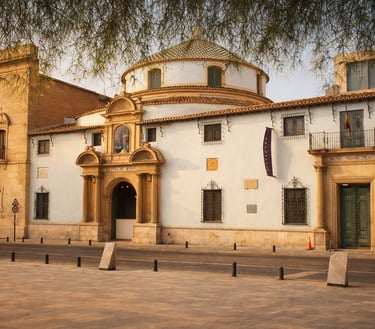
Few figures have left such a deep mark on the cultural identity of Murcia as Francisco Salzillo. His work not only defined the religious imagery of an entire era but also became one of the most recognizable symbols of the city and the Region of Murcia. The Museo Salzillo, located next to the Church of Jesus, is the place where one can best understand the artistic, human, and spiritual dimension of this exceptional sculptor.
More than a conventional museum, the building constitutes a meeting space between art, history, and popular tradition. In its halls, a fundamental part of Salzillo’s legacy is preserved, including the famous processional sculptural groups of the Brotherhood of Our Father Jesus Nazarene, the extraordinary Nativity created by the master, and a collection of sketches and models that allow one to delve into the secrets of his workshop. The visit also offers the possibility of contemplating the Church of Jesus, one of the most emblematic spaces related to Holy Week in Murcia.
The museum is now one of the most important cultural institutions in the city and an essential visit to understand 18th-century Murcia. The best way to approach this place and learn all its details is through our guided tour of the Museo Salzillo, as always with an official guide, an expert in history and cultural heritage.
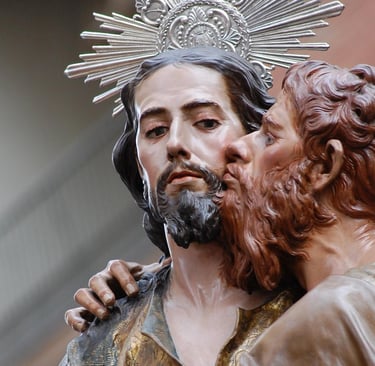
Francisco Salzillo: the great imaginer of the Spanish XVIII century
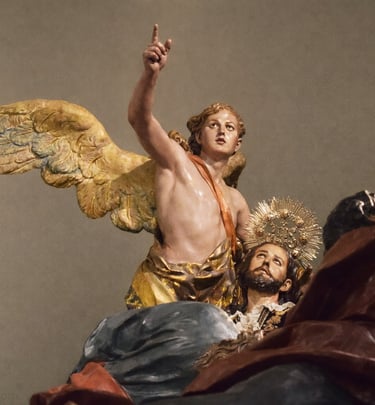
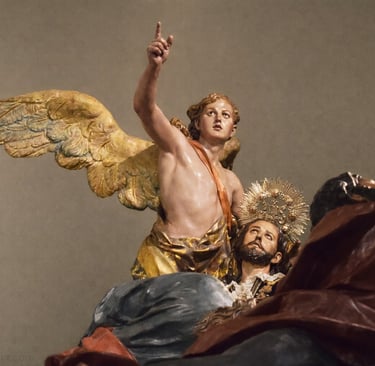
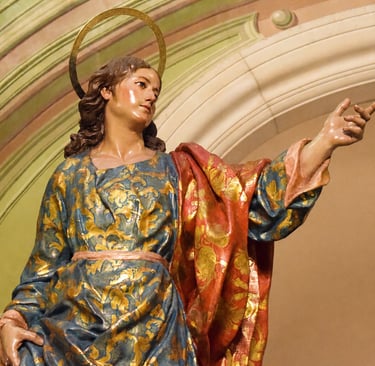
Francisco Salzillo Alcaraz was born in Murcia in 1707 and died in the same city in 1783. Son of the Neapolitan sculptor Nicolás Salzillo, he inherited the family workshop at a very young age and developed an artistic career that profoundly transformed Spanish religious sculpture of the 18th century. Unlike other artists of his time, Salzillo barely left Murcia, but this did not prevent him from creating a work of extraordinary quality that is today considered one of the culminations of late Spanish baroque.
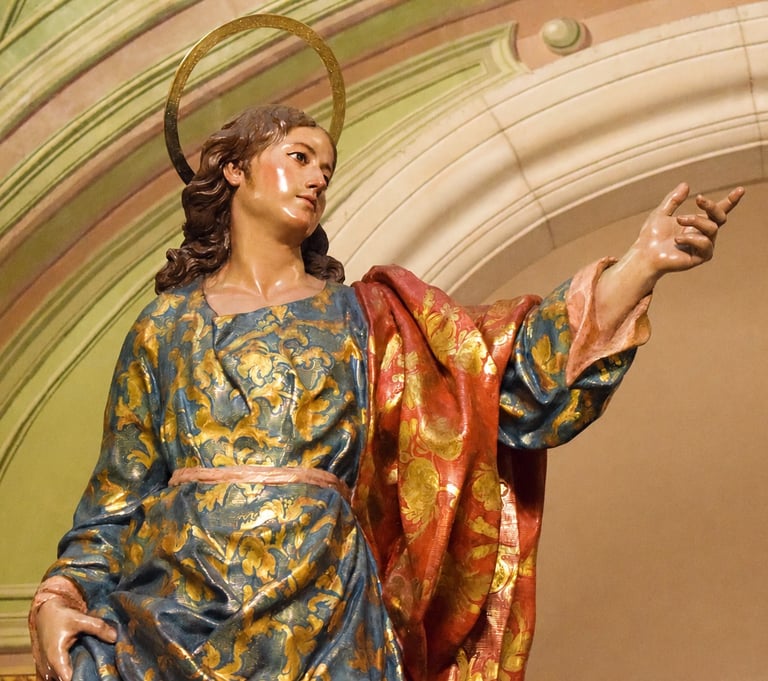
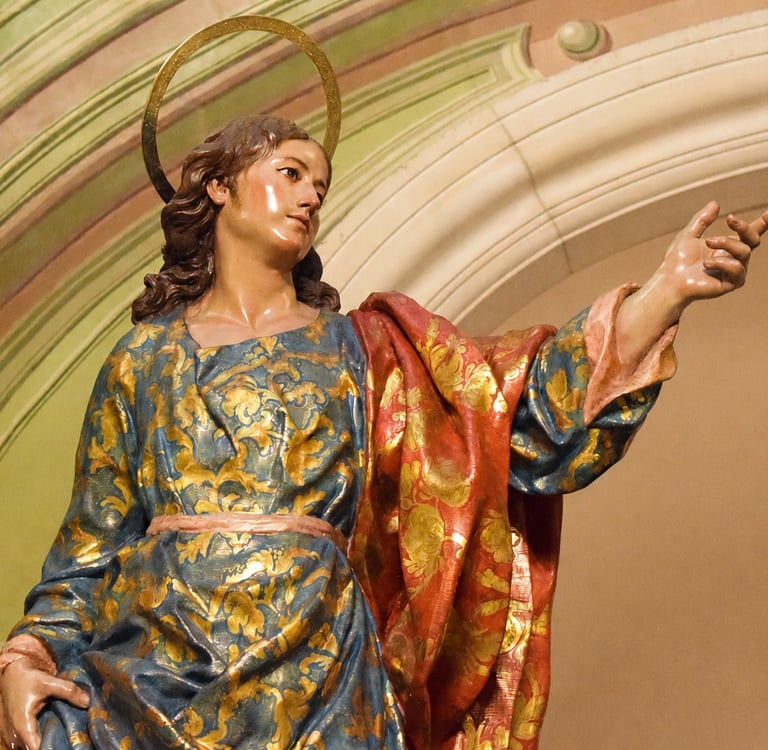
His production is situated at a moment of transition between baroque, rococo, and new illustrated sensibilities. Salzillo's sculptures retain the theatricality and emotional characteristics of baroque, but incorporate a formal delicacy and a humanity that distance them from the more dramatic models of the previous century. His characters show contained emotions, natural gestures, and a surprising ability to convey closeness.
The originality of Salzillo lies in his ability to combine religious devotion with a profound observation of reality. His figures possess their own personality, express recognizable feelings, and seem to participate in the everyday life of Murcia in his time. The elegance of the movements, the precision of the drawing, the mastery in polychromy, and the extraordinary treatment of the faces turned his workshop into the center of a true sculptural school whose influences spread throughout the region.
His fame soon transcended the local sphere and today he is considered one of the great imagers in the history of Spanish art, alongside masters such as Gregorio Fernández, Juan Martínez Montañés, and Pedro de Mena. The brilliance of Salzillo lies in part in that he developed a personal language, more luminous and kind, deeply linked to Mediterranean sensitivity.
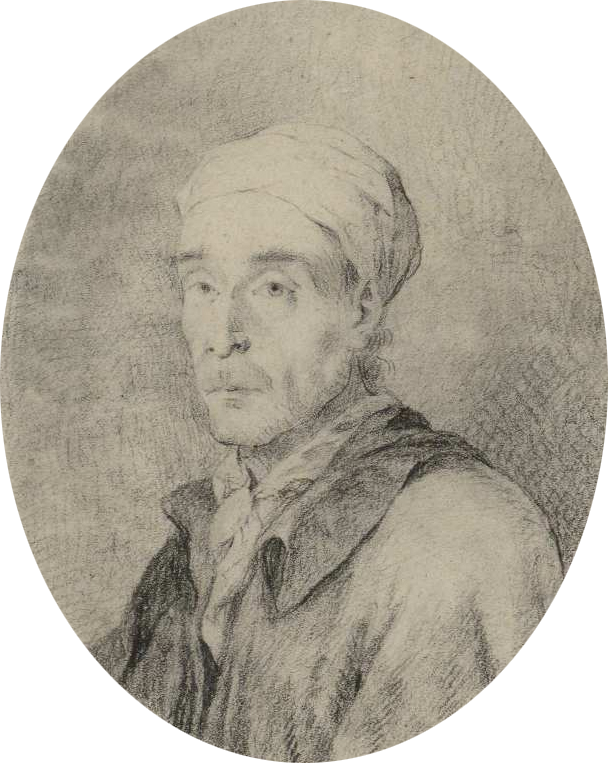
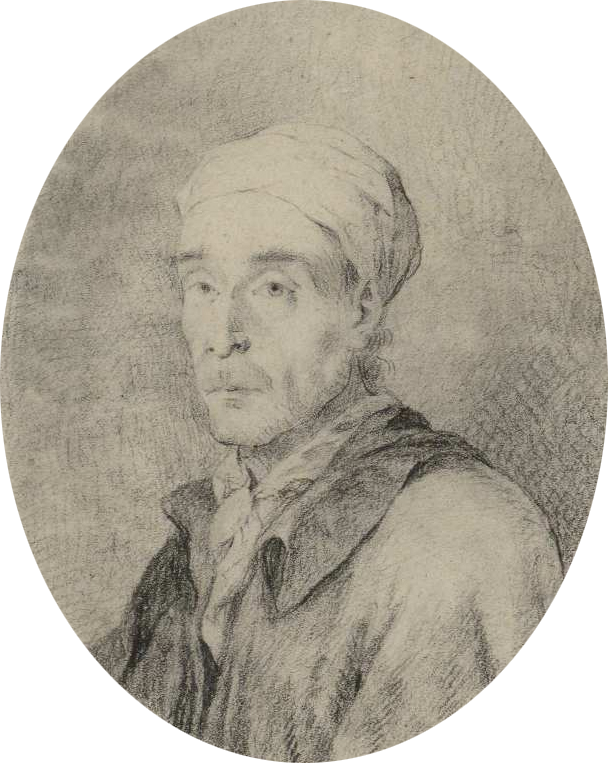
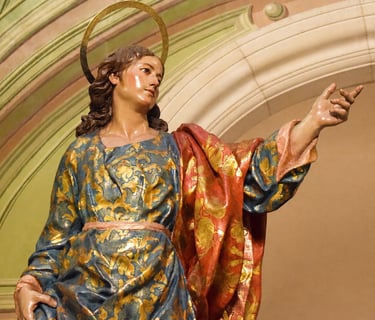
The Archconfraternity of Our Father Jesus Nazarene
The history of the Salzillo Museum is inseparably linked to the Royal and Very Illustrious Archconfraternity of Our Father Jesus Nazarene, one of the oldest and most prestigious religious institutions in Murcia.
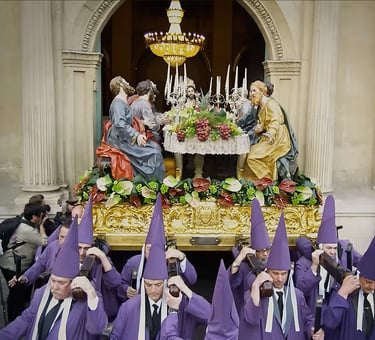
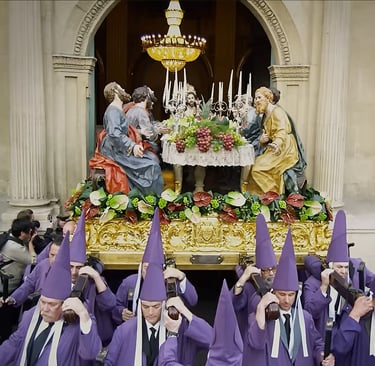
Founded in the 17th century, the brotherhood developed a close relationship with Francisco Salzillo during the 18th century. The sculptor was a brother of the institution and was commissioned to renew much of the processional groups that paraded in the morning of Holy Friday. Between 1752 and 1777, he created some of its most famous sets for the brotherhood, configuring a unique collection of processional sculpture that has remained almost intact to this day.
The procession of the Salzillos constitutes one of the most representative events of the Murcian Holy Week. During the morning of Holy Friday, the sculptural groups leave the church of Jesus to tour the streets of the city accompanied by nazarenes who distribute candies, traditional cakes, and other traditional products. This unique combination of religiosity, art, and popular customs has turned the procession into one of the most recognizable cultural symbols of Murcia.
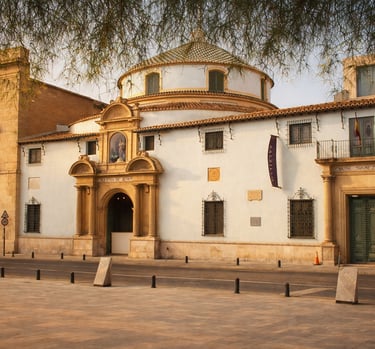
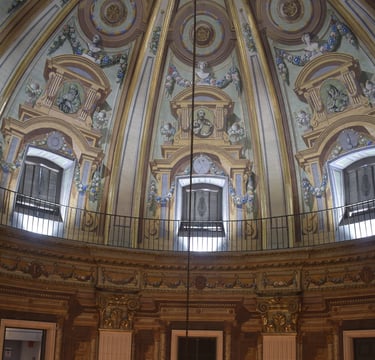
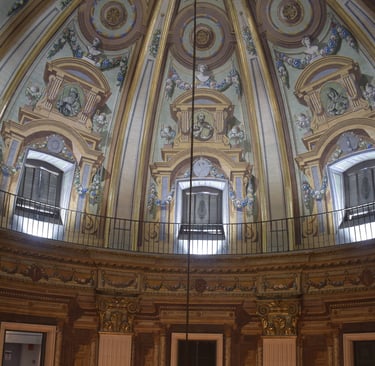
The church of Jesus, built with a characteristic centralized circular plan, was conceived precisely as the headquarters of the brotherhood and as a space to house its processional steps. Today, it is an integral part of the museum route and constitutes the setting where the sculptures can be viewed in their traditional arrangement.
GUIDED VISIT TO THE SALZILLO MUSEUM
The guided visit to the Salzillo Museum is the best way to delve into the life and work of the most important sculptor in the history of Murcia. Accompanied by an official guide graduated in History and a specialist in historical heritage, you will tour the museum's rooms to learn about the celebrated processional steps of the Brotherhood of Jesus, the extraordinary Bethlehem of Salzillo, and the artistic and symbolic details that make this space one of the most prominent museums of Spanish Baroque art.
More information and reservations for the guided visit to the Salzillo Museum.
The Sketch Room: Discovering the Creative Process
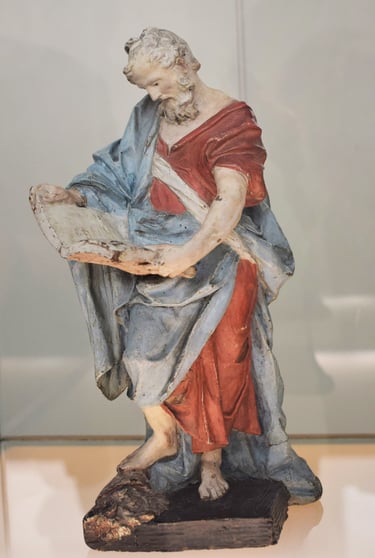
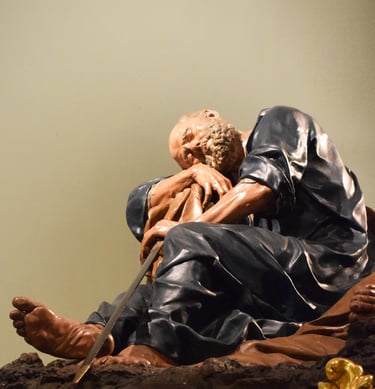
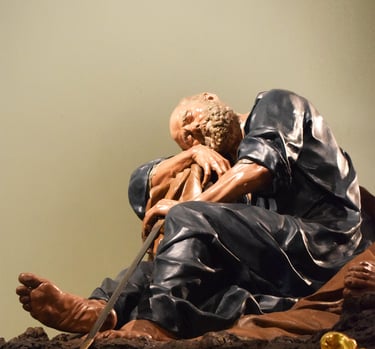
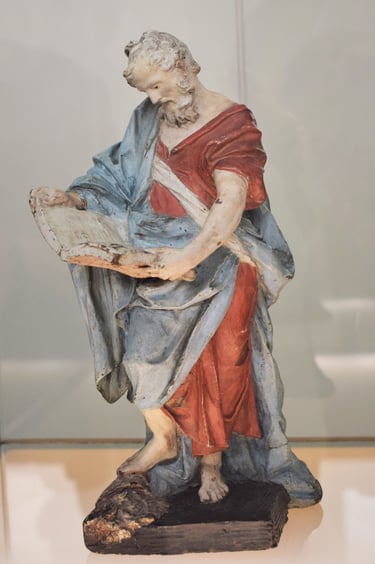
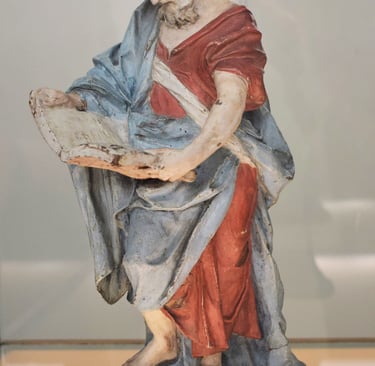
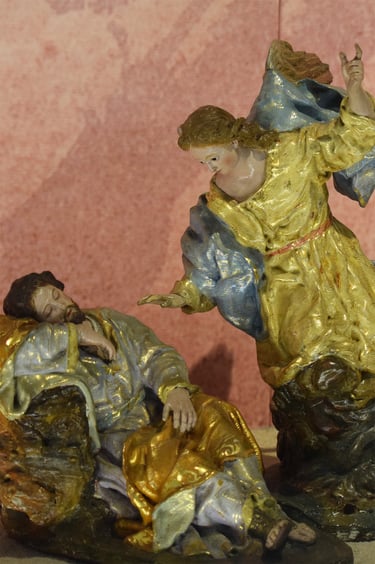
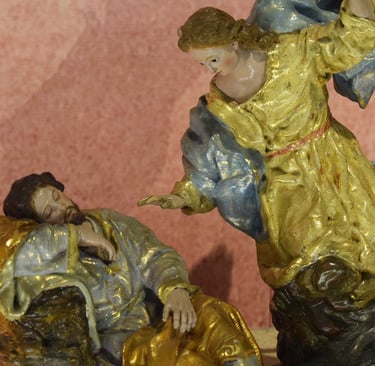
One of the most interesting sections of the museum is dedicated to sketches and preparatory models made by the sculptor.
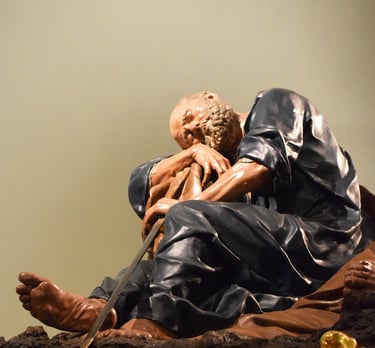
These small sculptures allow us to observe the creative process that preceded the execution of the definitive works. In them, we can appreciate how Salzillo conceived compositions, studied the movements of the figures, and organized the visual dialogue among the characters that would integrate each sculptural ensemble.
The sketches also reveal the extraordinary drawing and modeling ability of the artist. Far from being mere workshop tests, they constitute authentic works of art that allow us to understand the technical complexity of Baroque sculpture and the meticulousness with which the Murcian master worked.
The Nativity Scene by Salzillo
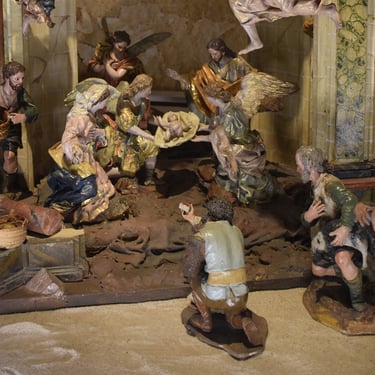
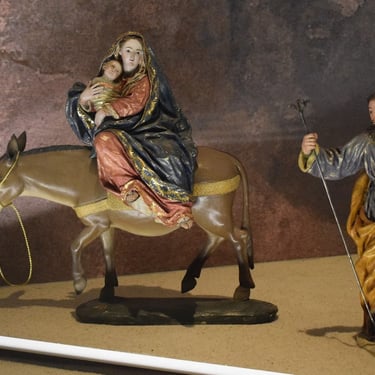
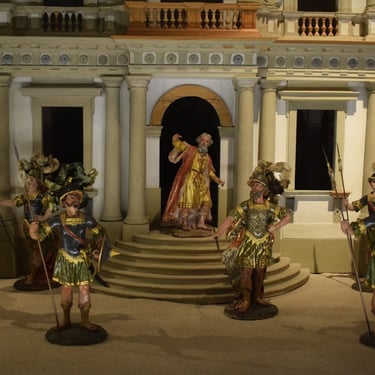
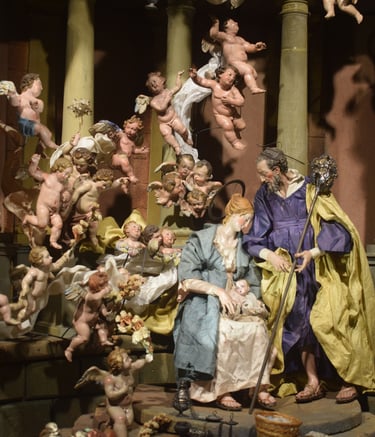
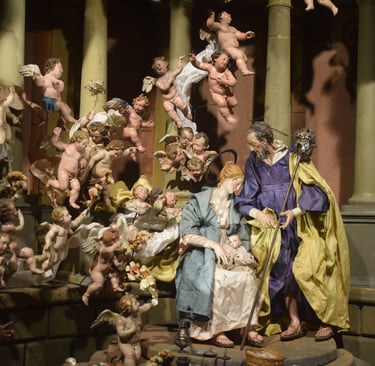
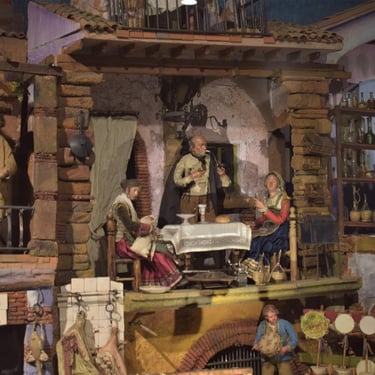
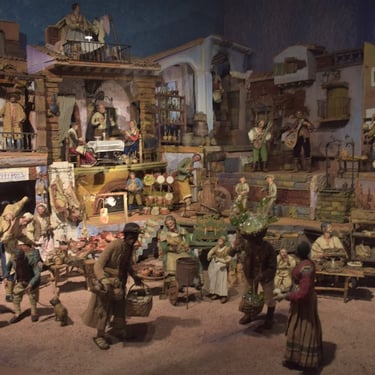
The most renowned jewel of the museum is probably the monumental Nativity scene made by Francisco Salzillo during the last years of his life.
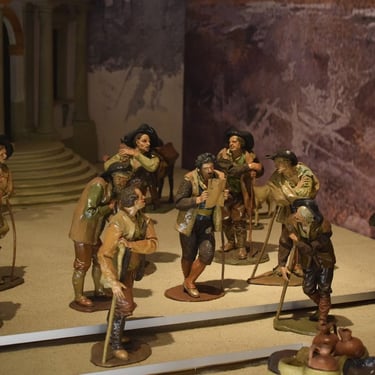
Commissioned by the noble Murcian Jesualdo Riquelme, the set came to comprise more than five hundred figures and constitutes one of the most extraordinary works of European nativity art. Although it represents traditional episodes from the childhood of Christ, Salzillo transferred many of the scenes to the landscape and customs of the Murcian orchard.
Shepherds, peasants, craftsmen, musicians, street vendors, and domestic animals are depicted with surprising naturalness. The observation of daily life reaches an exceptional level here, turning the set into a valuable testimony of Murcian society in the 18th century.
The sculptural quality of the figures, the richness of details, and the diversity of scenes mean that each visit reveals new aspects of a work considered one of the great creations of European sculpture of its time.
The Neapolitan Nativity
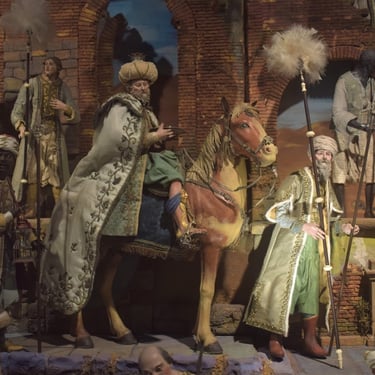
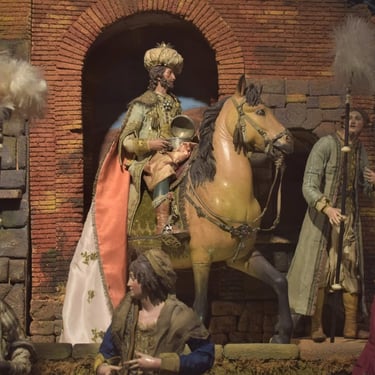
The presence of a Neapolitan Nativity within the museum establishes an interesting connection with the family origins of Francisco Salzillo.
Naples was, during the 17th and 18th centuries, one of the major European centers of nativity production. Its figures, characterized by dynamism, the richness of costumes, and the meticulousness of details, had a notable influence on numerous artists.
The collection preserved in the museum helps to contextualize the artistic environment from which Nicolás Salzillo, the sculptor's father, came, and allows for the comparison of two distinct but closely related nativity traditions. The visit thus offers a broader perspective on the existing cultural exchanges in the Mediterranean during the Baroque era.
The Church of Jesus and the Steps of Holy Week
The journey culminates at the Church of Jesus, the true spiritual heart of the museum and the space where the famous processional steps of the Brotherhood of Our Father Jesus Nazarene are preserved.
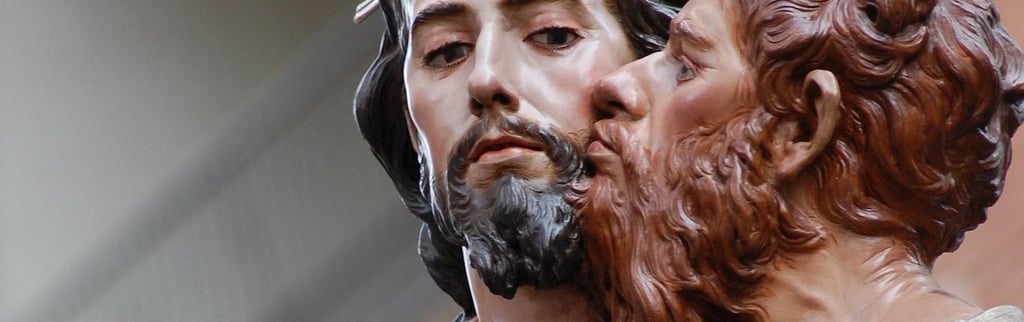
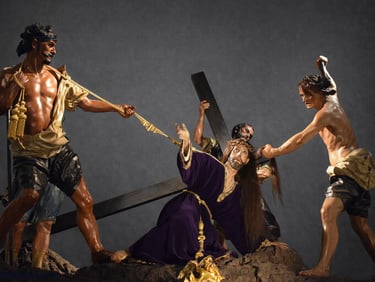
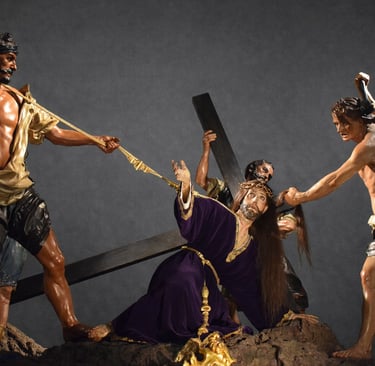
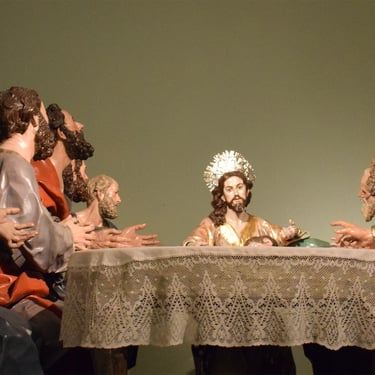
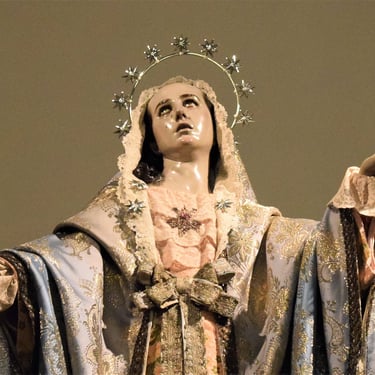
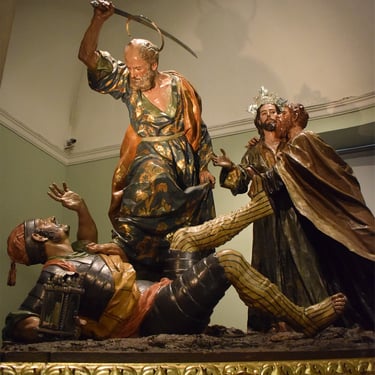
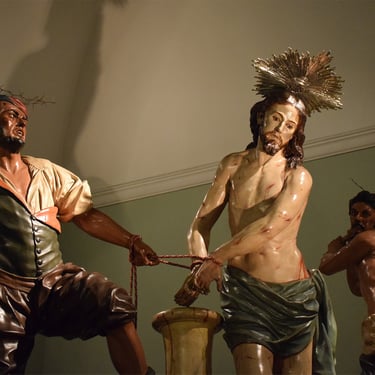
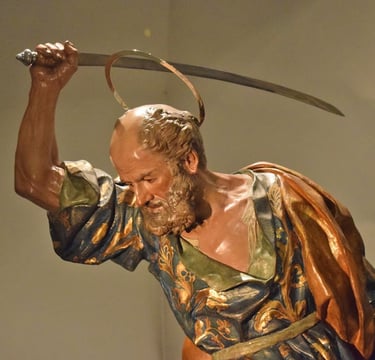
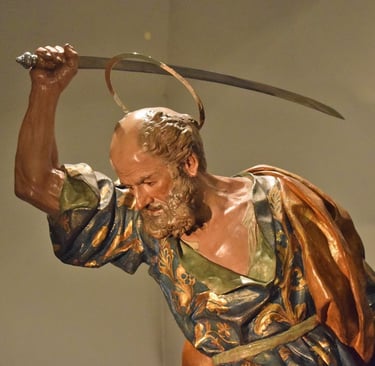
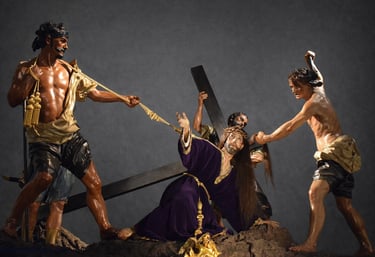
Around the circular space of the temple, some of the most admired sculptural groups of Spanish imagery are distributed. Works such as The Last Supper, The Agony in the Garden, The Arrest, The Scourging or The Fall showcase Salzillo's extraordinary narrative capacity and his skill in representing human emotions through sculpture.
Each group is conceived as a carefully organized theatrical scene, where gestures, glances, and movements contribute to narrating the episodes of the Passion of Christ. The visitor can contemplate them with an impossibility of proximity during the procession, appreciating technical and expressive details that often go unnoticed on the street.
The experience takes on a special dimension when understanding that these sculptures were not conceived as museum pieces, but as images intended to actively participate in the religious and cultural life of Murcia. This function remains valid today, when every Good Friday they temporarily leave the museum to once again roam the streets of the city, keeping alive a tradition that is an essential part of Murcian identity.
GUIDED VISIT TO THE SALZILLO MUSEUM
If you want to understand why Francisco Salzillo is considered one of the great masters of Spanish sculpture, a guided visit is the most recommended option. This tour allows you to interpret the most important works of the museum in their historical, artistic and religious context, uncovering aspects that are often overlooked in a free visit. With a certified guide graduated in History and an expert in historical heritage, you will learn about the evolution of the artist, the importance of the Brotherhood of Jesus, and the extraordinary legacy that has made the Salzillo Museum an essential cultural reference in Murcia.
Discover all the details of the guided visit to the Salzillo Museum and reserve your spot.
Salzillo Museum
Francisco Salzillo: the great sculptor of the Spanish 18th century
Francisco Salzillo Alcaraz was born in Murcia in 1707 and died in the same city in 1783. Son of the Neapolitan sculptor Nicolás Salzillo, he inherited the family workshop at a young age and developed an artistic career that profoundly transformed Spanish religious sculpture of the 18th century. Unlike other artists of his time, Salzillo barely left Murcia, but that did not prevent him from creating an extraordinary body of work that is now considered one of the culminations of late Spanish baroque.
His production is situated at a moment of transition between baroque, rococo, and new illustrated sensibilities. Salzillo's sculptures retain the theatricality and emotion characteristic of baroque, but incorporate a formal delicacy and humanity that set them apart from the more dramatic models of the previous century. His characters show contained emotions, natural gestures, and a surprising ability to convey intimacy.
The originality of Salzillo lies in his ability to combine religious devotion with a profound observation of reality. His figures have their own personality, express recognizable feelings, and seem to partake in the daily life of 18th-century Murcia. The elegance of movements, the precision of drawing, the mastery of polychromy, and the extraordinary treatment of faces turned his workshop into the center of a true sculptural school whose influences spread throughout the region.
His fame soon transcended the local realm and today he is regarded as one of the great sculptors in the history of Spanish art, alongside masters such as Gregorio Fernández, Juan Martínez Montañés, or Pedro de Mena. The genius of Salzillo partly lies in that he developed a distinctive language, brighter and kinder, deeply linked to Mediterranean sensibility.
The Brotherhood of Our Father Jesus Nazarene
The history of the Salzillo Museum is inseparably linked to the Royal and Most Illustrious Brotherhood of Our Father Jesus Nazarene, one of the oldest and most prestigious religious institutions in Murcia.
Founded in the 17th century, the brotherhood established a close relationship with Francisco Salzillo during the 18th century. The sculptor was a brother of the institution and was commissioned to renew much of the processional groups that paraded on Good Friday morning. Between 1752 and 1777, he created some of the brotherhood's most famous compositions, forming a unique collection of processional sculpture that has remained virtually intact to this day.
The procession of the Salzillos is one of the most representative events of Holy Week in Murcia. On Good Friday morning, the sculptural groups leave the church of Jesus to traverse the city's streets accompanied by Nazarenes who distribute candies, traditional pastries, and other traditional products. This singular combination of religiosity, art, and popular customs has turned the procession into one of the most recognizable cultural symbols of Murcia.
The church of Jesus, built with a characteristic centralized circular plan, was conceived precisely as the headquarters of the brotherhood and as a space to hold its processional floats. Today, it is an integral part of the museum route and constitutes the setting where the sculptures can be seen in their traditional arrangement.
GUIDED VISIT TO THE SALZILLO MUSEUM
The guided visit to the Salzillo Museum is the best way to deeply discover the life and work of the most important sculptor in the history of Murcia. Accompanied by an official guide graduated in History and specialist in historical heritage, you will tour the museum’s halls to learn about the famous processional steps of the Brotherhood of Jesus, the extraordinary Bethlehem of Salzillo, and the artistic and symbolic details that make this space one of the most outstanding museums of Spanish Baroque art.
More information and reservations for the guided visit to the Salzillo Museum.
The Nativity Scene by Salzillo
The best-known jewel of the museum is probably the monumental Nativity scene created by Francisco Salzillo during the last years of his life.
Commissioned by the noble Murcian Jesualdo Riquelme, the ensemble brought together more than five hundred figures and constitutes one of the most extraordinary works of European nativity scene art. Although it represents traditional episodes from the childhood of Christ, Salzillo transported many of the scenes to the landscape and customs of the Murcian orchard.
Shepherds, farmers, artisans, musicians, street vendors, and domestic animals are represented with surprising naturalness. The observation of everyday life reaches an exceptional level here, turning the ensemble into a valuable testimony of Murcian society in the 18th century.
The sculptural quality of the figures, the richness of details, and the diversity of scenes ensure that each visit allows for the discovery of new aspects of a work considered one of the great creations of European sculpture of its time.
The Neapolitan Nativity Scene
The presence of a Neapolitan Nativity Scene within the museum establishes an interesting connection with the family origins of Francisco Salzillo.
Naples was, during the 17th and 18th centuries, one of the great European centers of Nativity scene production. Its figures, characterized by dynamism, the richness of costumes, and meticulous details, had a notable influence on numerous artists.
The collection preserved in the museum helps to contextualize the artistic environment from which Nicolás Salzillo, the sculptor's father, came and allows for a comparison of two distinct but closely related Nativity scene traditions. The visit thus offers a broader perspective on the existing cultural exchanges in the Mediterranean during the Baroque period.
The Church of Jesus and the Holy Week Steps
The tour culminates at the Church of Jesus, the true spiritual heart of the museum and a space where the famous processional steps of the Brotherhood of Our Father Jesus Nazarene are preserved.
Around the circular space of the temple are distributed some of the most admired sculptural sets of Spanish imagery. Works such as The Last Supper, The Agony in the Garden, The Arrest, The Scourging or The Fall showcase Salzillo's extraordinary narrative ability and his skill in representing human emotions through sculpture.
Each group is conceived as a carefully organized theatrical scene, where gestures, looks, and movements contribute to narrating the episodes of the Passion of Christ. The visitor can contemplate them with an impossible proximity during the procession, appreciating technical and expressive details that often go unnoticed on the street.
The experience takes on a special dimension when understanding that these sculptures were not conceived as museum pieces, but as images intended to actively participate in the religious and cultural life of Murcia. This function remains active today, when every Good Friday they temporarily leave the museum to return to the streets of the city, keeping alive a tradition that is an essential part of Murcian identity.
GUIDED TOUR OF THE SALZILLO MUSEUM
If you want to understand why Francisco Salzillo is considered one of the great masters of Spanish sculpture, a guided visit is the most recommended option. This tour allows you to interpret the museum's most important works in their historical, artistic, and religious context, discovering aspects that usually go unnoticed during a self-guided visit. With an official guide graduated in History and an expert in historical heritage, you will learn about the artist's evolution, the importance of the Brotherhood of Jesus, and the extraordinary legacy that has made the Salzillo Museum an essential cultural reference in Murcia.
Discover all the details of the guided visit to the Salzillo Museum and reserve your spot.
Apotheosis of Baroque Sculpture in Murcia
Few figures have left such a deep mark on the cultural identity of Murcia as Francisco Salzillo. His work not only defined the religious imagery of an entire era, but also became one of the most recognizable symbols of the city and the Region of Murcia. The Salzillo Museum, located next to the Church of Jesús, is the place where the artistic, human, and spiritual dimension of this exceptional sculptor can be best understood.
More than a conventional museum, the building constitutes a meeting space between art, history, and popular tradition. In its rooms, a fundamental part of Salzillo's legacy is preserved, including the famous processional sculptural groups of the Brotherhood of Our Father Jesus Nazarene, the extraordinary Nativity created by the master, and a collection of sketches and models that delve into the secrets of his workshop. The visit also offers the possibility of contemplating the Church of Jesús, one of the most emblematic spaces related to Holy Week in Murcia.
The museum today constitutes one of the most important cultural institutions in the city and an essential visit to understand 18th-century Murcia. The best way to get to this place and learn all its details is through our guided tour of the Salzillo Museum, as always in the hands of an official guide, expert in history and cultural heritage.
The sketch room: discovering the creative process
One of the most interesting sections of the museum is dedicated to the sketches and preparatory models made by the sculptor.
These small sculptures allow us to observe the creative process that preceded the execution of the final works. In them, we can appreciate how Salzillo conceived the compositions, studied the movements of the figures, and organized the visual dialogue between the characters that would integrate each sculptural ensemble.
The sketches also reveal the extraordinary drawing and modeling ability of the artist. Far from being mere workshop tests, they constitute true works of art that help us understand the technical complexity of Baroque sculpture and the meticulousness with which the Murcian master worked.