Sierra Espuña
Mountains, Forests and Ancient Valleys

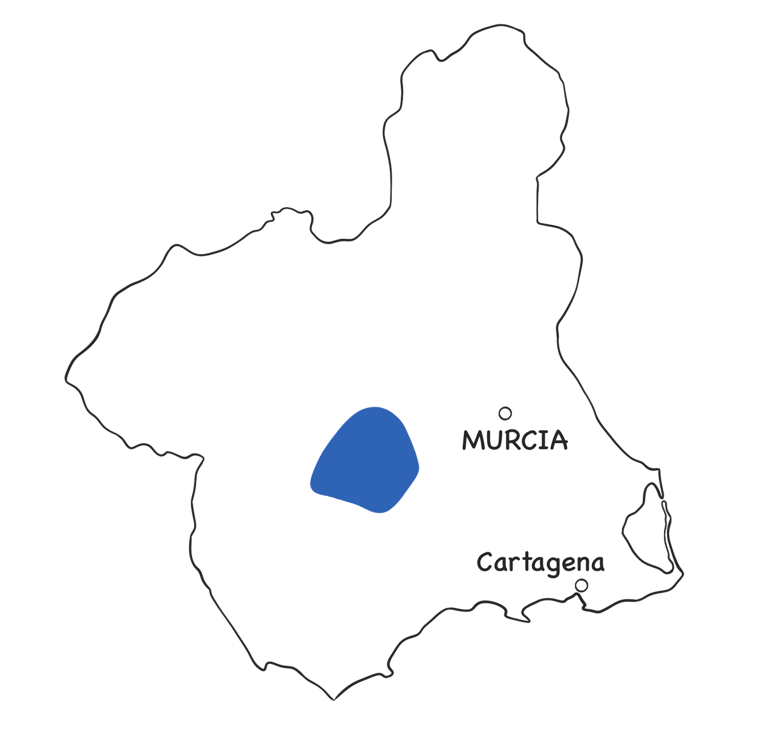
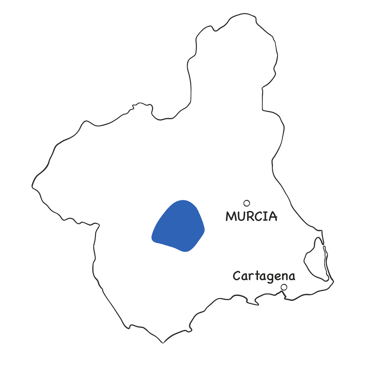
The area known as Sierra Espuña and the Lower Guadalentín Valley forms one of the most dramatic and contrasting landscapes in the Region of Murcia. Encompassing the municipalities of Aledo, Totana and Alhama de Murcia, this territory stretches from fertile agricultural plains to rugged limestone peaks, offering a remarkable variety of natural and cultural experiences.
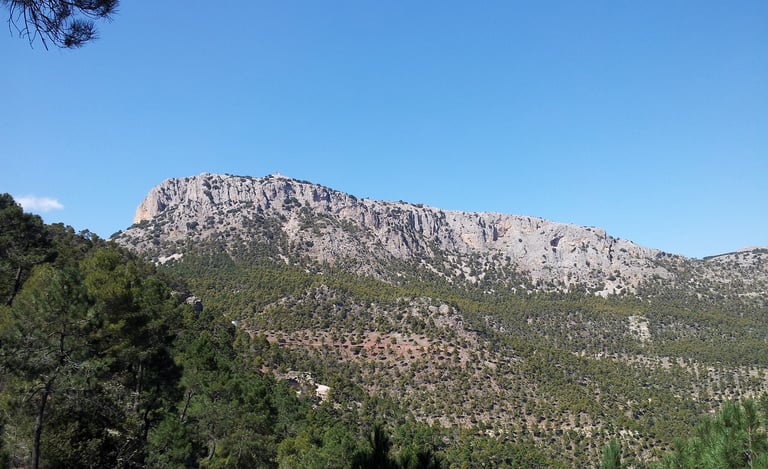
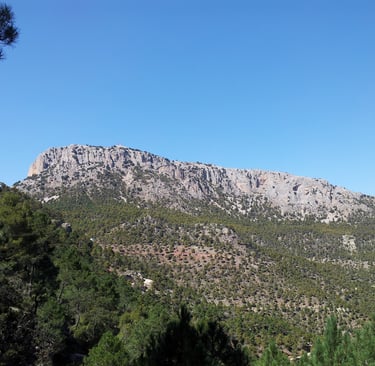
Geographically, the comarca is dominated by the Sierra Espuña Regional Park, a mountainous massif rising sharply above the Guadalentín valley. Its altitude creates a cooler and wetter microclimate than the surrounding lowlands, with pine forests, seasonal streams and rich biodiversity. Winters can be cold at higher elevations, while summers remain pleasantly mild in the mountains, making the area ideal for outdoor activities throughout the year.
This region represents a perfect balance between nature, history and traditional rural life, and is one of the best destinations in Murcia for hiking, landscape photography and cultural discovery.
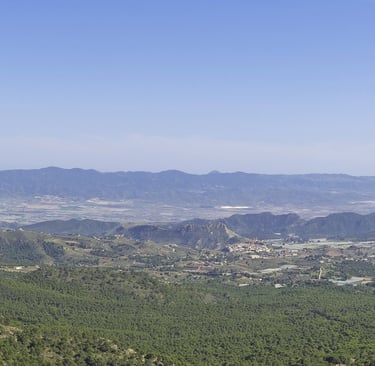
View from Sierra Espuña towards the Guadalentín valley, with the town of Aledo right in the center. Photo by Werner Wilmes.
Located at the northern end of the Guadalentín Valley, Alhama de Murcia is a town of approximately 22,000 inhabitants with a long history linked to water and agriculture. Its name derives from the Arabic al-hamma, referring to the thermal waters used since Roman times.
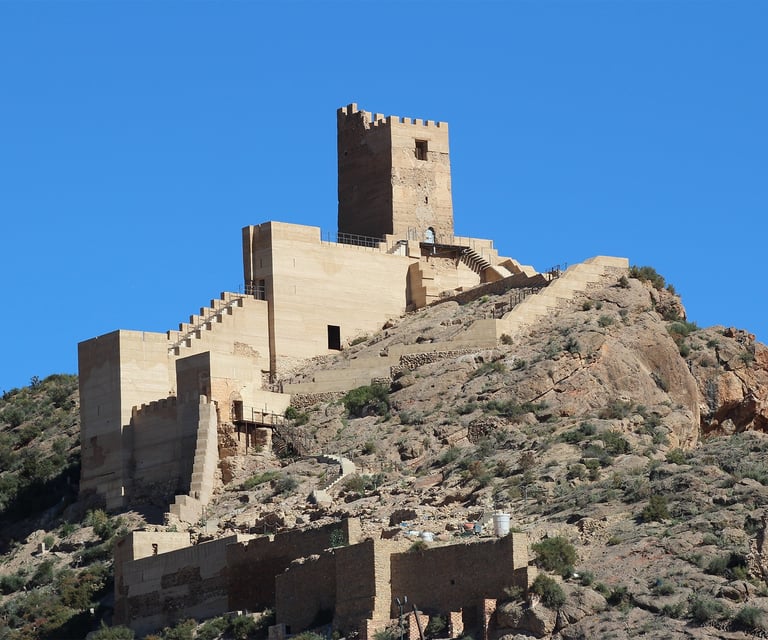
Alhama experienced significant development during the Islamic period and later under Christian rule, preserving a compact historic center dominated by Alhama Castle, which overlooks the town. Within the town center, visitors can explore the streets of the old quarter, the Church of San Lázaro Obispo, the local museums, and the traditional squares. From a historical perspective, one of the most interesting sites is the archaeological site where an ancient Roman thermal complex can be visited, which was reused for the same purpose by the Muslims centuries later. Alhama is also one of the main gateways to the Sierra Espuña mountain range.
The castle of Alhama de Murcia, of Islamic origin (11th century), dominates the town's landscape. Photo by Martinvl.
Alhama de Murcia
Totana
At the southern foot of the Sierra Espuña mountain range lies Totana, a lively town of approximately 32,000 inhabitants. Historically an agricultural center, Totana grew up around the irrigation systems that transformed the Guadalentín Valley into fertile farmland.
The town's historic center preserves churches, traditional houses, and a welcoming atmosphere. Among its main attractions are the Church of Santiago, the streets of the old town, and the local markets. Totana is especially known as a starting point for excursions to Sierra Espuña and for its deep-rooted artisan tradition, particularly in pottery. The town has had potters since time immemorial, and this craft is a defining characteristic of the municipality, so much so that it is home to the Region of Murcia's technology center for handicrafts.
About 7 kilometers from the town is the sanctuary dedicated to Saint Eulalia, one of the most important places of devotion in the region. It is a beautiful architectural complex surrounded by a stunning natural landscape.


About seven kilometers from the town lies this sanctuary dedicated to Saint Eulalia. It is one of the most beautiful spots in the Sierra Espuña mountain range and a major center of devotion, especially for the residents of Totana and the surrounding towns. Photo by Morini33.
Aledo
Located in the easternmost part of the Region of Murcia, bordering Alicante, Abanilla is a small town of about 6,000 inhabitants with a strong agricultural and border identity. Its landscape alternates between fertile orchards and arid mountain terrain, shaped by seasonal watercourses.
Within the town center, visitors can see the Church of San José, traditional houses, and small squares that reflect everyday rural life. Abanilla also serves as a gateway to natural areas such as the Chícamo River, one of the most unique river ecosystems in southeastern Spain.
Also in Abanilla is the Quibas Mountain Range Paleontological Site Interpretation Center. This center explains one of the most important Lower Pleistocene fossil sites in Europe. Excavations at Quibas have revealed remains of prehistoric animals and evidence of early human presence, offering valuable information about the evolution of climate and fauna more than a million years ago.
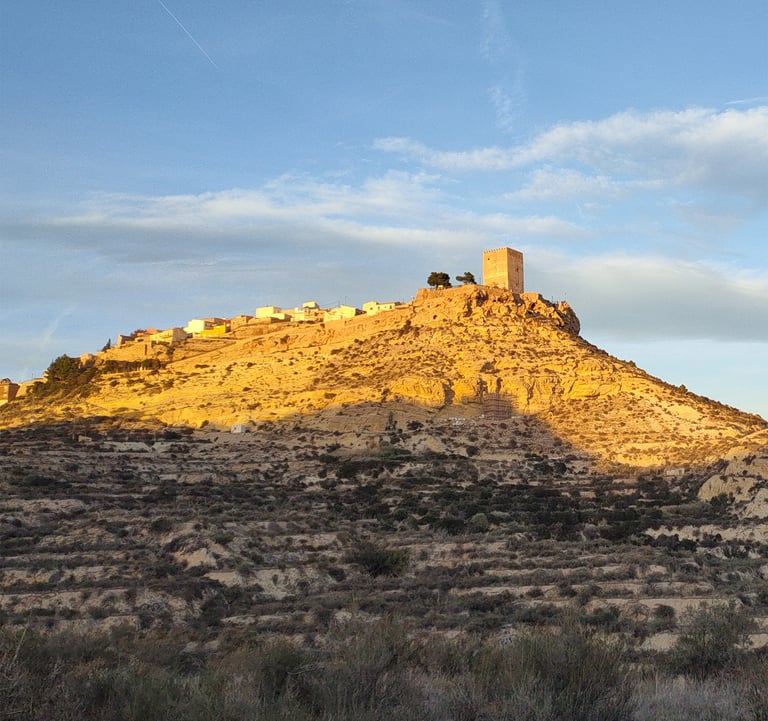
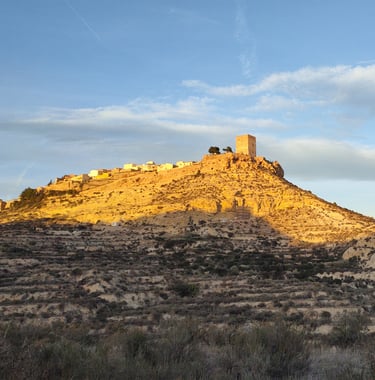
Aledo rises with the tower of its medieval castle on a hill on the north side of the Guadalentín valley. Photo by Lorenzo Soriano.
Sierra Espuña Regional Park
Sierra Espuña Regional Park is one of the most important protected natural areas in southeastern Spain. Once heavily deforested, it underwent a pioneering reforestation project in the late 19th century led by Ricardo Codorníu, transforming it into the forested massif seen today.
The park is characterised by pine forests, ravines, cliffs and high-altitude viewpoints. It is home to wild goats, birds of prey and a wide range of Mediterranean flora. Well-marked trails, picnic areas and viewpoints make it accessible to both casual visitors and experienced hikers. Sierra Espuña is a prime example of successful environmental restoration and sustainable nature tourism.


Photo by RubenLN.
Natural and Cultural Highlights Beyond the Towns
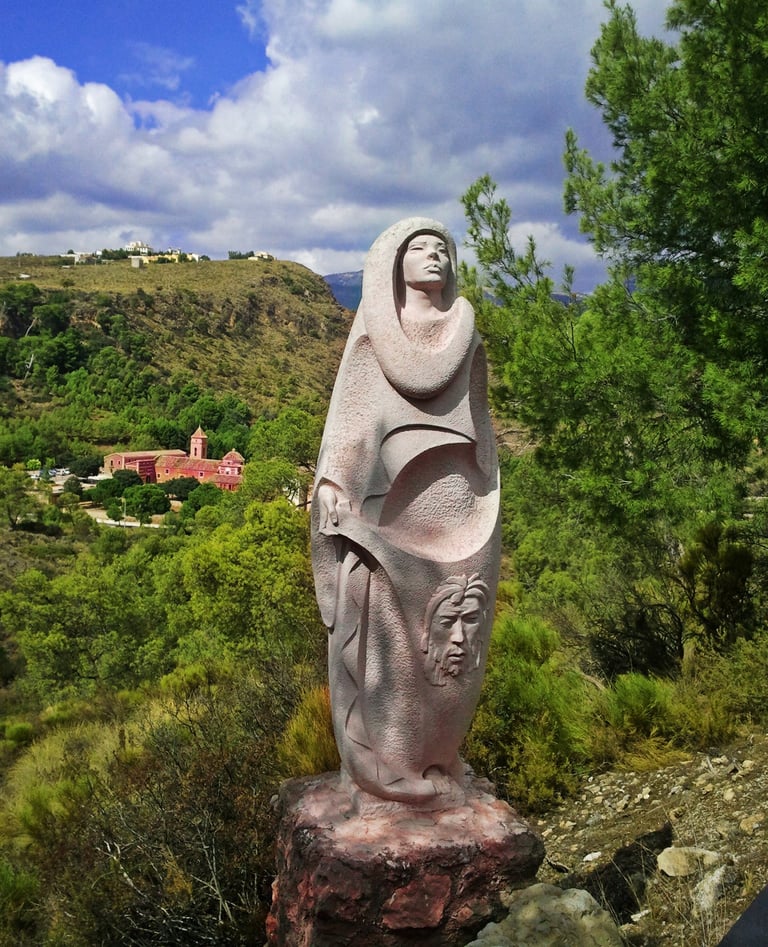
Around a hill near the sanctuary is arranged a Way of the Cross of 14 sculptural groups sculpted by the sculptor Anastasio Martínez Valcárcel around 1968.
Sanctuary of Santa Eulalia (Totana)
Located on the lower slopes of Sierra Espuña, the Sanctuary of Santa Eulalia is one of the most significant religious and historical landmarks in Totana. The current building dates mainly from the 16th and 17th centuries, although the site has been a place of worship since earlier times.
The sanctuary combines simple Renaissance and Baroque elements, reflecting its rural character and devotional function. Inside, visitors can admire historic wall paintings and decorative frescoes, which add artistic value to the building and illustrate scenes linked to Christian devotion. Set within a peaceful natural environment, the sanctuary remains an important pilgrimage site and a rewarding cultural stop for visitors exploring the Guadalentín valley.
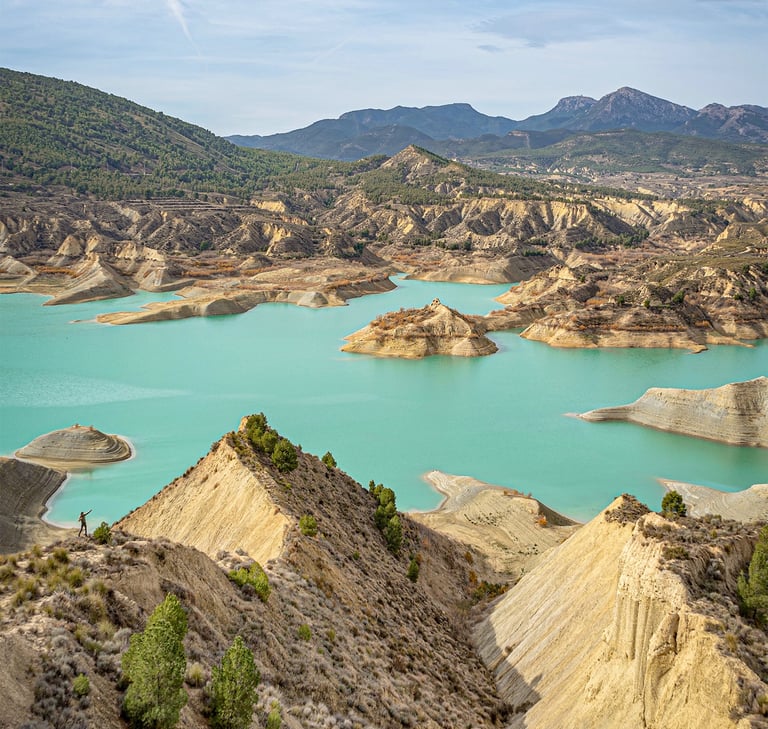
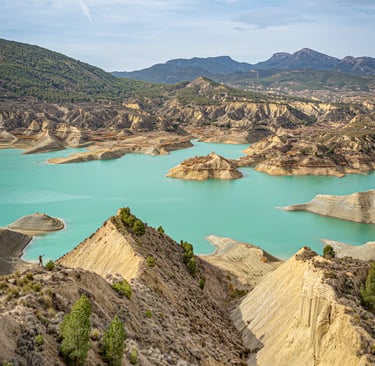
Barrancos de Gebas
A surreal badlands landscape of eroded clay hills and ravines, the Barrancos de Gebas resemble a natural sculpture park. Their arid beauty contrasts sharply with nearby farmland and forests. Visitors enjoy walking trails, photography and geological observation, especially at sunset.
Ricardo Codorníu Visitor Centre
Located within Sierra Espuña, this interpretation centre explains the history, ecosystems and reforestation of the park. It is an excellent starting point for understanding the environmental significance of the area and planning hiking routes.
Barrancos de Gebas. Photo by lopeorde1980.

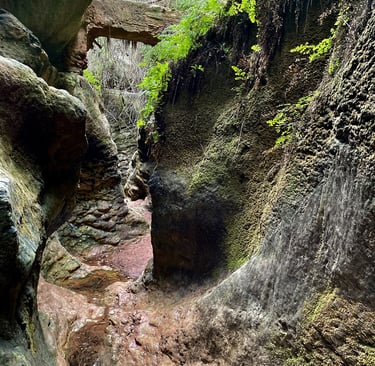
Estrecho de La Arboleja
A narrow gorge carved by water through limestone rock, offering a dramatic natural passage. It is ideal for hiking, canyon-style walks and enjoying the interaction between rock, water and vegetation.
La Bastida Archaeological Site
Situated near Totana, La Bastida is one of the most important Bronze Age settlements in Europe, dating back over 4,000 years. It provides invaluable insight into early urban societies and prehistoric engineering, making it a must-visit for archaeology enthusiasts.
Estrecho de la Arboleja. Photo by OakenshieldEdu.
Why Visit Sierra Espuña?
This area offers one of the most complete nature-and-culture experiences in the Region of Murcia. Forested mountains, prehistoric settlements, medieval villages and fertile valleys coexist within a compact territory.
Whether you are drawn by hiking, archaeology, rural landscapes or simply fresh mountain air, Sierra Espuña and the Lower Guadalentín provide a refreshing and deeply authentic side of Murcia, especially when explored with local guides who can reveal its hidden stories and natural secrets.