Southern Coast: From Cartagena to Águilas
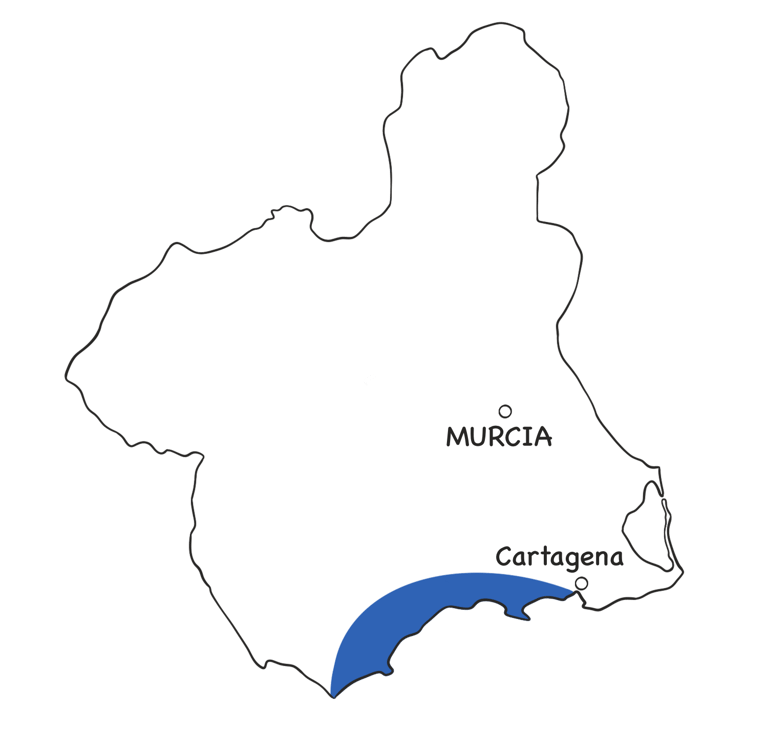
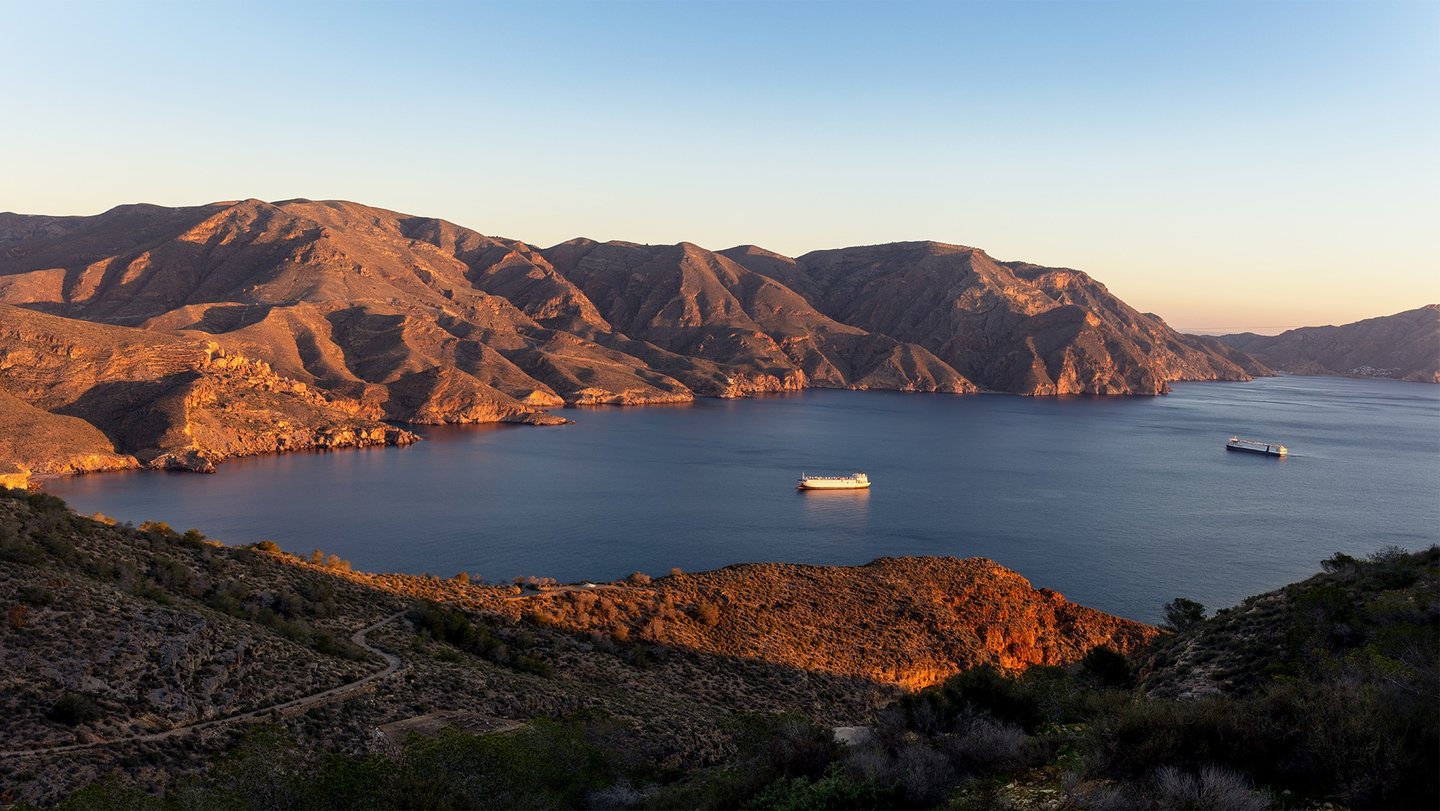
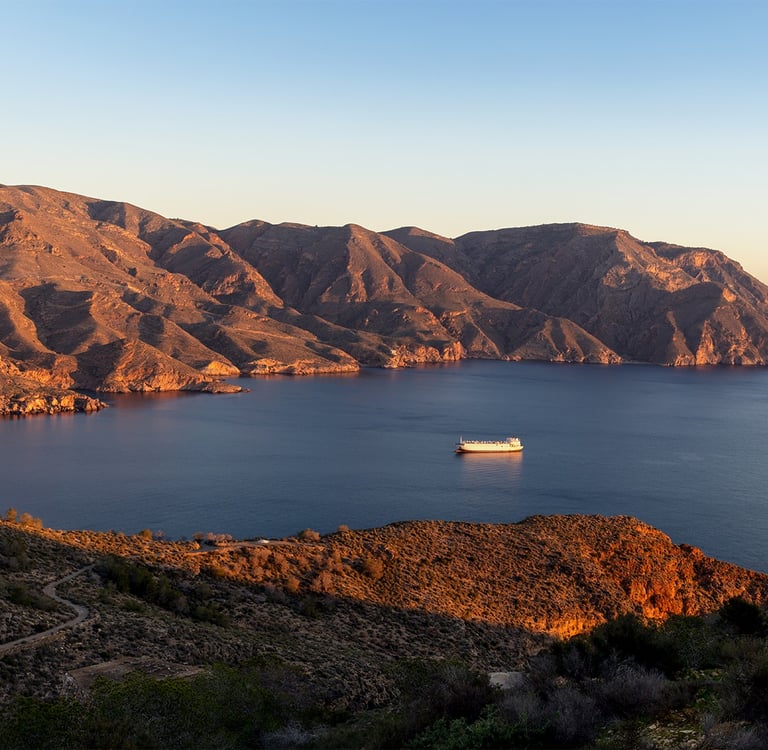
The Southern Coast of the Region of Murcia, stretching from the southern outskirts of Cartagena to the town of Águilas, is one of the most spectacular and least urbanised coastal areas in southeastern Spain. This territory includes the municipalities of Mazarrón and Águilas, the coastal area of Lorca, and the southern sector of Cartagena, forming a dramatic landscape where mountains plunge directly into the Mediterranean Sea.
From a geographical point of view, the coastline is shaped by several rugged mountain ranges (Sierra de La Muela, Cabo Tiñoso and Roldán, Sierra de las Moreras and Sierra de Almenara) creating steep cliffs, hidden coves and panoramic viewpoints. The climate is dry Mediterranean, with very mild winters, hot summers and more than 300 days of sunshine per year, ideal for outdoor activities all year round.
Historically, this coast has been a frontier and lookout zone: Phoenicians, Romans, pirates, miners and soldiers all left their mark. Watchtowers, coastal fortresses and defensive batteries still punctuate the landscape, adding cultural depth to its extraordinary natural beauty.
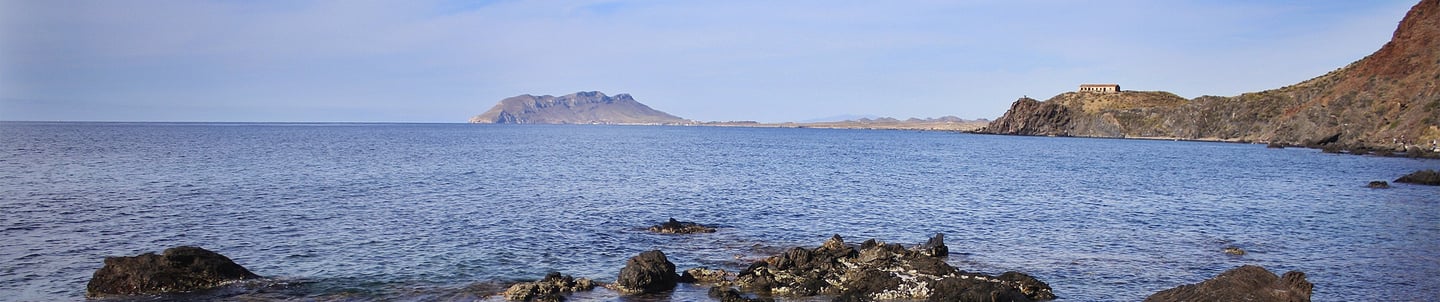
Cape Cope seen from the area known as Puntas de Calnegre, in the municipality of Lorca. Photo by Pau Lopezca.
Wild Mediterranean Landscapes
El Portús (Cartagena)
Nestled in a deep bay surrounded by cliffs, El Portús is a small coastal settlement with a long tradition linked to mining and fishing. Today it has a small permanent population and a peaceful atmosphere. The beach, nearby Roman remains and surrounding hills make it ideal for swimming, hiking and naturism.
La Azohía (Cartagena)
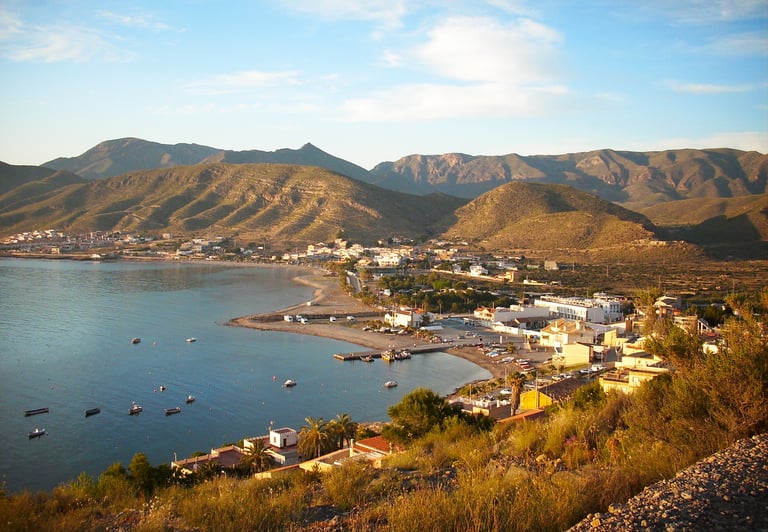
Located at the foot of the Sierra de La Muela, La Azohía is a quiet fishing village of around 900 inhabitants. Its Roman past, linked to fish-salting factories, is still visible in archaeological remains. Visitors enjoy calm beaches, a relaxed promenade and access to nearby hiking routes and defensive batteries.
View of La Azohía from the path leading up to the Santa Elena tower. Photo by TASAIRES.
Coastal Towns and Villages
Isla Plana (Cartagena)
Once an island, Isla Plana is now connected to the mainland and has around 1,000 residents. Historically associated with Roman industry and later coastal defence, it offers family-friendly beaches, thermal springs and excellent snorkelling spots.
Mazarrón
Located slightly inland, Mazarrón is a historic mining town with around 35,000 inhabitants. Its past is tied to metal extraction, especially in the 19th century. Within the town, visitors can explore the historic centre, mining heritage sites and museums that explain the area’s industrial history.
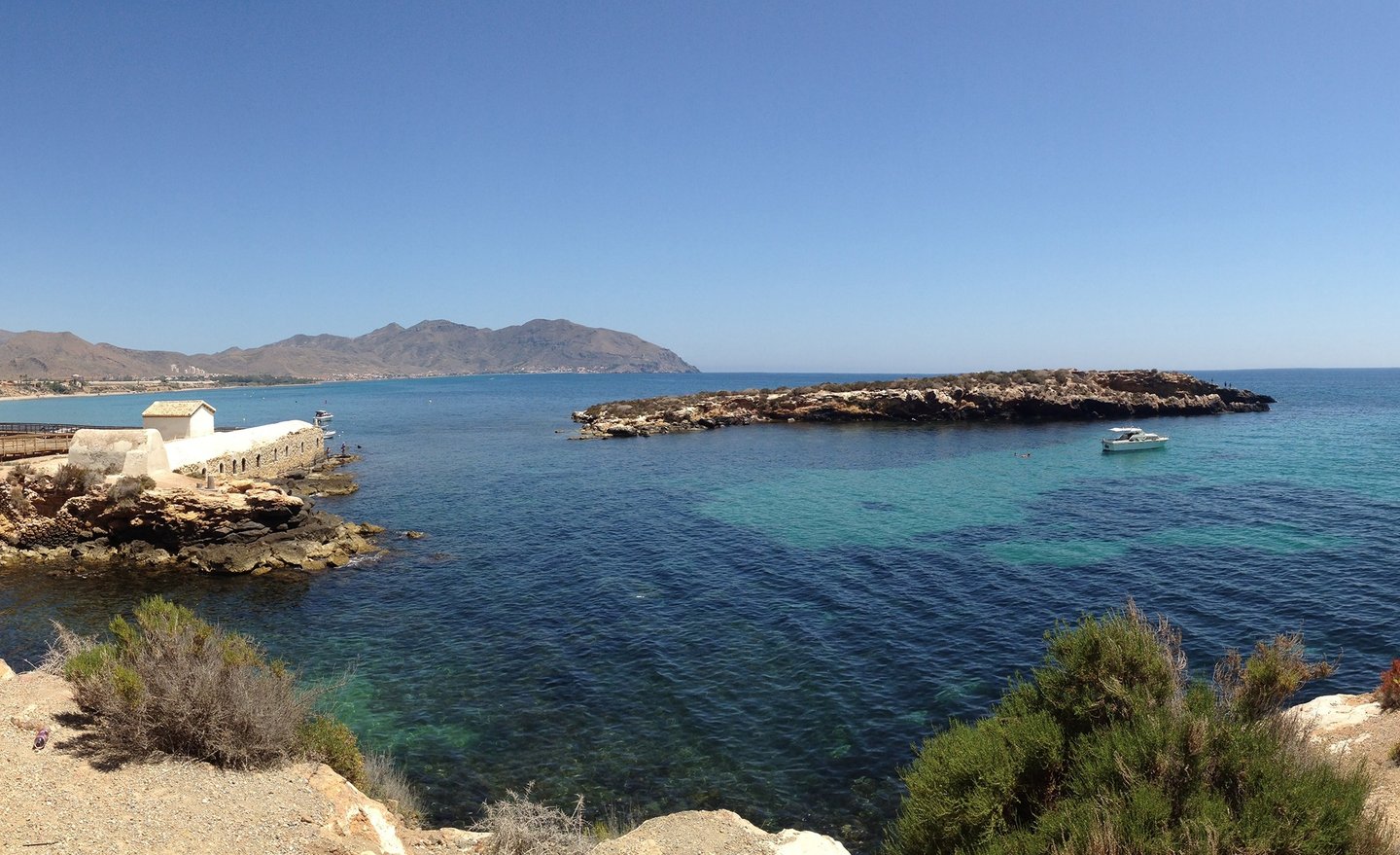
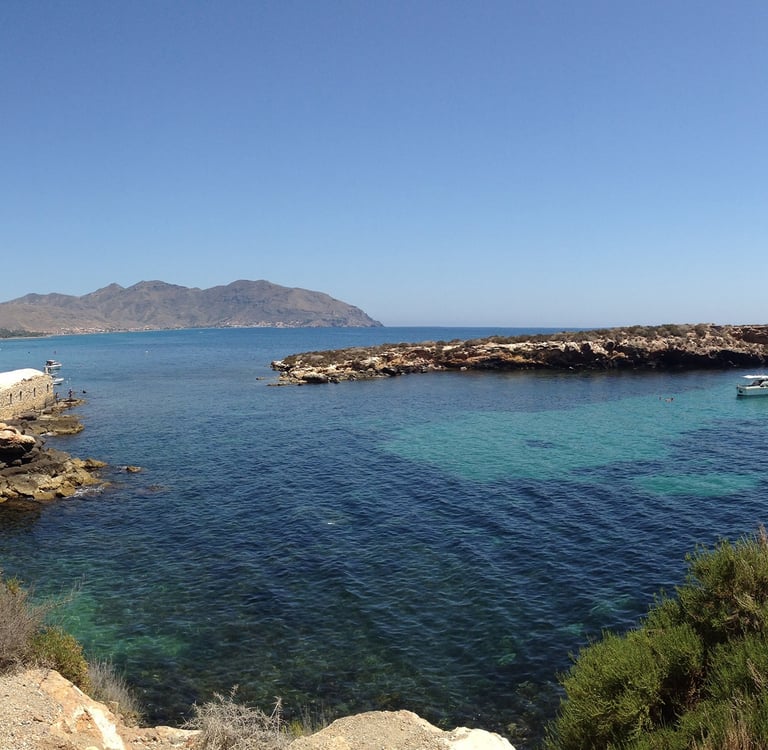
The area around the small island that gives its name to the town of Isla Plana is ideal for snorkeling due to its shallow depth and clear waters. Photo by LosMadriles.
Puerto de Mazarrón
The coastal heart of the municipality, Puerto de Mazarrón is a lively seaside town with marinas, promenades and beaches. Nearby Bolnuevo is famous for the Erosions of Bolnuevo, surreal sandstone formations sculpted by wind and water. The area combines beach tourism, geology and coastal walks.
Puntas de Calnegre (Lorca)
This small coastal hamlet belongs to the municipality of Lorca and is known for its unspoilt coastline and traditional fishing character. Its low-density development and proximity to protected natural areas make it ideal for quiet seaside holidays and nature-based tourism.

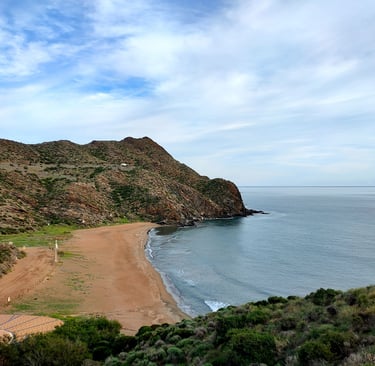
One of the coves in the area known as Puntas de Calnegre, in Lorca. Photo by Lorenzo Soriano.
Calabardina (Águilas)
A residential coastal village near Águilas, Calabardina offers wide beaches, calm waters and excellent conditions for water sports. Its proximity to natural parks makes it a good base for hiking and diving.
Águilas
At the southern end of the route lies Águilas, a coastal town of around 36,000 inhabitants with a strong maritime identity. Founded by the Romans and later developed in the 18th century, Águilas features a historic harbour, colourful old town, the San Juan de las Águilas Castle and one of the most famous carnivals in Spain. Its 30-plus beaches and coves make it a top coastal destination.
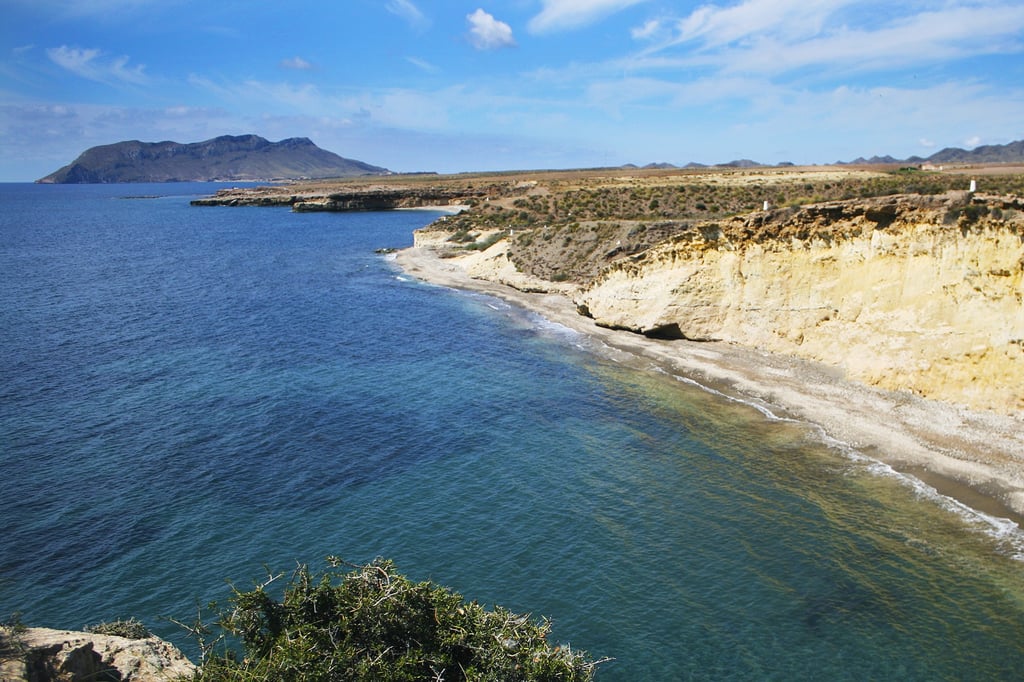

One of the coves near Calabardina, with Cabo Cope in the background. Photo by Pau Lopezca.
Natural and Monumental Highlights Beyond the Towns

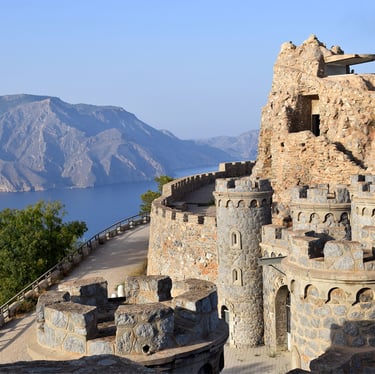
Beyond its villages and beaches, the southern coast of Murcia reveals a powerful landscape where mountains, sea and history merge into a single dramatic setting. This is a territory shaped not only by nature, but also by centuries of defence, isolation and human adaptation to a demanding coastline.
Sierra de La Muela, Cabo Tiñoso and Roldán Natural Area
This vast protected area is one of the most impressive coastal mountain landscapes in southeastern Spain. Steep limestone cliffs plunge directly into the sea, while hidden valleys and ridges create a sense of wilderness rarely found so close to urban centres. What makes this area truly unique is the extraordinary concentration of coastal defensive architecture built between the late 19th and mid-20th centuries.
Among the most spectacular structures is the Batería de Castillitos, often compared to a fairytale castle due to its neo-medieval design. From its gun emplacements, visitors enjoy sweeping views over the Mediterranean and the African horizon on clear days. Nearby, the Batería del Jorel, less monumental but equally atmospheric, blends into the cliffs above La Azohía. Many of these batteries are accessible by car, bike or hiking trails, making the area ideal for combining military history, photography and nature walks.
Rising above the surrounding coastline, Cabezo Roldán is a solitary volcanic peak that dominates the skyline. The ascent offers a rewarding hike through rocky terrain, with panoramic views stretching from Cartagena’s coastline to the open Mediterranean. Archaeological remains and old watchpoints remind visitors that this peak once played a strategic role in coastal surveillance. The sense of isolation and silence at the summit is one of its greatest attractions.
Castillitos military battery, built in the 1930s, but with the appearance of a medieval castle. In the background, the coastline of the natural park. Photo by Pablo Cabezos.
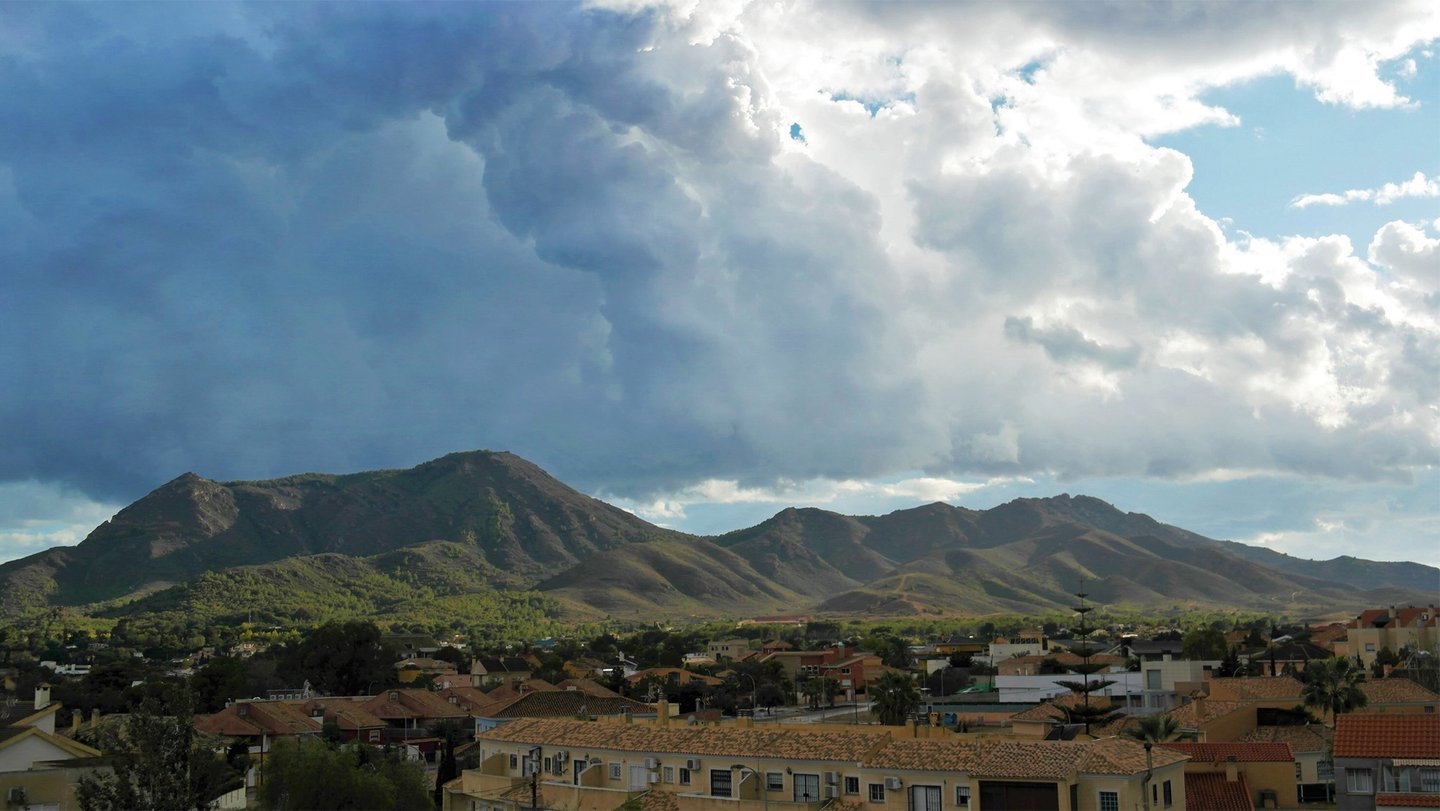
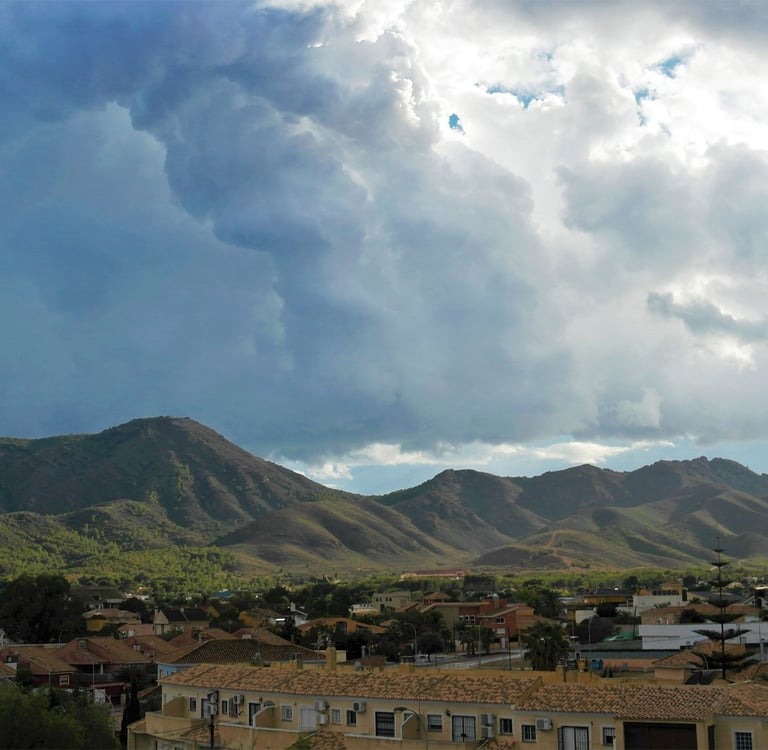
Mount Roldán rises a few kilometers from the center of Cartagena. It's the perfect setting for hiking trails and outdoor activities. Photo by Sopasconhonda.

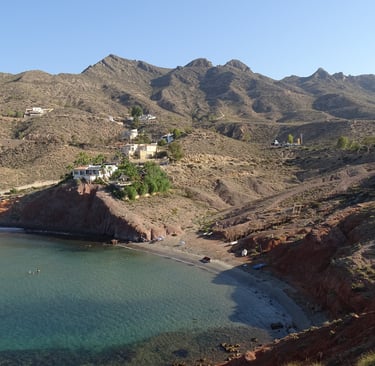
Sierra de Almenara
Separating the coastal strip from inland valleys, the Sierra de Almenara forms a natural barrier of hills and ridges rich in biodiversity. It has long been a frontier zone, and its slopes are dotted with archaeological remains and medieval fortifications. Walking here combines natural scenery with historical exploration.
Sierra de las Moreras
Running parallel to the coast near Mazarrón, the Sierra de las Moreras is a quieter, less-visited mountain range characterised by dry ravines, open ridges and expansive views. Its paths follow ancient routes used by shepherds and farmers, offering a slow and contemplative walking experience. The sierra is ideal for those seeking solitude, birdwatching and wide, open landscapes framed by the sea and agricultural plains.
The Sierra de las Moreras mountain range, with the beach known as Rincón de Bolnuevo. Photo by 19migmas63.
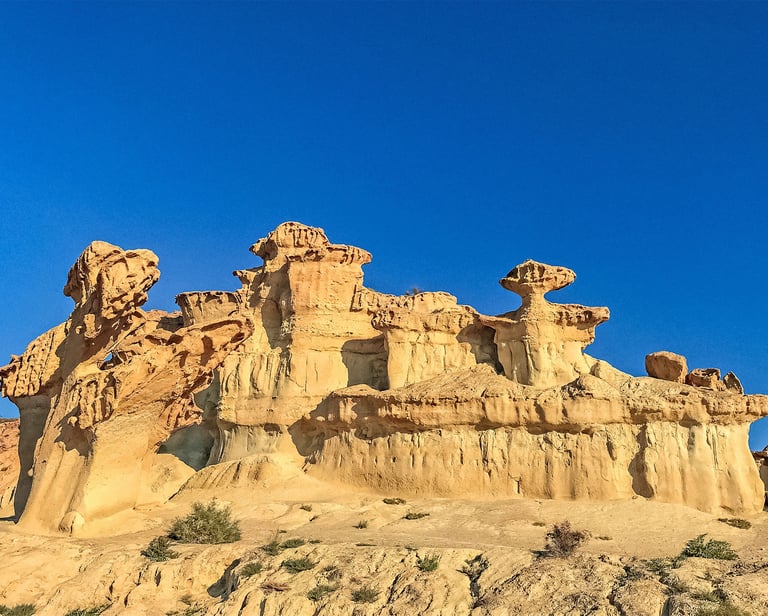
Erosions of Bolnuevo
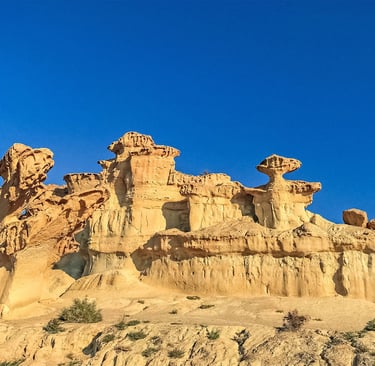
Declared a Natural Monument, the Erosions of Bolnuevo form one of the most striking geological landscapes in Murcia. Wind and water have sculpted soft sandstone into mushroom-like shapes, columns and arches that seem almost unreal. Easy access makes them popular, but visiting early in the morning or at sunset reveals their most magical side, when light and shadows transform the formations into a natural sculpture gallery.
Cabo Cope and Puntas de Calnegre Natural Area
This protected stretch of coast is one of the last truly wild shorelines in the region. Cliffs, coves and semi-desert vegetation dominate the landscape, creating a strong sense of remoteness. Hiking trails connect hidden beaches, while the clear waters invite snorkelling. The area is especially valued for its biodiversity and its role as a refuge from intensive coastal development.
The erosional formations of Bolnuevo, very close to the Port of Mazarrón. Photo by smdelacolina.
Isla del Fraile (Águilas)
Just offshore from Águilas, Isla del Fraile is a small island with a rich historical and ecological legacy. Archaeological remains indicate Roman occupation, while the surrounding waters are home to abundant marine life. Today, the island is one of the most popular diving and snorkelling destinations in the area, thanks to excellent visibility and underwater rock formations.
Cuatro Calas (Águilas)
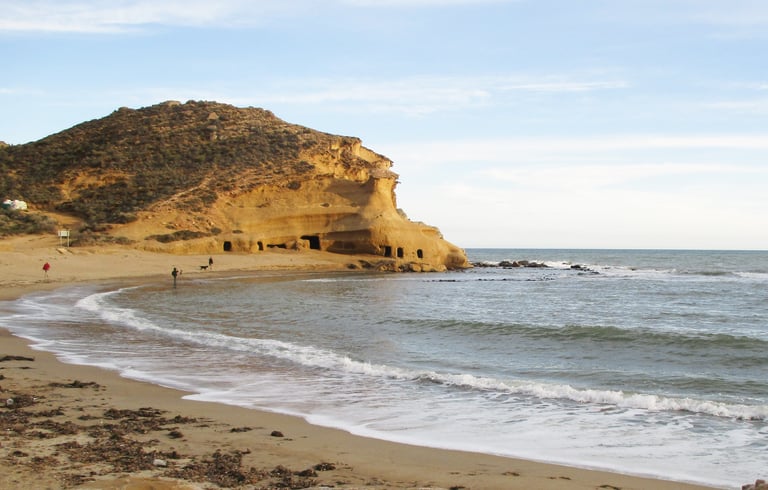
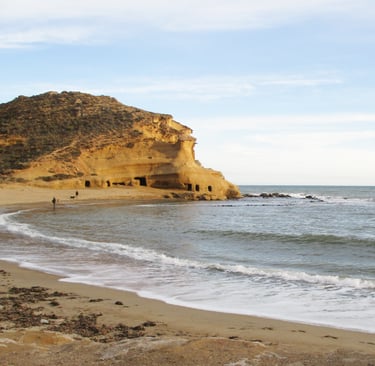
Cuatro Calas refers to a sequence of four secluded coves near the border with Andalusia. Their crystal-clear waters, rocky seabeds and limited access make them ideal for snorkelling and quiet swimming. Surrounded by semi-arid hills, these beaches offer a sense of discovery and are often cited as some of the most beautiful in the Region of Murcia.
Fortaleza de Chuecos and Fortaleza de Tébar
These medieval hilltop fortresses once guarded key routes between the coast and the interior. Though now in ruins, they retain a powerful presence. Reaching them on foot allows visitors to understand the strategic importance of this landscape, with commanding views over plains, mountains and sea.
Playa de los Cocederos or Playa Cerrada, within the protected area known as Cuatro Calas. Photo by Mabelcalabuig.
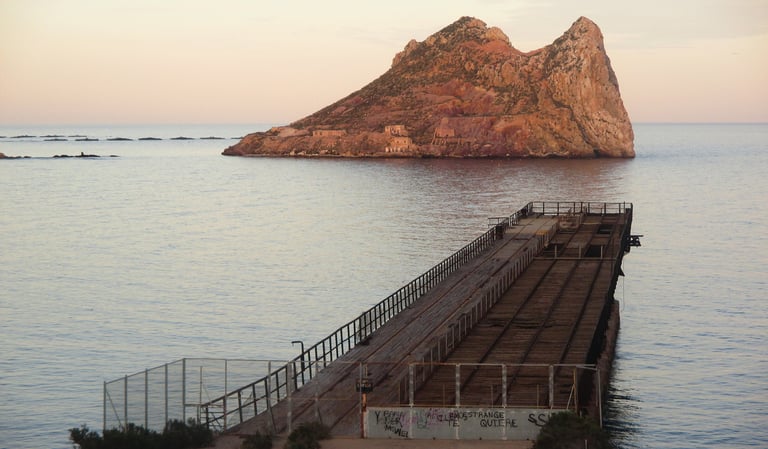
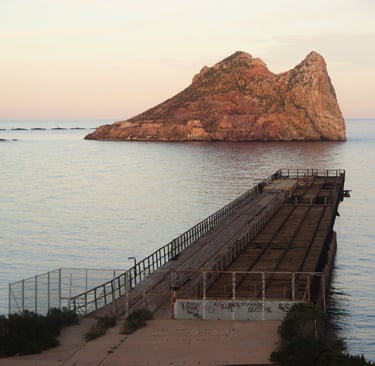
Isla del Fraile, very close to Águilas. In the foreground, the Hornillo pier, built at the beginning of the 20th century to facilitate the export of minerals. Photo by Mabelcalabuig.
Snorkelling, Diving and Water Sports
The southern coast of Murcia is a privileged destination for water-based activities, thanks to its clean waters, rocky seabeds and relatively low levels of urban pressure.
For snorkelling, areas such as La Azohía, Isla Plana, Calabardina and Cuatro Calas offer shallow, clear waters with abundant marine life. Rocky bottoms create natural reefs where fish, octopus and sea urchins are easily spotted, making these spots ideal for beginners and families.
Scuba diving reaches its peak around Cabo Tiñoso and Isla del Fraile, where underwater cliffs, caves and shipwrecks attract experienced divers from across Europe. Several dive centres operate in Águilas and the Cartagena coast, offering guided dives and certification courses.
The coast is also well suited to kayaking and paddleboarding, particularly along the cliffs of Cabo Tiñoso and Puntas de Calnegre, where paddlers can explore caves and inaccessible coves from the sea. On calmer days, sailing and wind-based sports are popular near Águilas and Mazarrón.
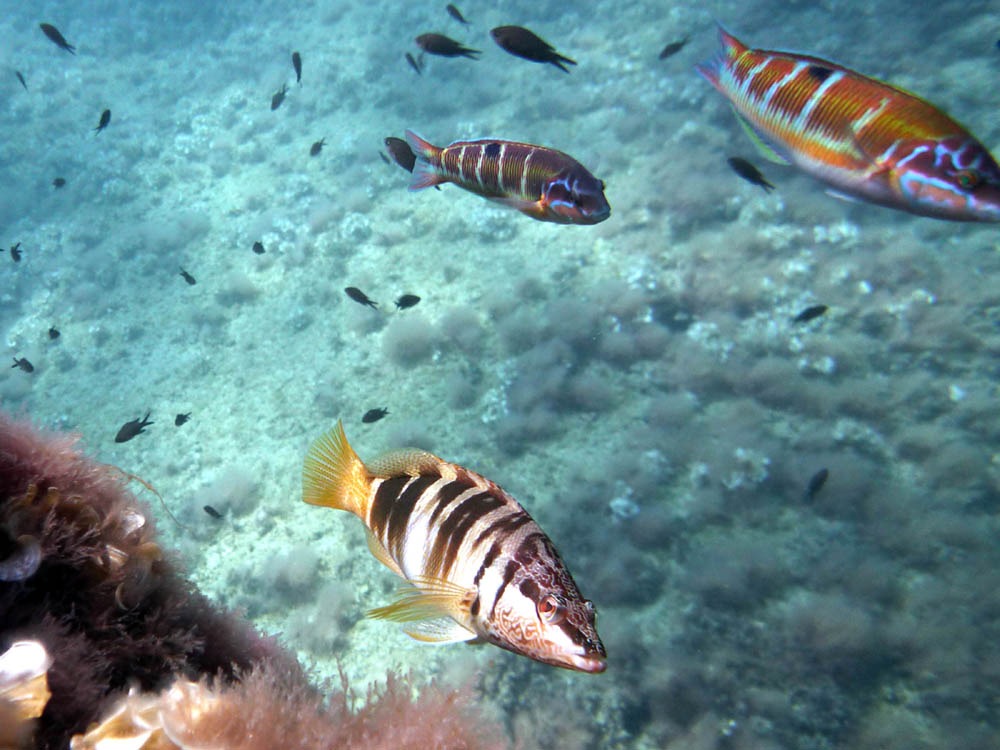
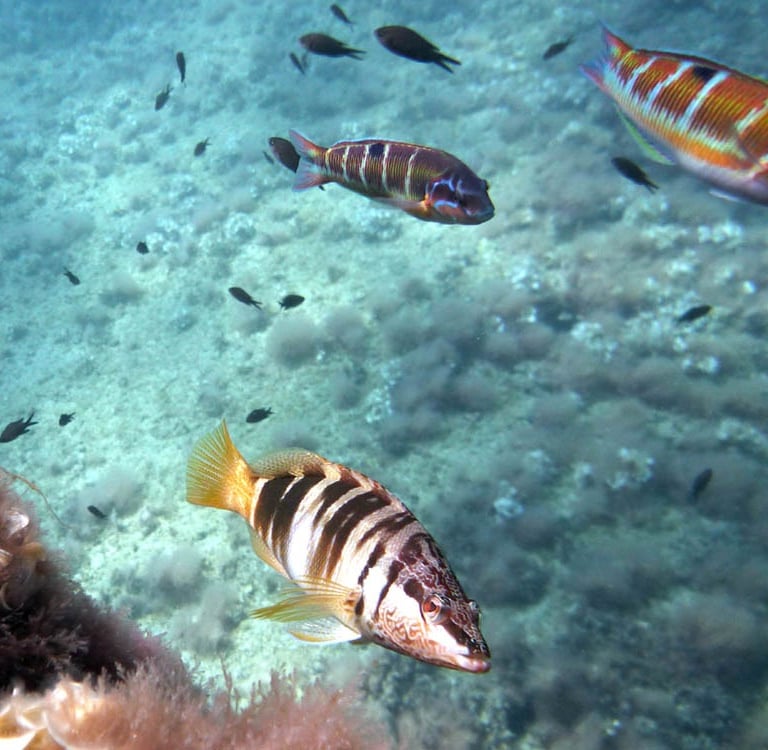
Fish species (Serranus scriba, Thalassoma pavo and Chromis chromis) photographed in waters near El Portús (Cartagena). Photo by Nanosanchez.

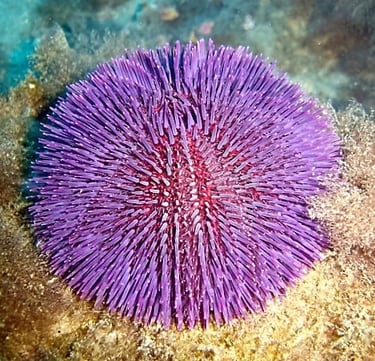
Sea urchin (Sphaerechinus granularis) photographed in waters near Calabardina (Águilas). Photo by Fernando Herranz Martín.
Why Visit the Southern Coast of Murcia?
The Southern Coast of Murcia offers one of the most diverse and spectacular coastal landscapes in the Mediterranean. Here, rugged mountain ranges plunge into the sea, creating dramatic cliffs, hidden coves and unspoilt beaches far from mass tourism. Historic fortresses, coastal batteries and fishing villages reveal a coastline shaped by centuries of defence, trade and maritime life.
The area is ideal for hiking, snorkelling, diving and kayaking, with crystal-clear waters and well-preserved marine environments, particularly around Cabo Tiñoso and Águilas. Inland, semi-desert mountains and archaeological remains add depth to the experience. Thanks to its mild climate and abundant sunshine, this coast can be enjoyed year round. Whether you seek wild nature, underwater adventure, scenic trails or authentic Mediterranean character, the Southern Coast of Murcia rewards travellers looking for beauty, tranquillity and genuine connection with the landscape.