Baroque Palaces of Murcia
The development of palace architecture was one of the most visible manifestations of the splendor experienced by Murcia during the 17th century and, above all, the 18th century. The economic growth, driven by agriculture, trade, and the consolidation of the city as the capital of the ancient Kingdom of Murcia, allowed the nobility and the most influential families to build new residences or transform existing ones following the baroque style.
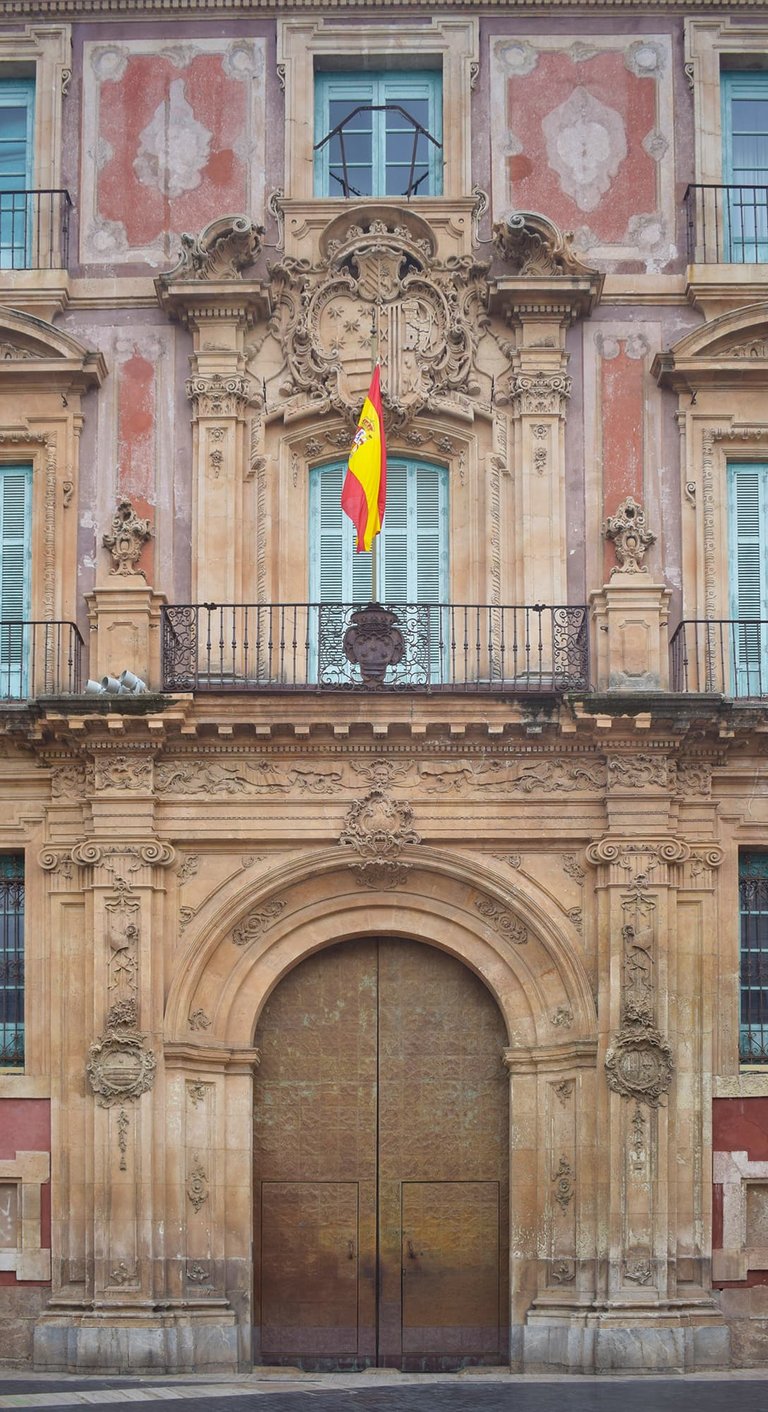
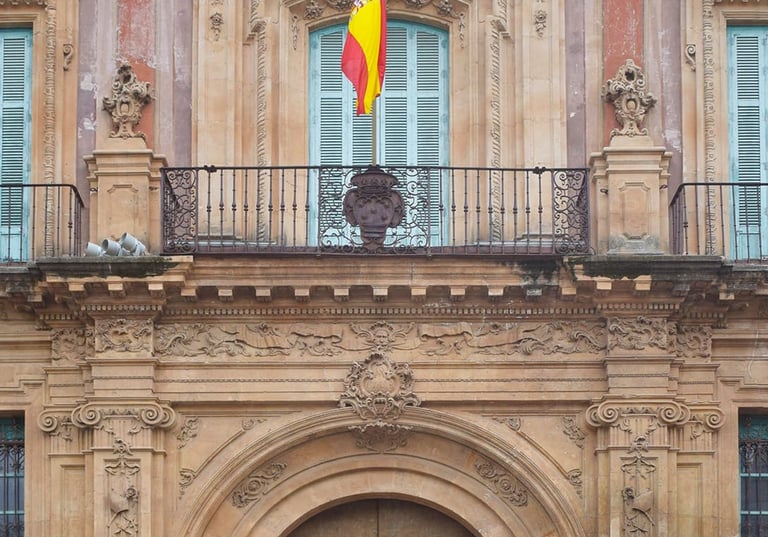
These buildings not only constituted the home of their owners, but also an expression of prestige and power. Their monumental facades, presided over by stone doorways, wrought-iron balconies, and heraldic shields, contributed to defining the image of the city along with churches, convents, and public buildings erected during the same period.
Most of the preserved baroque palaces in Murcia were built during the 18th century, coinciding with a stage of economic prosperity and urban renewal that profoundly transformed the city. Promoted both by the bishopric and by the leading families of the nobility and the upper bourgeoisie, these buildings reflect the evolution of civil architecture in Murcia, from the most sober compositions of baroque tradition to the elegant Rococo forms that characterized the central decades of the 1700s. The artistic language evolved towards increasingly elegant and refined forms, incorporating Italian and French influences that can be especially appreciated in some of the main Murcian palaces.
Although each one has its own history and characteristics, they all share common elements such as monumental stone doorways, heraldic shields, interior courtyards, and facades designed to express the prestige of their owners. The palaces that have survived to this day constitute some of the best testimonies of Baroque Murcia and allow us to understand the important urban and artistic development that the city experienced during that time.
If you want to know the most beautiful testimonies of this golden period in the history of Murcia, the best option is our "The Best of Murcia" walking tour, a two-hour itinerary through the most emblematic and interesting places in the city. Ideal for small groups and conducted by an official guide, graduated in history and an expert in historical heritage.
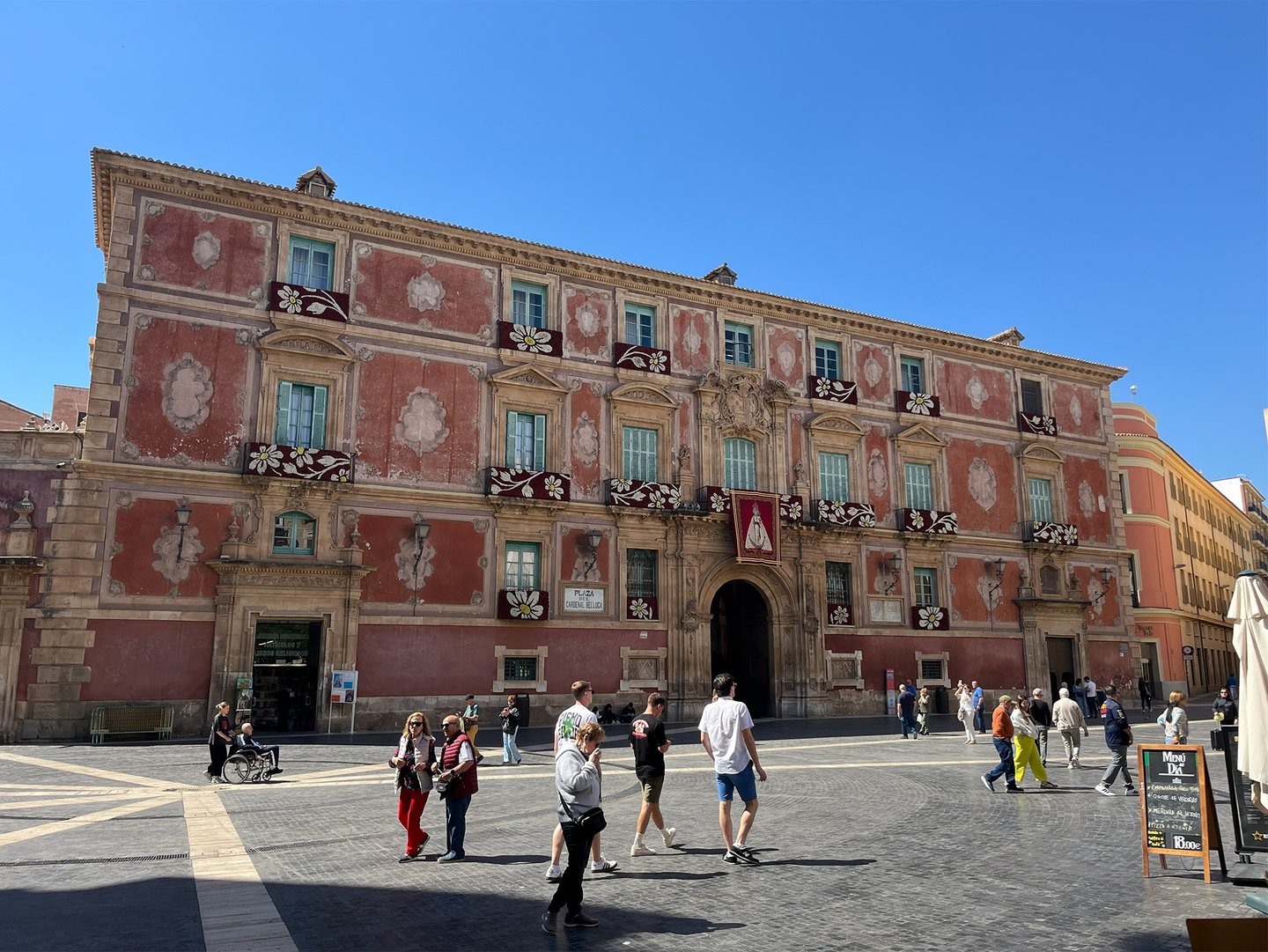
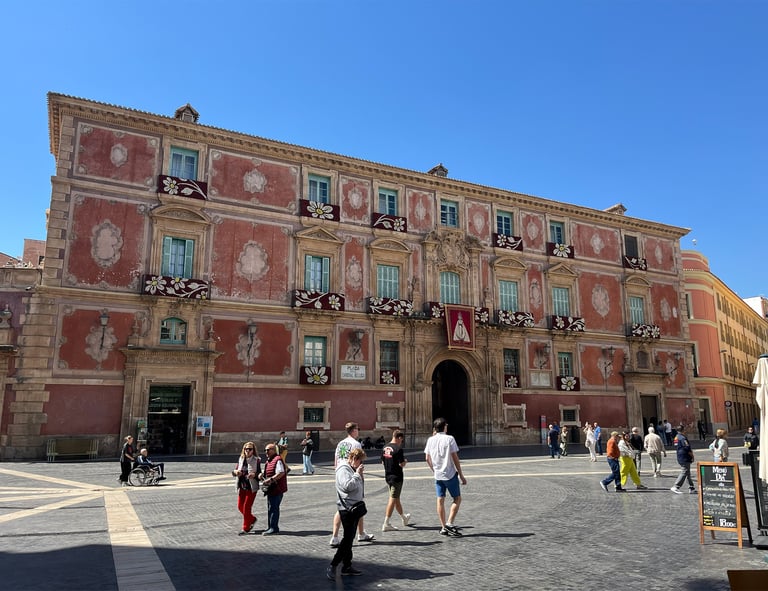
Episcopal Palace
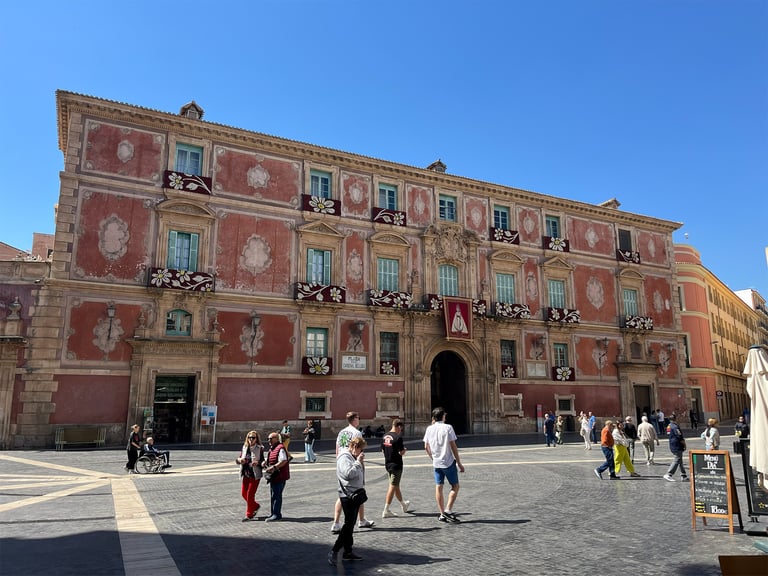
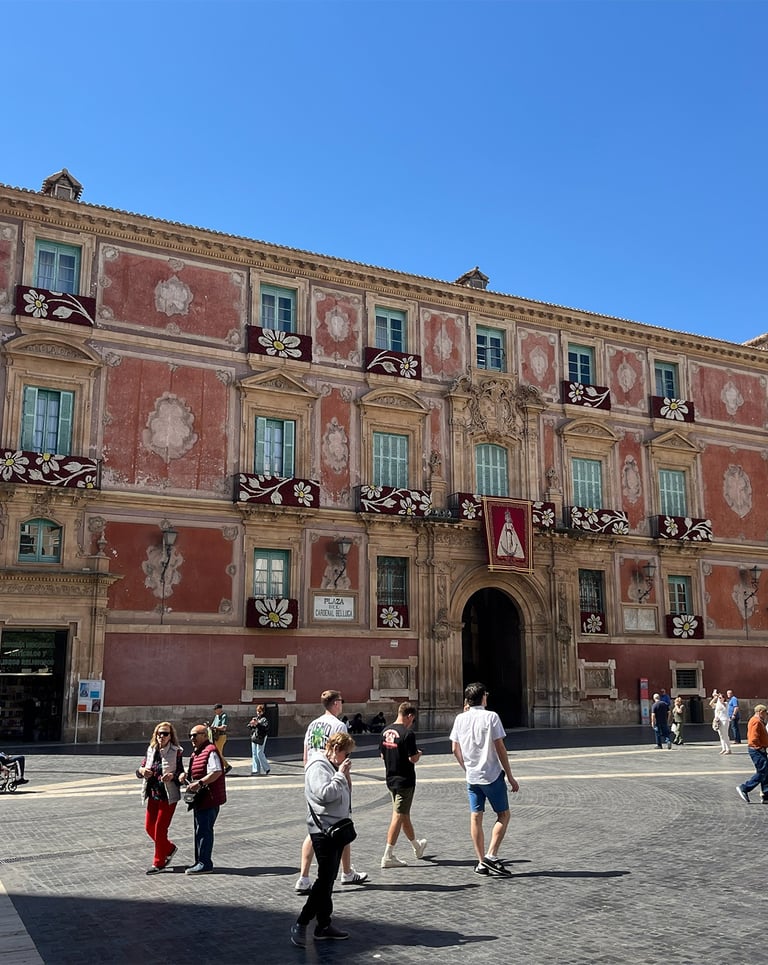
The Episcopal Palace is the maximum exponent of palace architecture in the Murcian Baroque and an essential piece of the monumental set in Cardinal Belluga Square. Its construction began in 1748 at the initiative of Bishop Juan Mateo, following a project by the Italian architect Baltasar Canestro, who introduced an elegant Rococo language of Italian-French influence in Murcia. Its characteristic facade, the interior courtyard, and the body of the building that extends towards the Segura River as a viewpoint, known as "the Hammer," stand out. These elements make the building one of the masterpieces of civil architecture of the 18th century in the city. See more about the Episcopal Palace of Murcia.
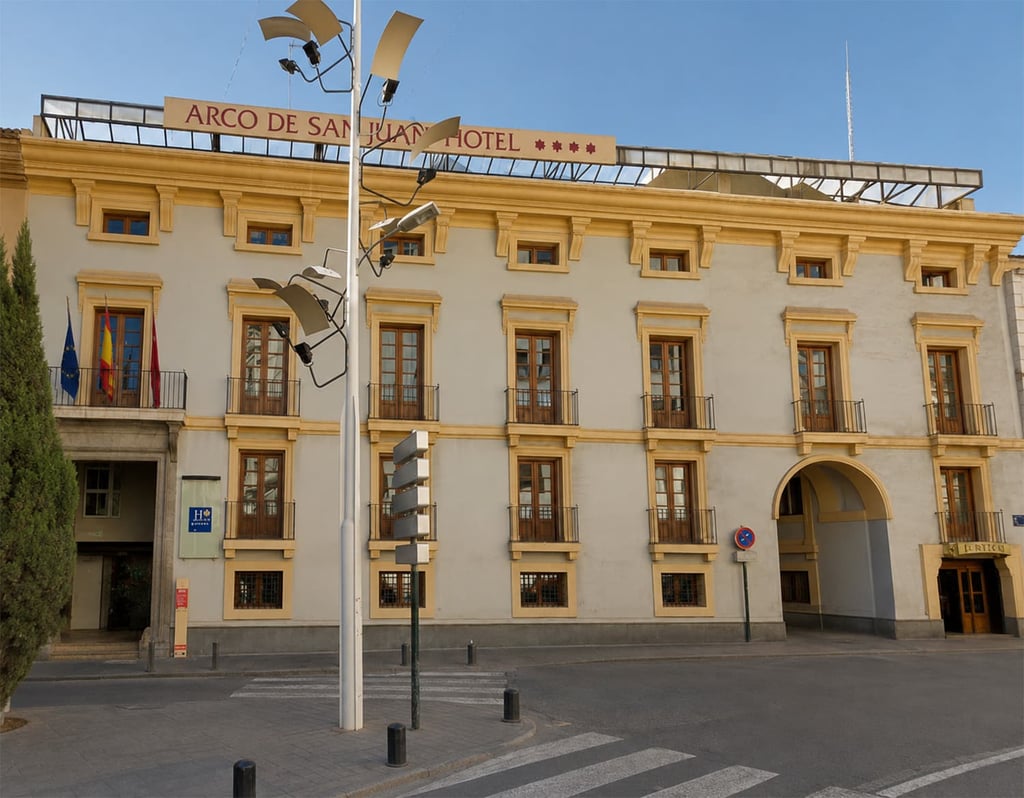
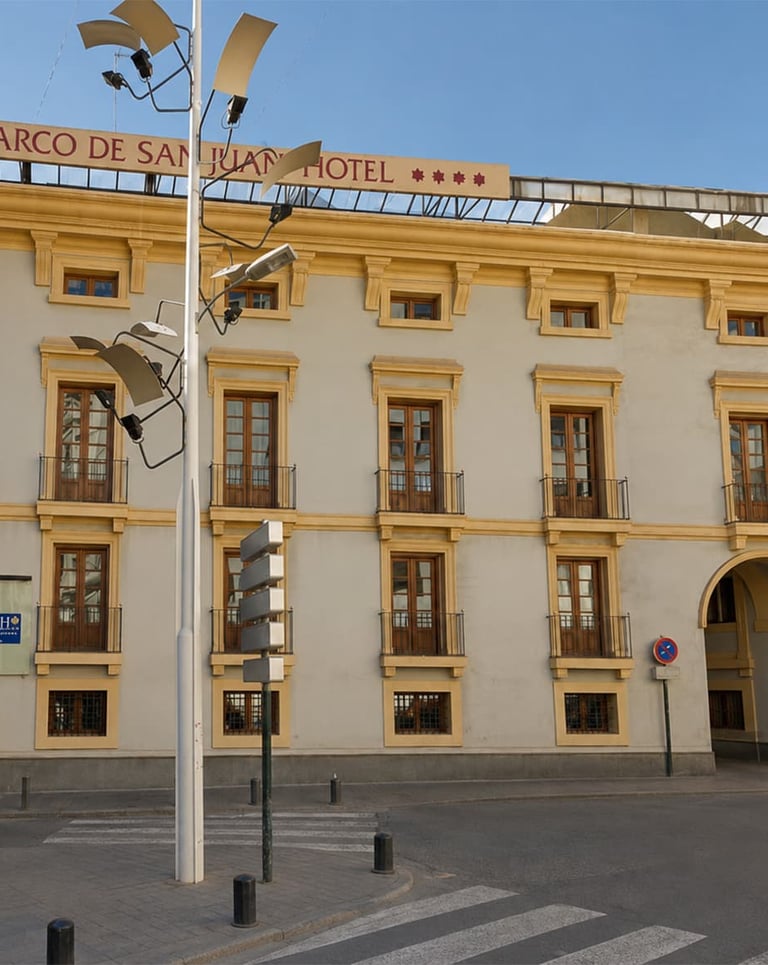
Palacio Fontes
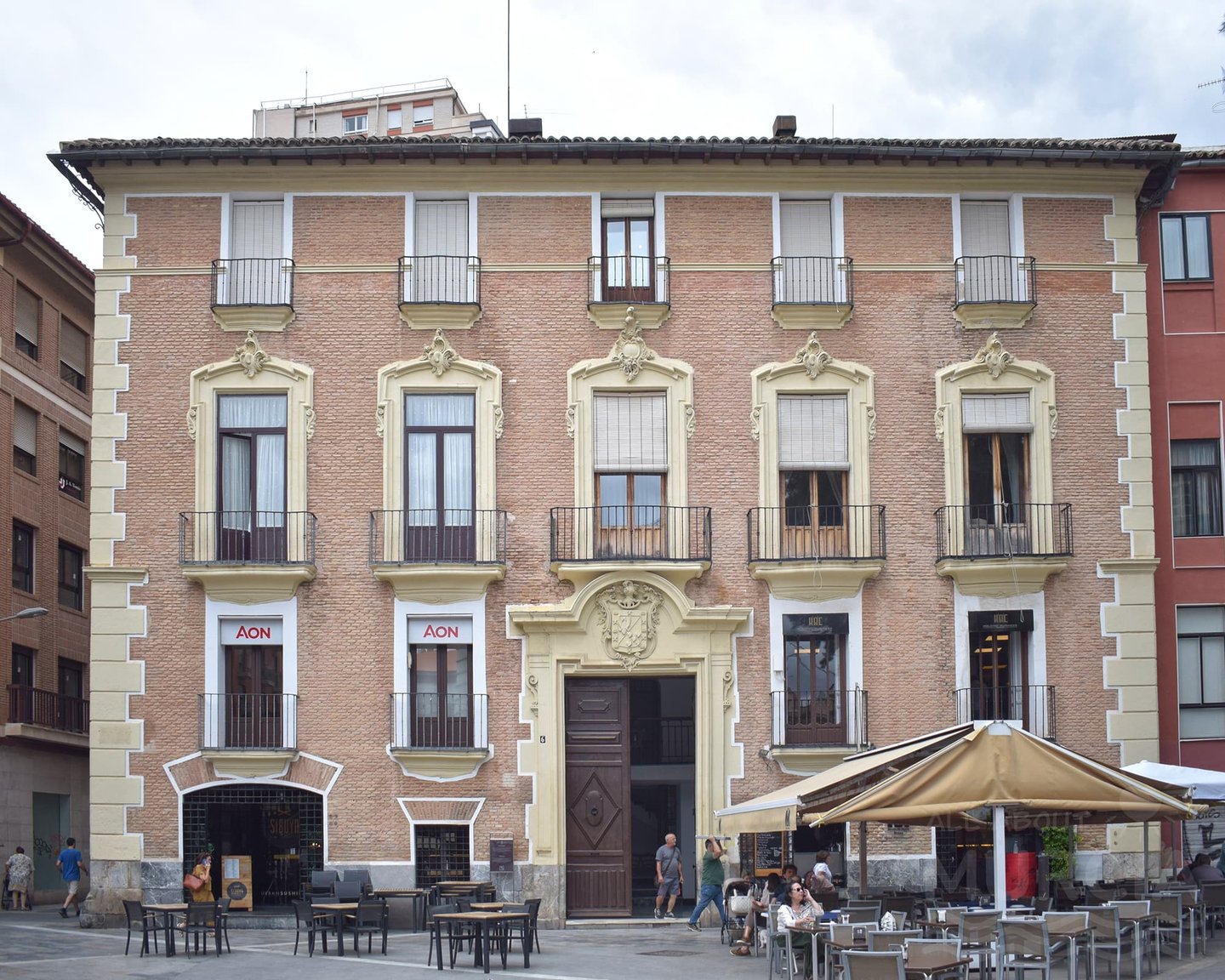
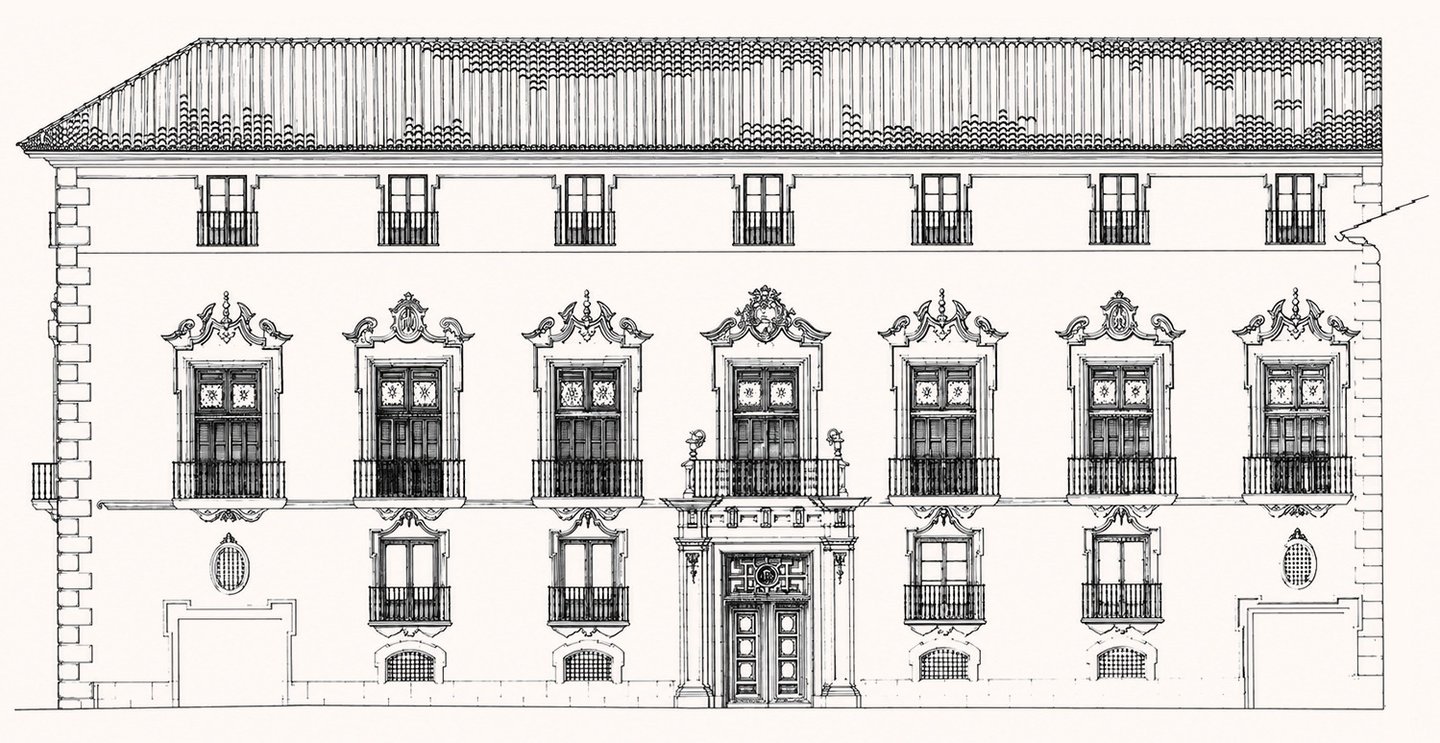
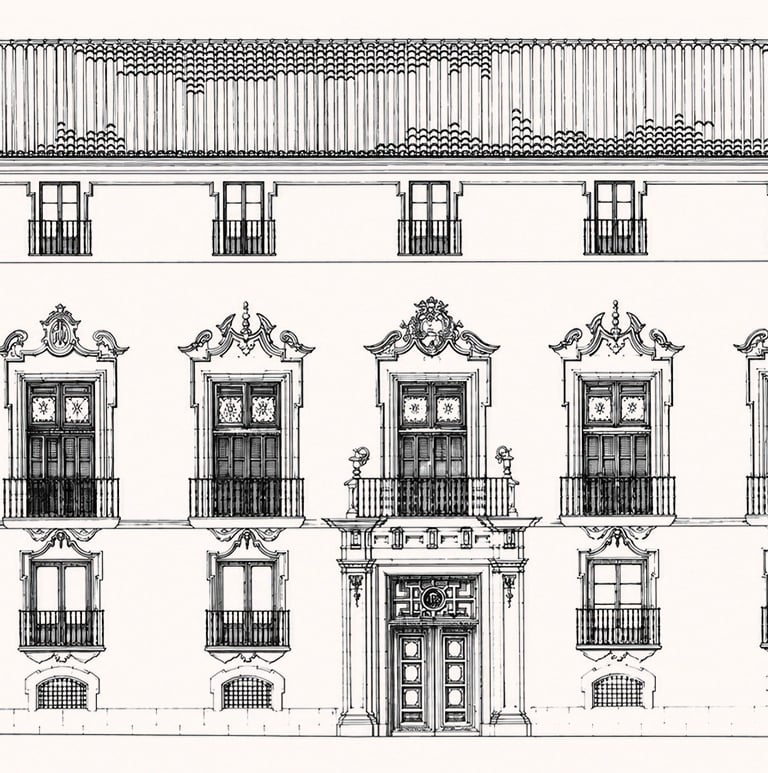
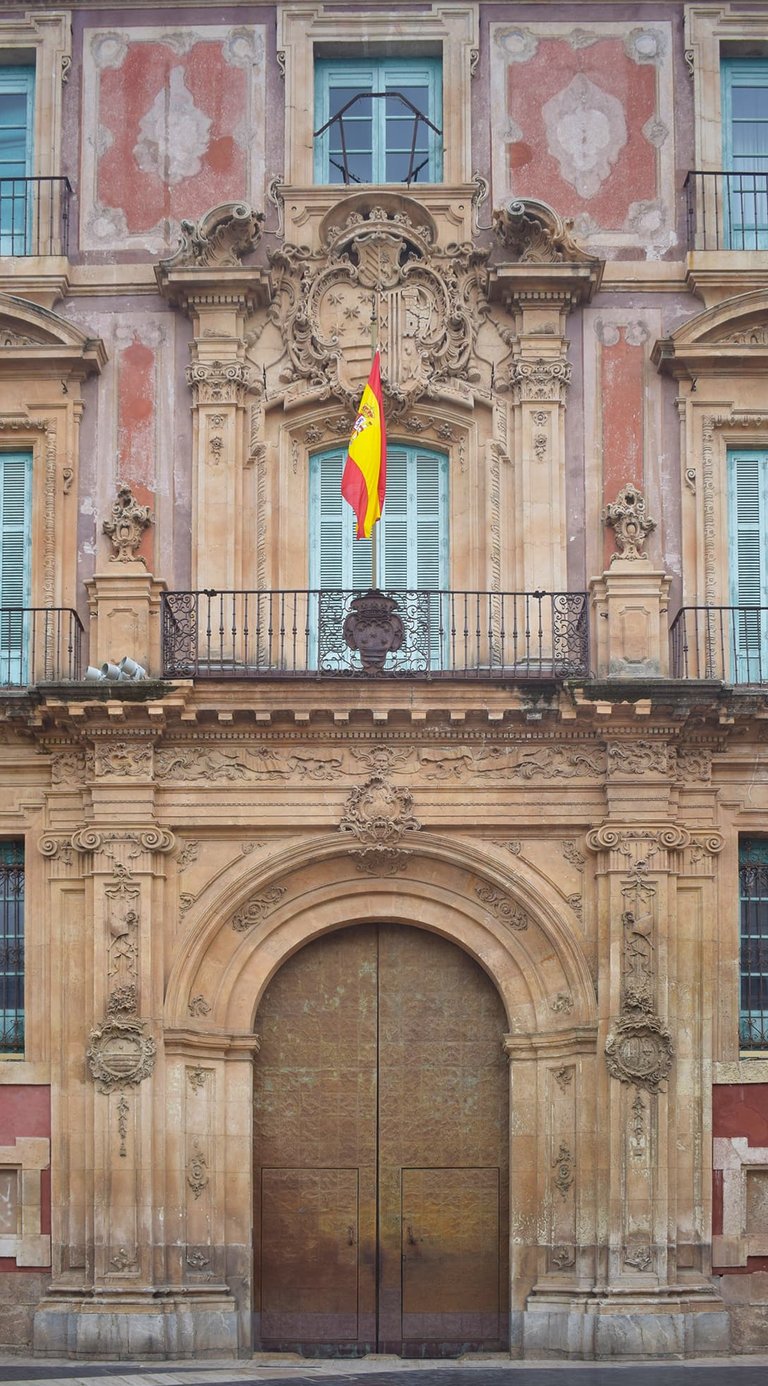
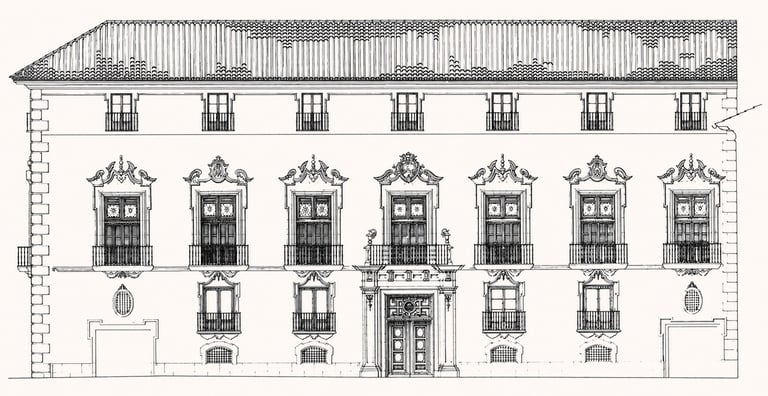
Built during the 18th century at the initiative of Baltasar de Fontes and Melgarejo, the Fontes Palace is one of the best examples of baroque palace architecture in Murcia. Its Rococo facade, presided over by a monumental stone entrance, wrought-iron balconies, and the shields of the main lineages of the Fontes family, reflects the evolution of civil architecture in Murcia during the second half of the 1700s. The building, organized on four floors, responds to the typical typology of urban palaces of the time, where the richest decoration is concentrated on the noble floor.
The property stands on much of the site that occupied the old manor house of the Fontes, built in the 16th century by Onofre Fontes de Avilés. From that Renaissance residence, the building now known as the Palace of Pacheco is preserved, named so after the family obtained the Marquisate of Torre Pacheco at the end of the 17th century. Both buildings today form an architectural ensemble of great interest, where the evolution of Murcian noble architecture from the Renaissance to the Baroque can be appreciated.
Palacio Vinader
Built in the second half of the 18th century by Salvador Vinader, captain of the Royal Armies and regidor of the Council of Murcia, the Vinader Palace reflects the moment of greatest splendor of civil baroque architecture in the city, when the impulse generated by the large works of the Cathedral favored the diffusion of Rococo taste among the noble residences. The building was erected on part of the old Islamic wall, at the site where the Portillo de Santo Domingo was located, and later passed to the García Perea family, who continue to be its owners.
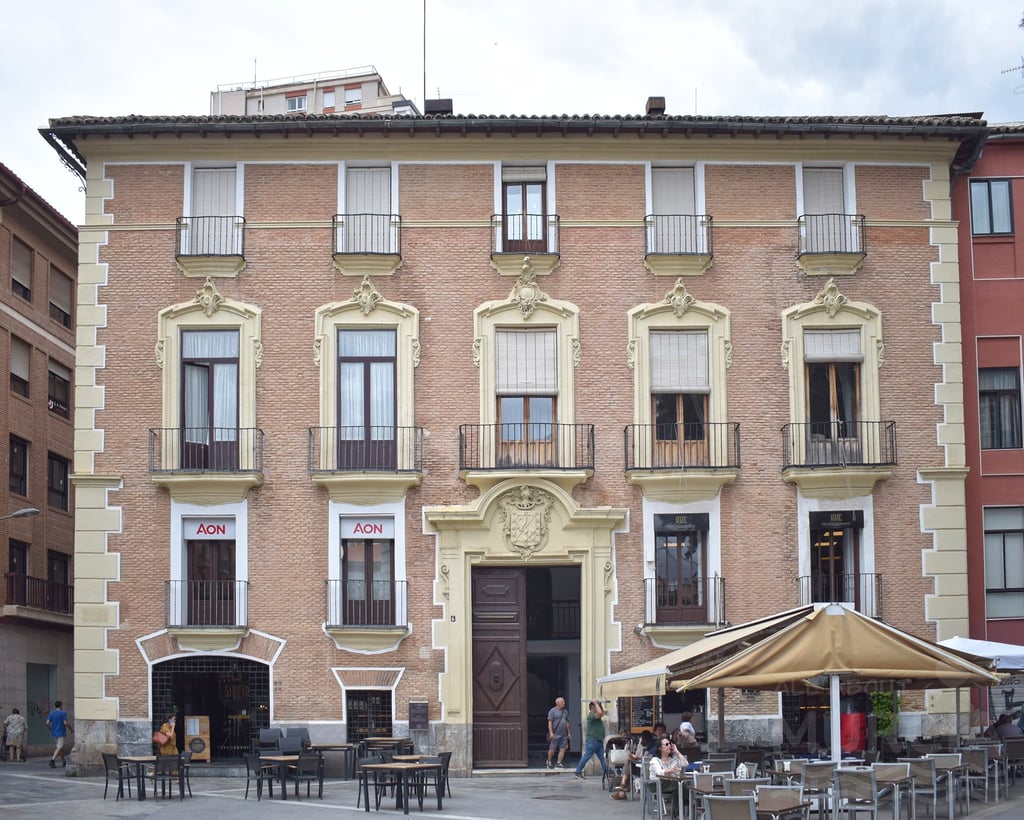
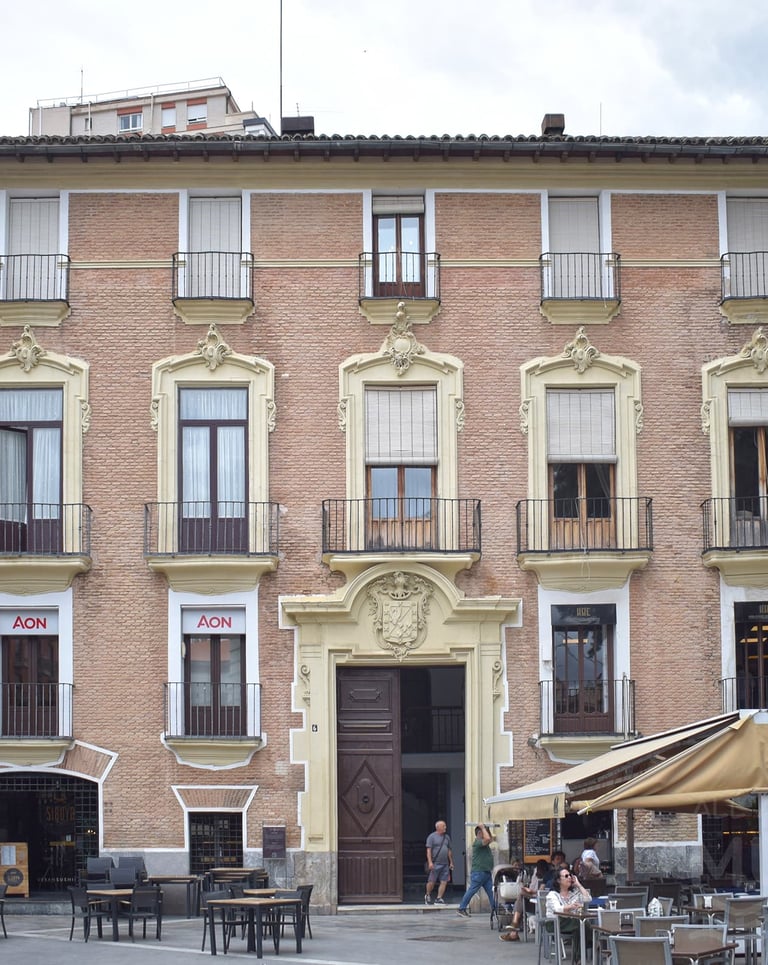
Its facade responds to the characteristic model of Murcian palace architecture, with brick factory, stone entrance and corners, four heights, and a decoration concentrated on the noble floor. The coat of arms of the Vinader, located above the entrance, completes a composition of great balance that constitutes one of the best-preserved examples of the domestic architecture of Murcian Baroque.
Palacio de González Campuzano
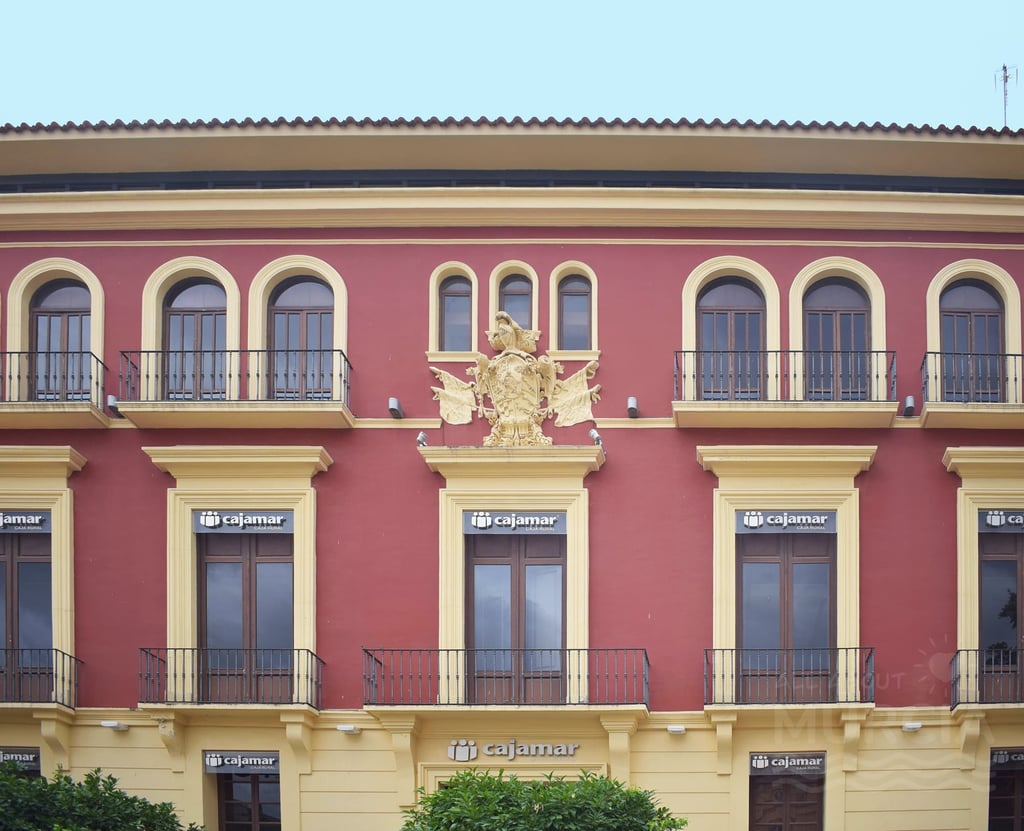
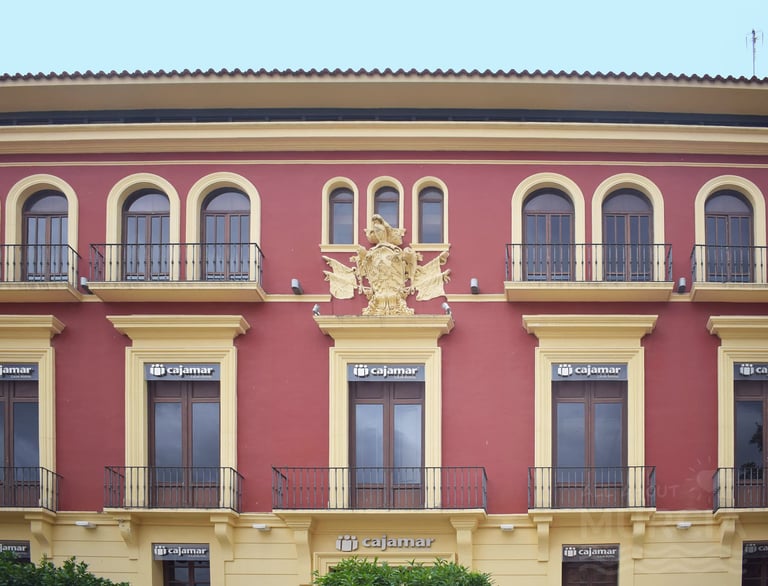
The Palacio de González Campuzano was built at the end of the 18th century as an urban residence for this family belonging to Murcian nobility, at a time when many main houses were built in the historic center as an expression of the economic and social prestige achieved by their owners. The building constitutes an interesting example of the transition between Baroque and Neoclassicism, noticeable in the sobriety of its decoration and in the balance of its architectural composition.
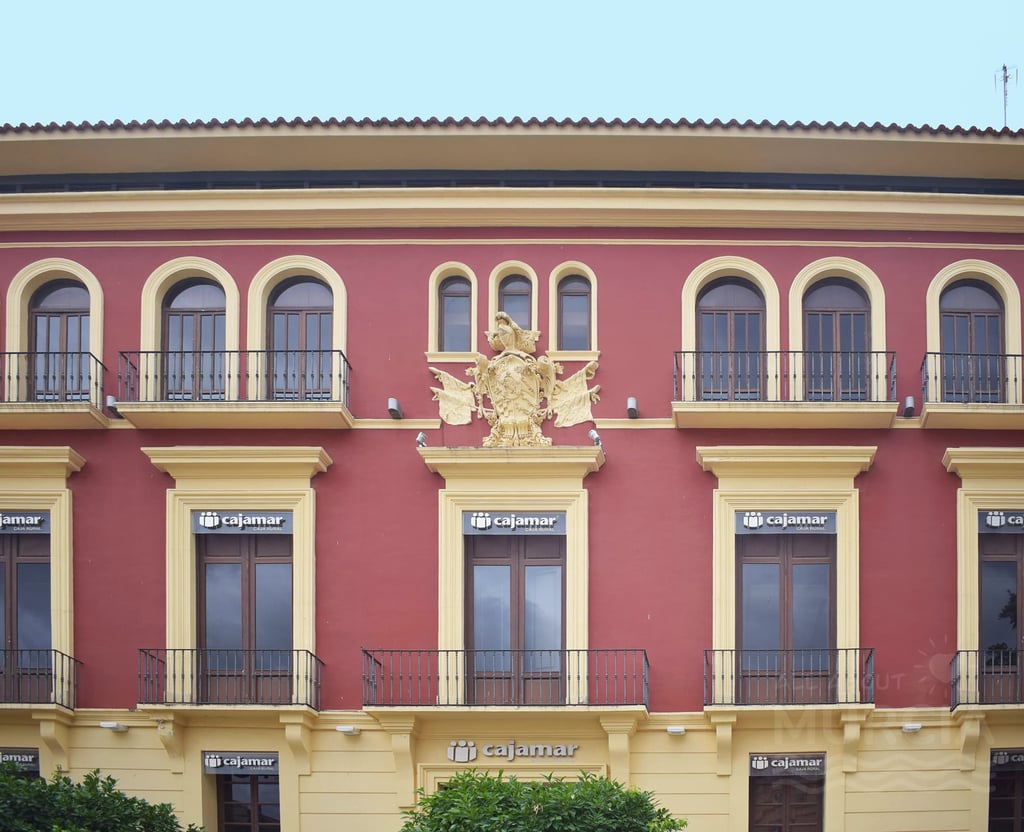
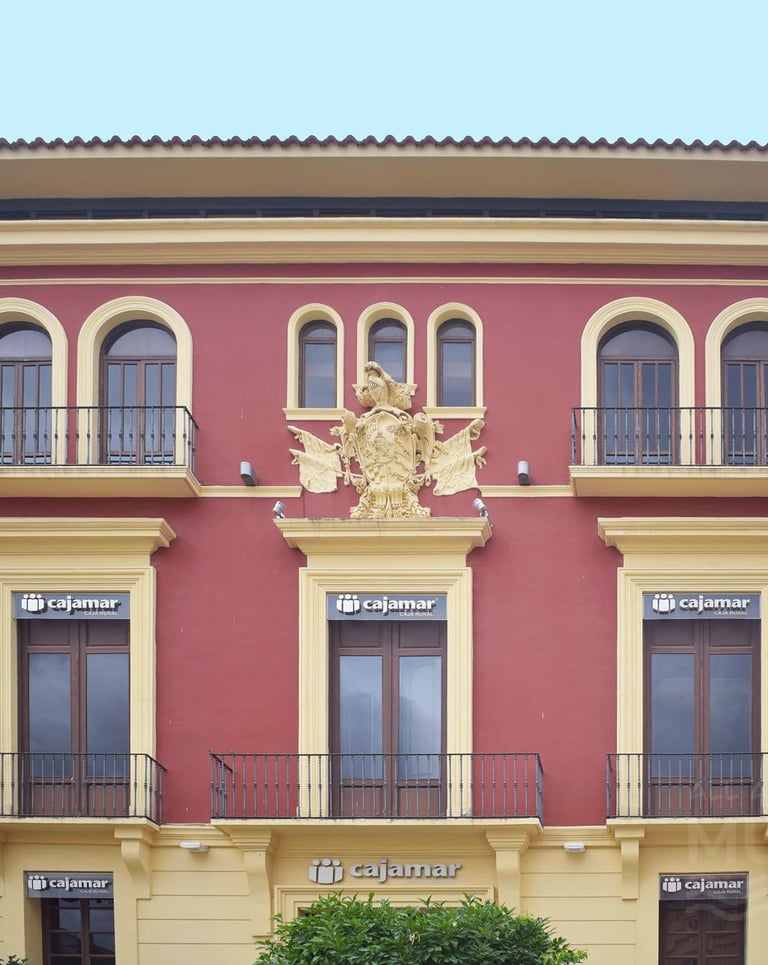
Originally, it was organized around an interior courtyard and presented the typical typology of urban Murcian palaces. Although the property has undergone significant transformations, it still retains its main facade, one of the most representative elements of the civil architecture of the late 1700s, located opposite the current Plaza de Julián Romea. It highlights the family coat of arms, which appears richly decorated above the central balcony.
Palacio de las Balsas
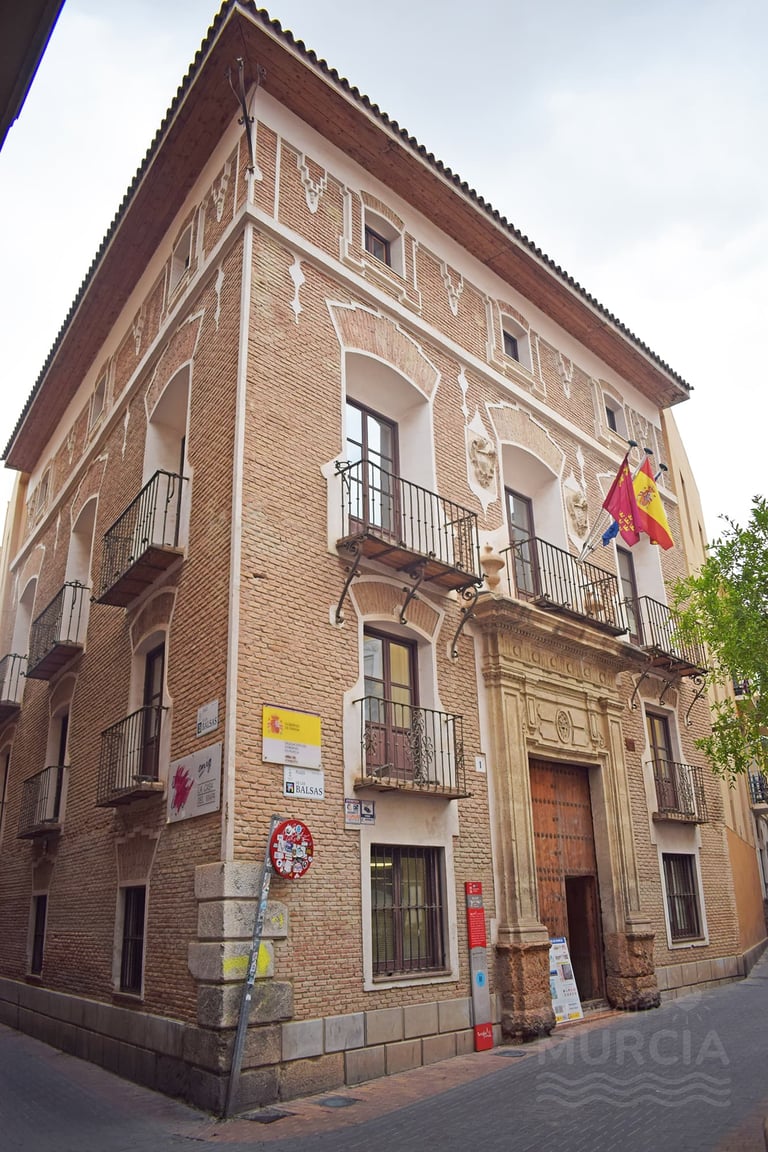
The so-called Palacio de las Balsas rises in the historic square of the same name, documented already at the end of the 17th century. Although it is not known for certain who promoted its construction, the heraldic shield on its facade can be associated with the Pérez Calvillo family, one of the lineages of Murcian nobility settled in this part of the city.
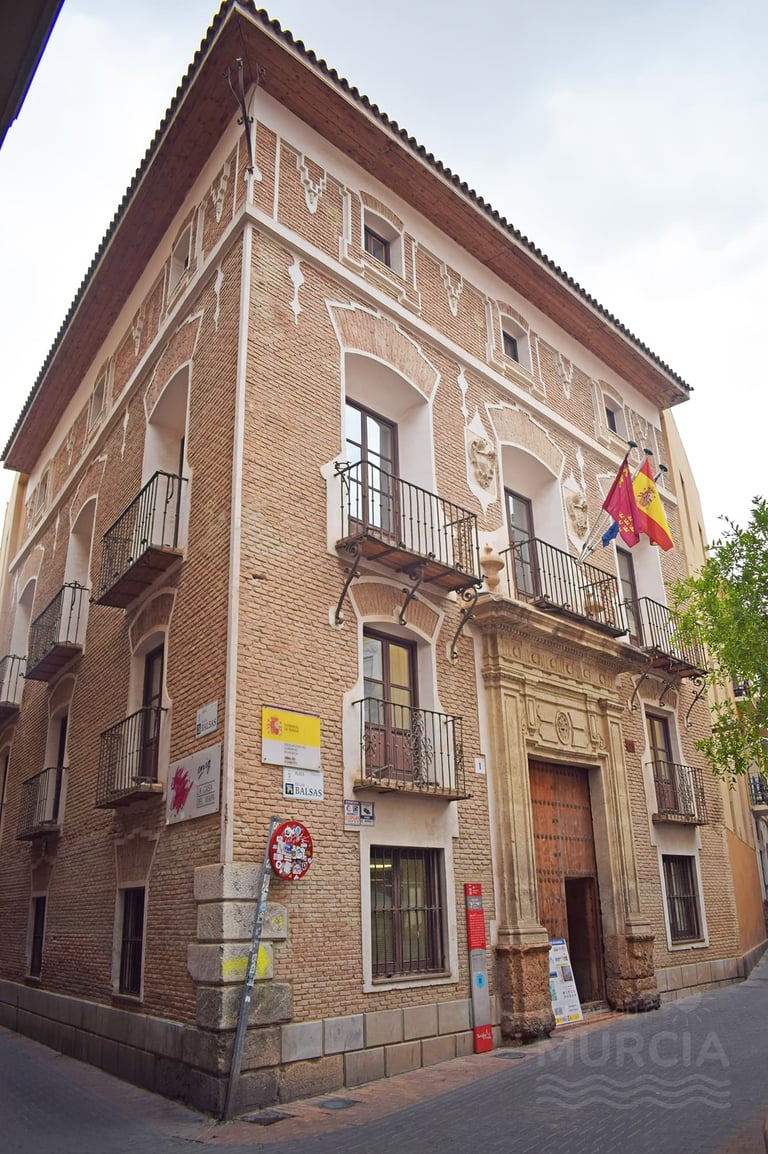
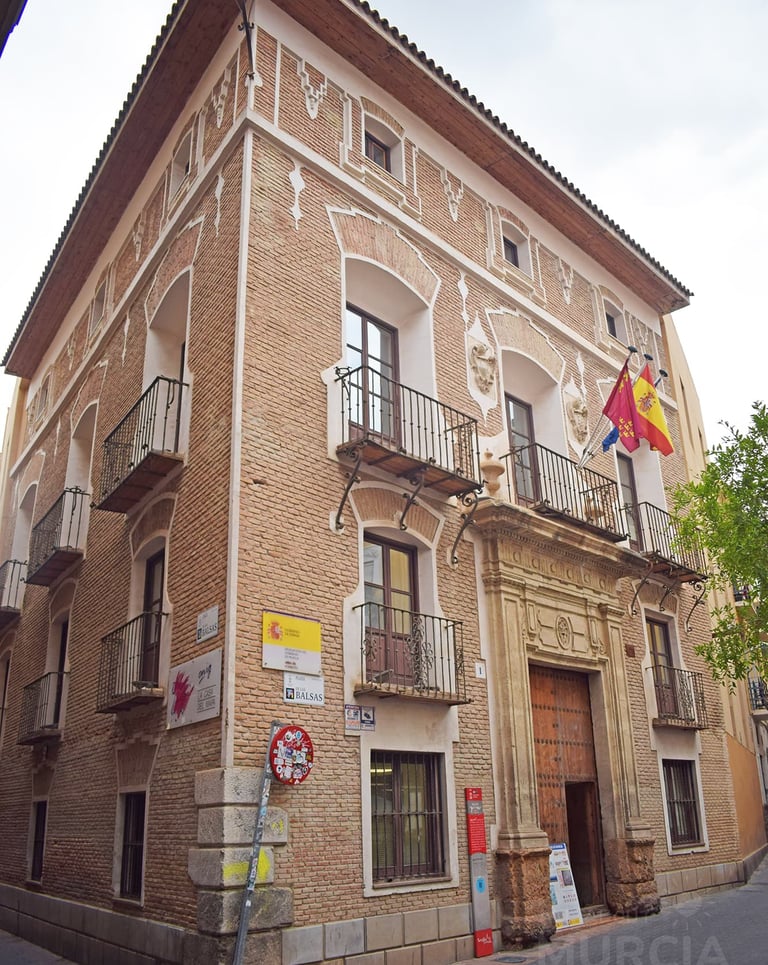
The building constitutes one of the most representative examples of palace architecture developed in Murcia during the 17th and 18th centuries. Its facade combines brick and stone to accentuate the chromatic contrast, while the monumental entrance, conceived as a grand arch of triumph, confers the monumentality characteristic of civil Baroque Murcia to the ensemble. The preservation of this property allows us to understand what many of the noble residences that once lined the streets of the historic center must have looked like.
Almodóvar Palace
The Almodóvar Palace, of which only the main façade remains, was built at the beginning of the 17th century on the site of old houses attached to the medieval wall, next to the now-vanished Market Gate, and became linked to the Almodóvar and Melgarejo families.
The building displays an interesting Mannerist style that anticipates some Baroque forms. Its most distinctive feature is the façade, flanked by figures of giants or wild men, a heraldic motif alluding to the strength and ancestral origins of the lineage. Similar motifs can be found in other buildings in Murcia, such as on the exterior of the Los Vélez Chapel or on the façade of the now-vanished Riquelme Palace, which is currently in the Salzillo Museum. In the 18th century, the Counts of Almodóvar commissioned the construction of the famous Santo Domingo Arch, a work by Toribio Martínez de la Vega, to connect the palace with the Chapel of the Rosary, of which they were patrons and benefactors.
It has served numerous purposes throughout history, undergoing a major renovation in the early 20th century to adapt it for administrative use. Currently (2026), it is undergoing a new comprehensive rehabilitation and restoration project.
Palacio del Conde de Floridablanca
The Murcian residence of the family of the Count of Floridablanca is one of the most prominent examples of domestic architecture from the late 18th century. Linked to the lineage of José Moñino y Redondo, Count of Floridablanca, one of the most relevant political figures during the reign of Charles III, the house reflects the transition from late Baroque to a language increasingly closer to Neoclassicism.
Its architecture renounces the decorative excesses typical of the most exuberant baroque to adopt a more orderly and serene composition, in line with the new aesthetic currents of the Enlightenment. The facade retains the monumentality typical of an aristocratic residence while based on the balance of proportions and a more contained ornamentation. The bibliography on 18th century Murcia cites this residence among the main noble houses built during that period of urban prosperity.
Tour "The Best of Murcia"
The tour with everything you cannot miss in Murcia. An itinerary of two hours ideal for small groups. With an official tourism guide.
More information: "Rehabilitación del Palacio Fontes". CHS, 1991.


Baroque Palaces of Murcia
The development of palace architecture was one of the most visible manifestations of the splendor that Murcia experienced during the XVII and, above all, XVIII centuries. The economic growth, driven by agriculture, commerce, and the consolidation of the city as the capital of the ancient Kingdom of Murcia, allowed the nobility and the most influential families to build new residences or transform existing ones following the Baroque taste.
These buildings not only constituted the home of their owners but also an expression of prestige and power. Their monumental façades, presided over by stone doorways, wrought-iron balconies, and heraldic shields, contributed to defining the image of the city alongside churches, convents, and public buildings erected during the same period.
Most of the preserved Baroque palaces in Murcia were built during the eighteenth century, coinciding with a period of economic prosperity and urban renewal that profoundly transformed the city. Promoted by both the bishopric and the main families of the nobility and high bourgeoisie, these buildings reflect the evolution of civil architecture in Murcia, from the more sober Baroque traditions to the elegant Rococo forms that characterized the central decades of the Eighteenth century. The artistic language evolved towards increasingly elegant and refined forms, incorporating Italian and French influences that can be especially appreciated in some of the main Murcian palaces.
Although each one has its own history and characteristics, they all share common elements such as the monumental stone doorways, heraldic shields, interior patios, and façades designed to express their owners' prestige. The palaces that have survived to this day constitute some of the best testimonies of Baroque Murcia and allow us to understand the significant urban and artistic development that the city experienced during that time.
If you want to discover the most beautiful testimonies of this golden period in the history of Murcia, the best option is our walking tour "The Best of Murcia", an itinerary of about two hours through the most emblematic and interesting places in the city. Ideal for small groups and led by an official guide, graduated in history and an expert in historical heritage.
Episcopal Palace
The Episcopal Palace is the highest exponent of palace architecture in Murcian Baroque and an essential piece of the monumental ensemble of Cardinal Belluga square. Its construction began in 1748 at the initiative of Bishop Juan Mateo, following a project by the Italian architect Baltasar Canestro, who introduced in Murcia an elegant Rococo language of Italian-French influence. Its characteristic façade, the interior patio, and the body of the building extending towards the Segura River as a viewpoint, known as "the Hammer", stand out. These elements make the building one of the masterpieces of XVIII century civil architecture in the city. See more about the Episcopal Palace of Murcia.
Fontes Palace
Built during the XVIII century at the initiative of Baltasar de Fontes and Melgarejo, Fontes Palace represents one of the best examples of Baroque palace architecture in Murcia. Its Rococo façade, presided over by a monumental stone doorway, wrought-iron balconies, and the coats of arms of the main lineages of the Fontes family, reflects the evolution of civil architecture in Murcia during the second half of the Eighteenth century. The building, organized in four floors, responds to the typical style of urban palaces of the time, where the greatest decorative wealth is concentrated in the noble floor.
The building stands over much of the land that occupied the former noble house of the Fontes family, built in the XVI century by Onofre Fontes de Avilés. From that Renaissance residence, the building known today as the Palace of the Pachecos is preserved, named so after the family obtained the Marquis title of Torre Pacheco at the end of the XVII century. Both buildings today form an architectural ensemble of great interest, in which the evolution of Murcian nobility architecture from the Renaissance to the Baroque can be appreciated.
Vinader Palace
Built in the second half of the XVIII century by Salvador Vinader, captain of the Royal Armies and regidor of the Council of Murcia, Vinader Palace reflects the peak moment of civil Baroque architecture in the city, when the momentum generated by the great works of the Cathedral favored the diffusion of Rococo taste among noble residences. The building was erected over part of the ancient Islamic wall, in the place where the gate of Santo Domingo stood, and later passed to the García Perea family, who continue to be its owners.
Its façade responds to the characteristic model of Murcian palace architecture, with a brick structure, stone doorway and corners, four heights, and decoration concentrated on the noble floor. The coat of arms of the Vinader family, situated above the doorway, completes a composition of great balance that constitutes one of the best-preserved examples of domestic Baroque architecture in Murcia.
González Campuzano Palace
González Campuzano Palace was built at the end of the XVIII century as the urban residence of this family belonging to the Murcian nobility, in a period when many main houses were raised in the historic center as an expression of the economic and social prestige achieved by their owners. The building represents an interesting example of the transition between Baroque and Neoclassicism, noticeable in the sobriety of its decoration and in the balance of its architectural composition.
Originally it was organized around an interior patio and presented the typical style of Murcian urban palaces. Although the building has undergone significant transformations, it still preserves its main façade, one of the most representative elements of civil architecture of the late Eighteenth century, located in front of the current Julian Romea square. Its prominent family coat of arms, richly decorated above the central balcony, stands out.
Palace of the Balsas
The so-called Palace of the Balsas stands in the historic square of the same name, documented already at the end of the XVII century. Although it is not known for sure who promoted its construction, the heraldic shield on the façade allows it to be related to the Pérez Calvillo family, one of the lineages of Murcian nobility settled in this area of the city.
The building constitutes one of the most representative examples of palace architecture developed in Murcia during the XVII and XVIII centuries. Its façade combines brick and stone to emphasize the chromatic contrast, while the monumental doorway, conceived as a large triumphal arch, gives the whole the monumental character characteristic of civil Baroque in Murcia. The preservation of this building allows us to understand what many of the noble residences that once lined the streets of the historic center must have looked like.
Palace of the Count of Floridablanca
The Murcian residence of the family of the Count of Floridablanca is one of the most prominent examples of domestic architecture from the late XVIII century. Linked to the lineage of José Moñino y Redondo, Count of Floridablanca, one of the most relevant political figures of the reign of Charles III, the house reflects the transition from late Baroque towards an increasingly neoclassical language.
Its architecture renounces the decorative excesses typical of the most exuberant Baroque to adopt a more orderly and serene composition, in line with the new aesthetic currents of the Enlightenment. The façade retains the monumentality typical of an aristocratic residence, although based on the balance of proportions and a more contained ornamentation. The bibliography on Murcia in the XVIII century cites this residence among the main noble houses raised during that period of urban prosperity.
Tour "The Best of Murcia"
The tour with everything you can't miss in Murcia. An itinerary of two hours ideal for small groups. With official tourism guide.
Más información: "Rehabilitación del Palacio Fontes". CHS, 1991.