Tour "The Best of Murcia"
The tour with everything you can’t miss in Murcia. An itinerary of two hours ideal for small groups. With an official tour guide.
Church of Carmen (Murcia)
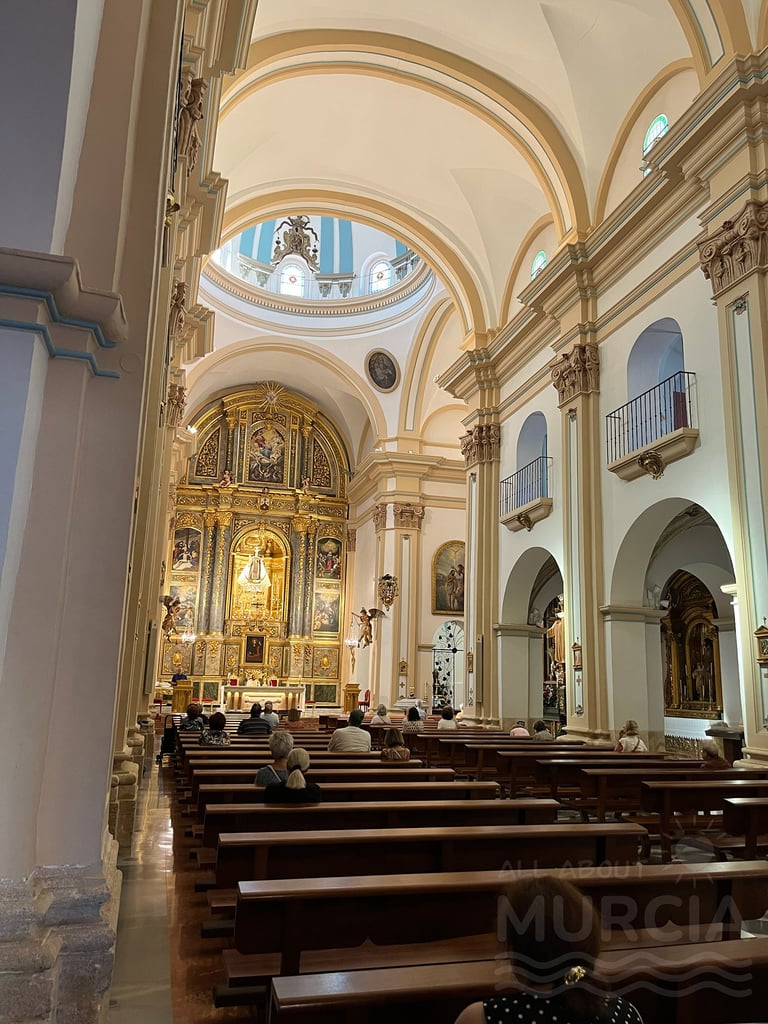
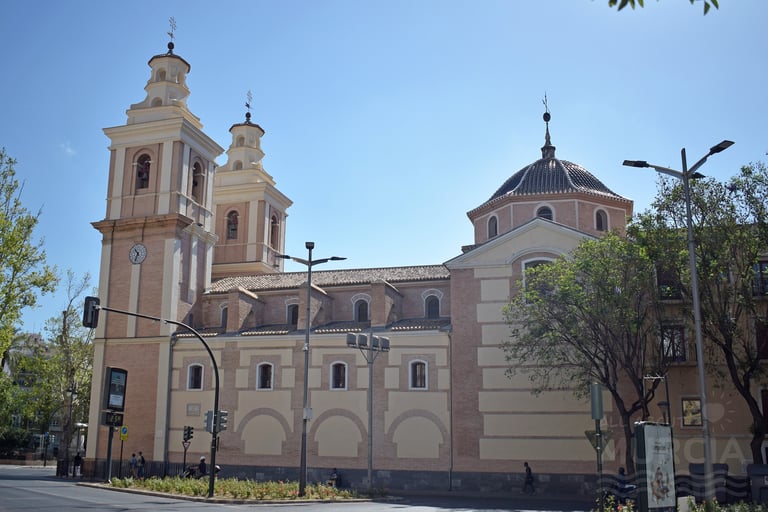
In front of the Floridablanca Garden, the church of Carmen stands as the beacon of the popular neighborhood of the same name. This building was the temple of a Carmelite convent founded in the 16th century near the ancient hermitage of San Benito, although the current church we see dates from the 18th century. Its construction began in 1721 to replace the church of the original convent, devastated by successive floods throughout its history, especially that of San Calixto in 1651. After almost fifty years of work, interrupted by a lack of funds, the temple was consecrated in 1769, becoming one of the jewels of the Murcian Baroque more late and refined.
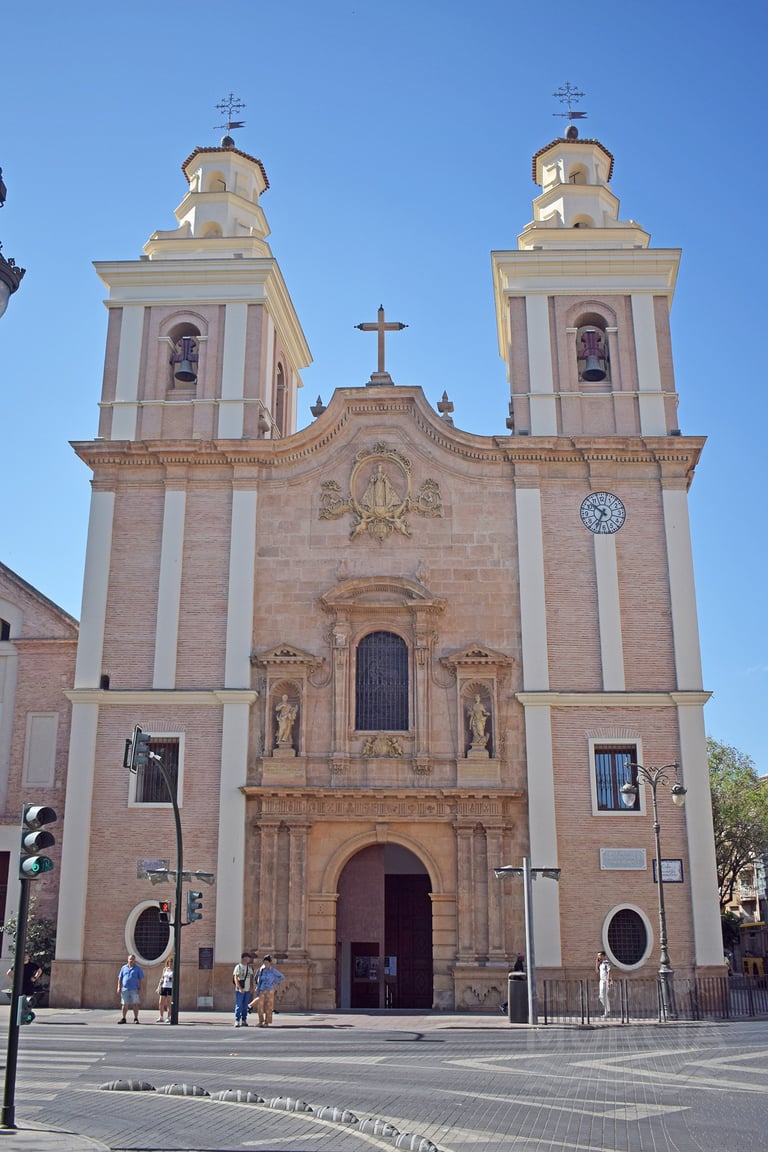
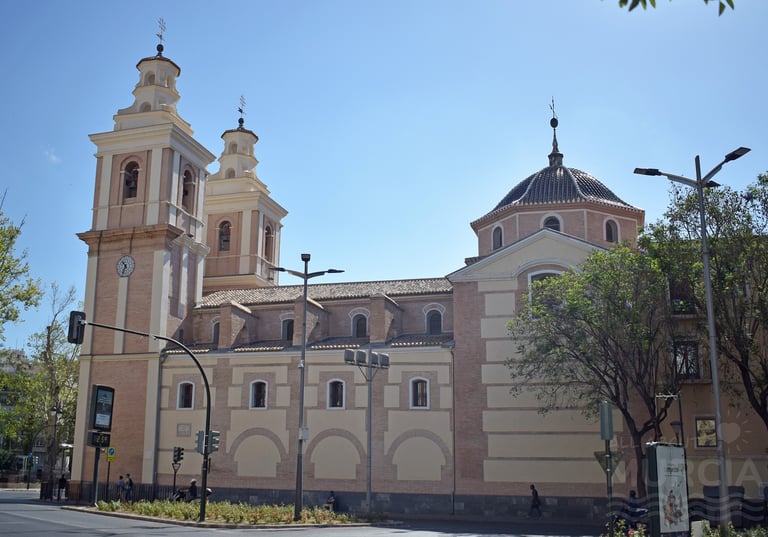
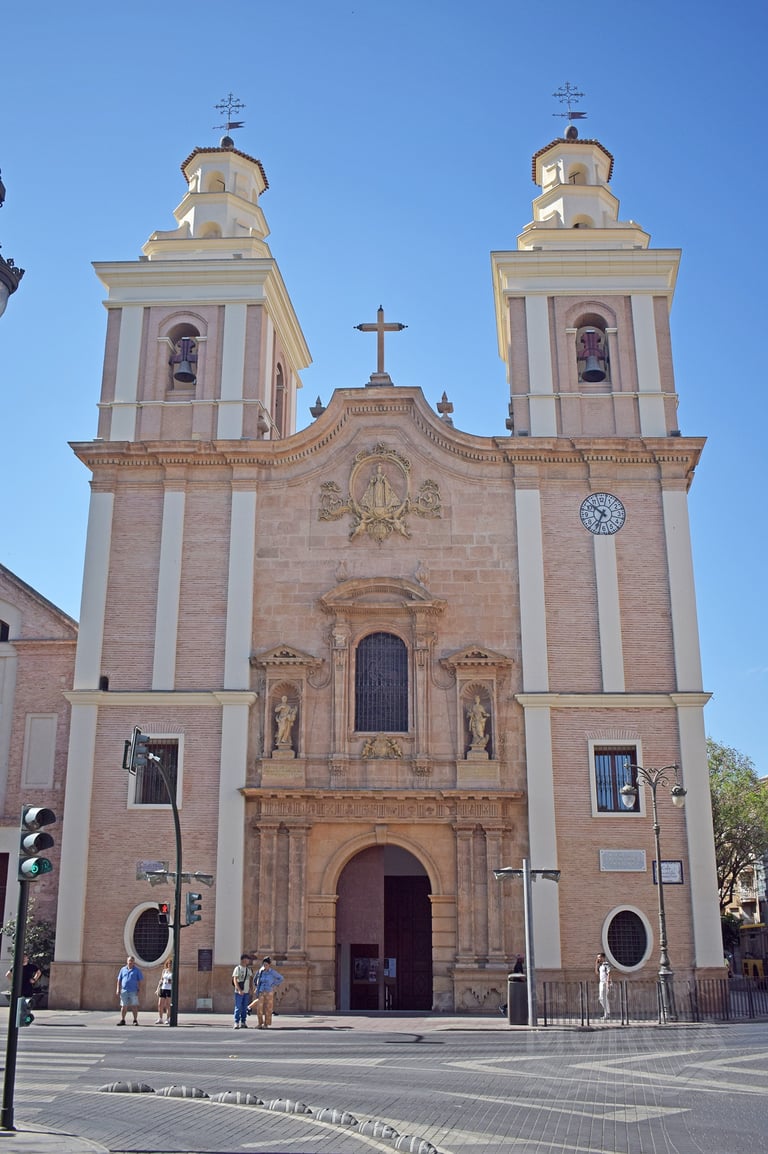
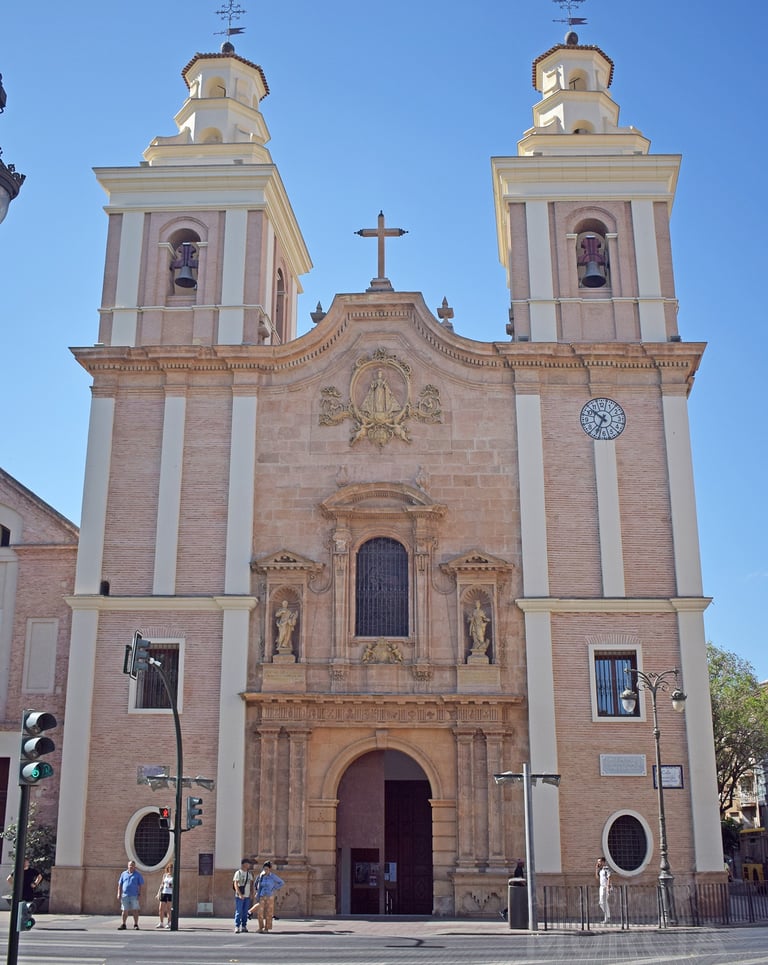
The design responds to the desire to create a monumental building that is also functional, with the purpose of providing the neighborhood with an urban image visible from the Bridge of Peligros. Its main façade is flanked by two twin towers that frame a portal organized like a triumphal arch with two bodies. On the lower body, the entrance is made through a semi-circular arch between two pairs of pilasters that support an entablature of triglyphs and metopes. Above this rises the second body, formed by three niches. The central one frames a stained glass window that serves to illuminate the high choir inside the church. On both sides, there are niches that house Saint Philip and Saint Catherine, the protective saints of the patron couple who enabled the completion of the work (Felipe García Ros and Catalina Faz y Ros). At the top, a large medallion with a relief of the Virgin of Carmen, supported by angels, crowns the ensemble.
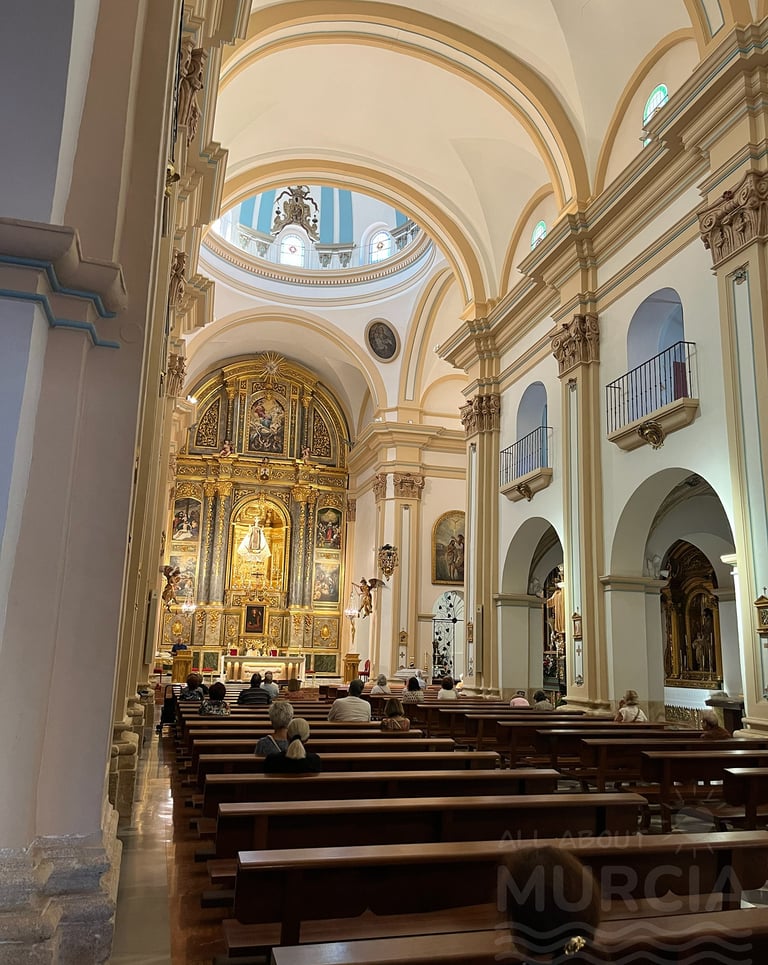
The church has a Latin cross shape and large dimensions. It consists of a central nave and side chapels, quite spacious and communicating with each other, which gives the sensation of a three-nave temple. The crossing is covered with an airy dome on an octagonal drum, in which eight windows open that contribute to giving greater brightness to the central space of the temple. Although it suffered the loss of part of its artistic heritage during the Civil War, it still houses works of immense value. The main altarpiece is a neobaroque work inaugurated in 2012. In its central niche, it houses the titular image of the temple, a dressed figure of the Virgin of Carmen, a work from the 18th century by an anonymous author.
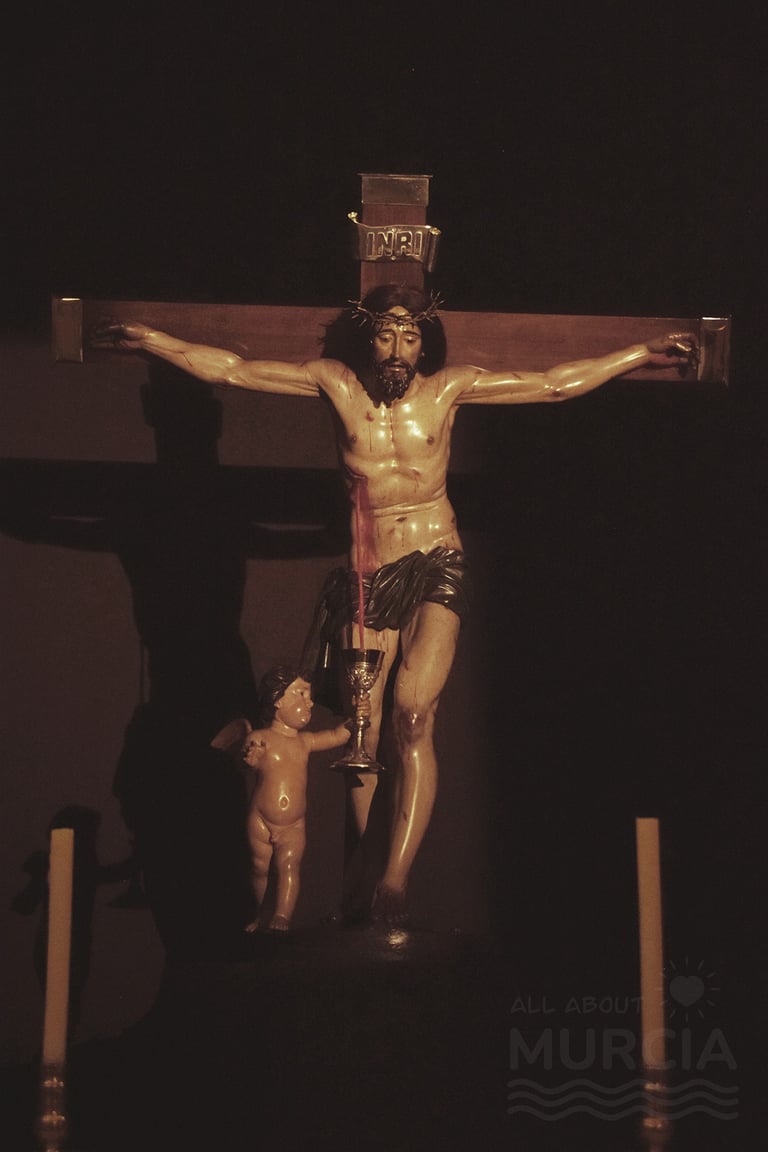
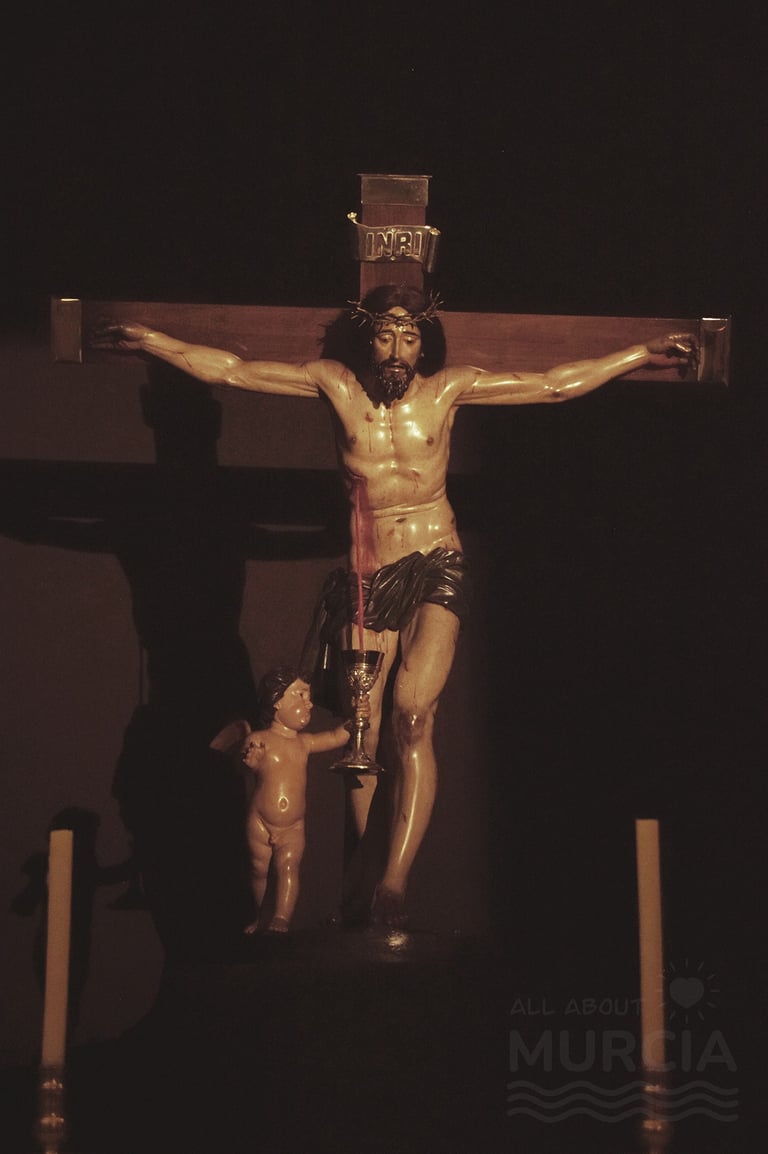
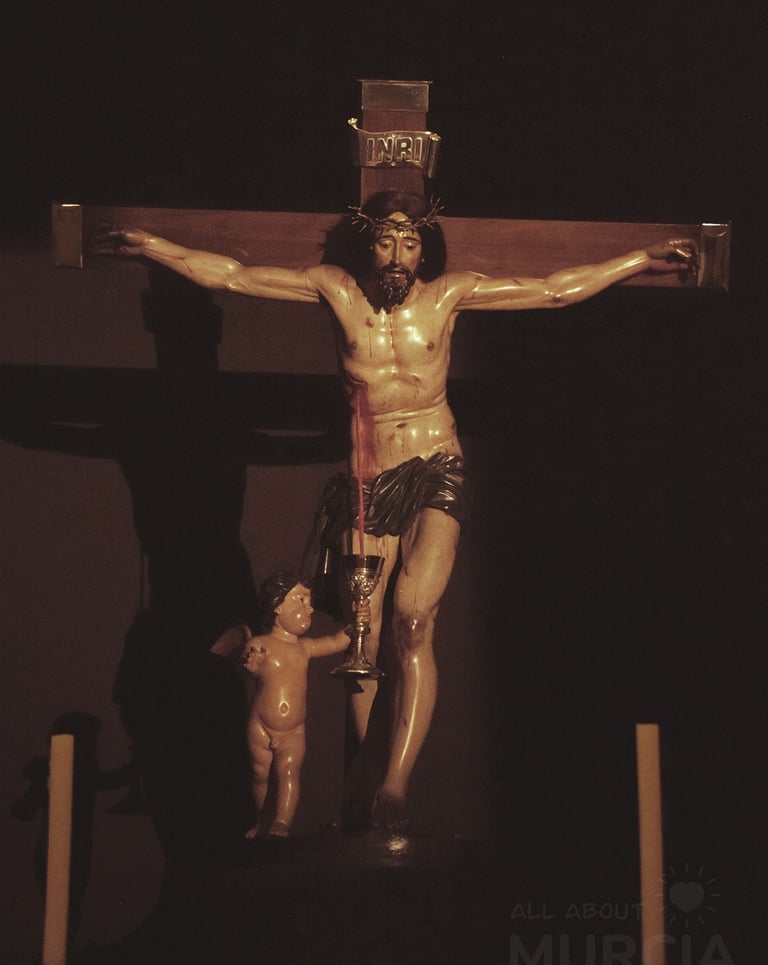
In the chapel adjacent to the side of the Gospel (left) is the imposing figure of Christ of the Blood, a pinnacle work of the Baroque by Nicolás de Bussy (1693) that processes on Holy Wednesday in the traditional "processed of the Coloraos", where it is venerated with deep popular devotion. It represents Christ nailed to the cross, with an open side, but alive and walking at the same time, while a little angel collects in a chalice the blood that flows from his side. This is an iconography known as “mystic press”, common in Central European art since the Middle Ages. The image is the titular of the Archconfraternity of the Most Precious Blood, the oldest and one of the most popular in the city of Murcia. They have an extensive artistic heritage that can be visited in a museum adjacent to the chapel.
Among the works that receive worship in the side chapels of the church of Carmen, a magnificent “Immaculate” by Francisco Salzillo can also be highlighted, a delicate figure that reflects the movement and grace of the Murcian genius. In another chapel, the Dolorosa receives worship, a dressed figure by Roque López, the most outstanding disciple of Salzillo. In this image, he faithfully follows the lines and style of the model of “Murcian Dolorosa” created by his master.
Sources - More information (Spanish):
Elías Hernández Albaladejo. "The Convent of Calzado Carmelites of Murcia"
Tour "Lo Mejor de Murcia"
El tour con todo lo que no te puedes perder en Murcia. Un itinerario de dos horas ideal para grupos pequeños. Con guía oficial de turismo.
Church of Carmen (Murcia)
In front of the Floridablanca Garden, the Church of Carmen stands as the beacon of the popular neighborhood of the same name. This building was the temple of a Carmelite convent founded in the 16th century near the ancient hermitage of San Benito, although the current church we contemplate dates back to the 18th century. Its construction began in 1721 to replace the church of the primitive convent, devastated by successive floods throughout its history, especially the one in San Calixto in 1651. After almost fifty years of work, interrupted by lack of funds, the temple was consecrated in 1769, becoming one of the jewels of the Murcian Baroque more late and refined.
The design responds to the desire to create a monumental building that is also functional, with the purpose of providing the neighborhood with a visible urban image from the Bridge of the Peligros. Its main façade is flanked by two twin towers that frame a portal organized like a triumphal arch with two bodies. In the lower body, the entrance is made through a semicircular arch between two pairs of pilasters that support a frieze of triglyphs and metopes. Above this rises a second body, formed by three niches. The central one frames a stained glass window that serves to illuminate the high choir in the interior of the church. On both sides, two niches house Saint Philip and Saint Catherine, the protective saints of the patron couple who made the completion of the work possible (Felipe García Ros and Catalina Faz y Ros). At the top, a large medallion with a relief of the Virgin of Carmen, supported by angels, crowns the ensemble.
The church has a Latin cross layout and large dimensions. It consists of a central nave and side chapels, quite spacious and interconnected, which gives the sensation of a temple of three naves. The transept is covered with a graceful dome on an octagonal drum, in which eight windows open that contribute to giving greater brightness to the central space of the temple. Although it suffered the loss of part of its artistic heritage during the Spanish Civil War, it still houses works of immense value. The main altarpiece is a neobaroque work inaugurated in 2012. In its central niche, it houses the titular image of the temple, a dressable figure of the Virgin of Carmen, dating from the 18th century and by an anonymous author.
In the chapel adjacent to the side of the Gospel (left) stands the imposing sculpture of Christ of the Blood, a culminating work of the baroque by Nicolás de Bussy (1693) that processes on Holy Wednesday in the traditional "colorados' procession", where it is venerated with profound popular devotion. It represents Christ nailed to the cross, with an open side, yet alive and walking at the same time, while an angel gathers in a chalice the blood that flows from his side. This is known as "mystical vat" iconography, common in Central European art since the Middle Ages. The image is the titular of the Archconfraternity of the Most Precious Blood, the oldest and one of the most popular in the city of Murcia. They cherish a large artistic heritage that can be visited in a museum annex to the chapel.
Among the works that receive cult in the lateral chapels of the Church of Carmen, we can also highlight a magnificent "Immaculate" by Francisco Salzillo, a delicate figure that reflects the movement and grace of the Murcian genius. In another chapel, the Dolorosa is venerated, a dressable image by Roque López, the most talented disciple of Salzillo. In this image, he faithfully follows the lines and style of the "Murcian Dolorosa" model created by his master.
Sources - More information:
Elías Hernández Albaladejo. "The Convent of Barefoot Carmelites of Murcia"