Tour "The Best of Murcia"
The tour with everything you cannot miss in Murcia. An itinerary of two hours ideal for small groups. With an official tour guide.
Saint Andrew's Church in Murcia
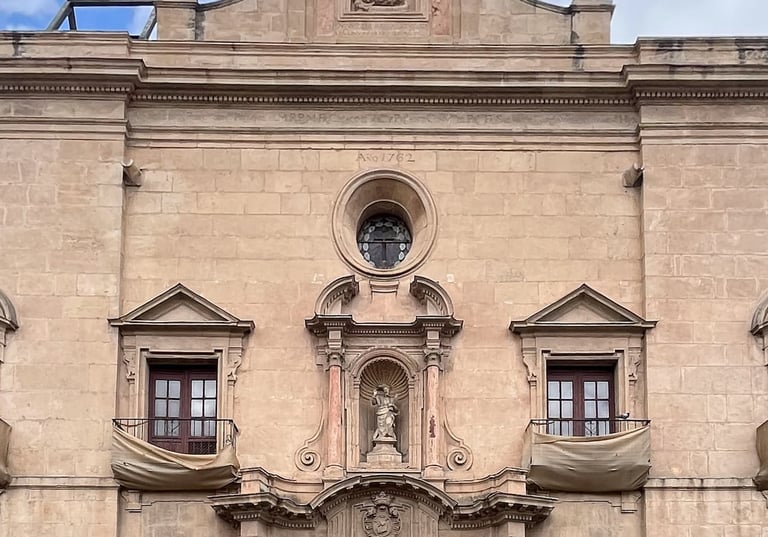
Saint Andrew's Church (iglesia de San Andrés) stands in the square of San Agustín, in the heart of the old suburb of La Arrixaca. The current temple has its origins in the now-disappeared convent of the Augustinians, established in this place at the end of the 16th century next to the ancient hermitage of the Virgin of La Arrixaca. After the damage caused by the flood of San Calixto in 1651, the complex underwent a profound reconstruction that culminated in the 18th century with the building of the church that is preserved today. The main works took place between 1748 and 1762 thanks to the support of Bishop Diego de Rojas y Contreras. After the disappropriation of the 19th century, the convent disappeared, while the church became the seat of the parish of San Andrés.
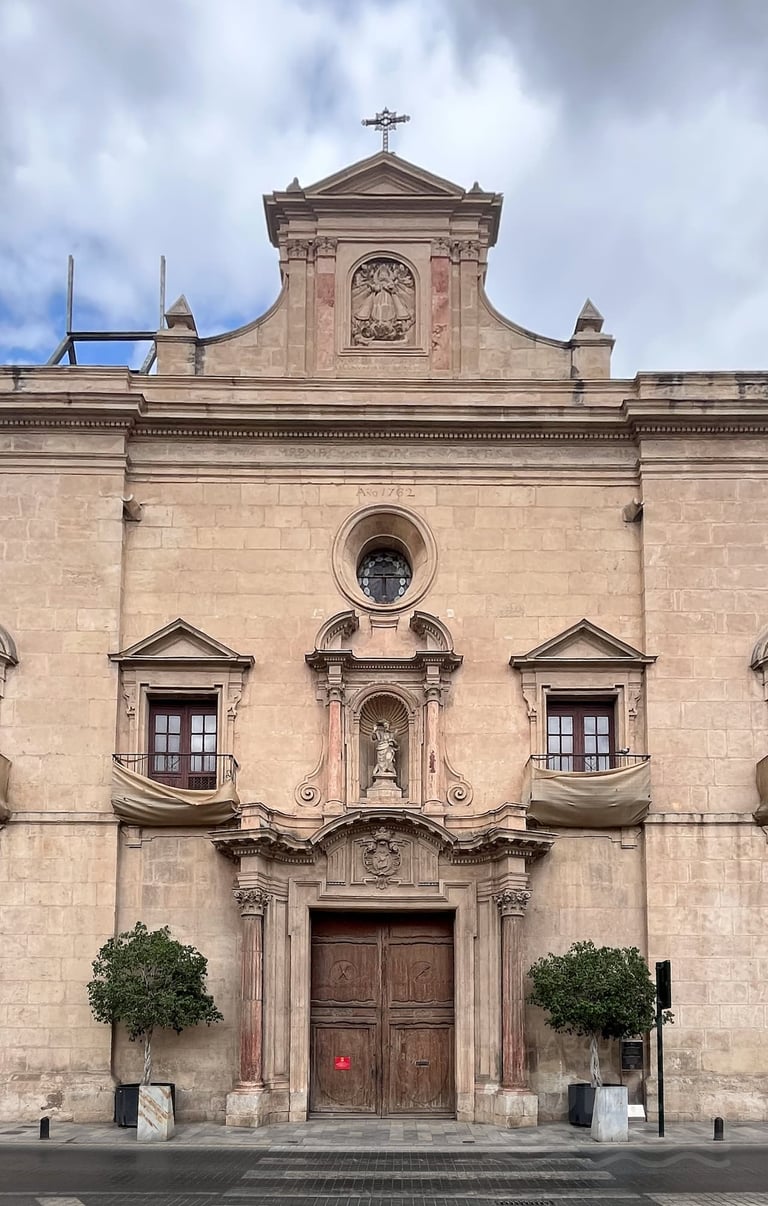
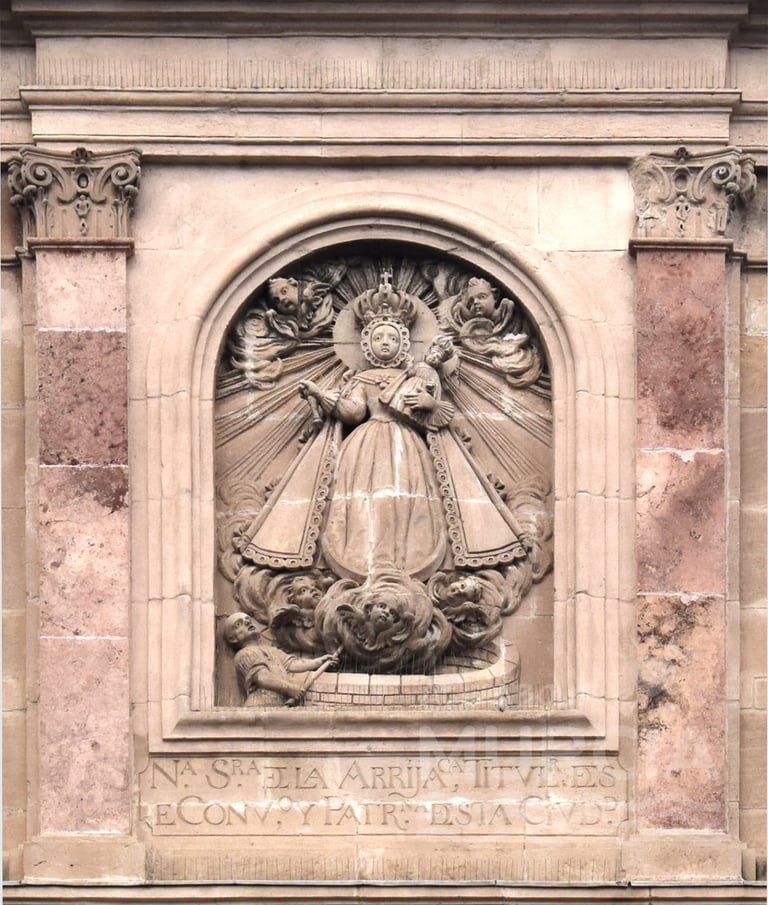
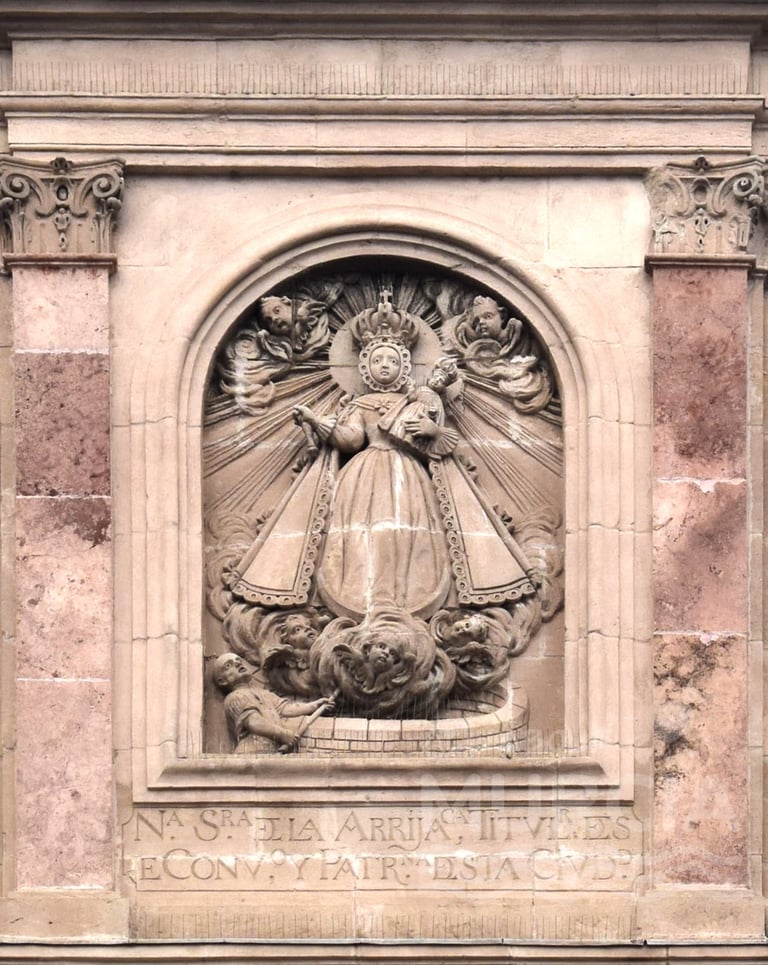
The façade is one of the most distinctive elements of the building. Designed with a composition closer to palatial architecture than to a traditional conventual church, it incorporates two reused Roman columns of red marble, probably from the surroundings of Monteagudo. Above the entrance, the image of Saint Andrew rises, and at the upper finishing, a relief dedicated to the Virgin of La Arrixaca, reflecting the close historical relationship between the temple and the ancient patroness of Murcia.
The interior features a Latin cross plan, with spacious side chapels interconnected and a wide crossing covered by a dome. Although much of the original pictorial decoration disappeared during the 19th century, remnants of the trompe-l'œil and fake architectures created by the Italian painter Pablo Sistori, one of the main decorators of the Baroque Murcia, are still preserved.
The Chapel of La Arrixaca holds particular significance, built in 1630 at the initiative of the Marquis of Corvera. Covered by a dome decorated with baroque plant-like plasterwork, it houses the image of the Virgin of La Arrixaca, a sculpture from the 12th-13th centuries that was the patroness of Murcia and its ancient kingdom for much of the Middle Ages and Modern Era. The small sculpture, of Romanesque tradition, represents Mary as the throne of the Child Jesus and is one of the oldest Marian images preserved in the Region of Murcia. The historical importance of this invocation was such that Alfonso X the Wise dedicated one of his Cantigas to her, a testimony to the deep devotion she inspired over the centuries.
The artistic heritage of the temple also includes the Adoring Angels by Antonio Dupar. From Francisco Salzillo it preserves the titular saint, Saint Andrew, who is venerated in the main altarpiece, as well as a splendid Saint Roch from 1757. The collection of paintings attributed to Senén Vila is also interesting, works that enrich a heritage closely linked to the religious and cultural history of the city of Murcia.
Tour "The Best of Murcia"
The tour with everything you can’t miss in Murcia. An itinerary of two hours ideal for small groups. With an official tourist guide.
Church of San Andrés in Murcia
The church of San Andrés stands in the plaza of San Agustín, in the heart of the old neighborhood of La Arrixaca. The current temple has its origins in the disappeared convent of the Augustinians, established in this place at the end of the 16th century next to the old hermitage of the Virgen de la Arrixaca. After the damage caused by the flood of San Calixto in 1651, the complex underwent a profound reconstruction that culminated in the 18th century with the building of the church that is preserved today. The main works were carried out between 1748 and 1762 thanks to the support of Bishop Diego de Rojas y Contreras. After the disappropriation of the 19th century, the convent disappeared, while the church became the seat of the parish of San Andrés.
The façade constitutes one of the most singular elements of the building. Conceived with a composition closer to palatial architecture than to that of a traditional conventual church, it incorporates two Roman columns of reused red marble, probably coming from the surroundings of Monteagudo. Above the entrance, the image of San Andrés rises and, at the top, a relief dedicated to the Virgen de la Arrixaca, a reflection of the close historical relationship between the temple and the ancient patroness of Murcia.
The interior features a Latin cross layout, spacious lateral chapels connected with each other, and a spacious crossing covered by a dome. Although much of the original pictorial decoration disappeared during the 19th century, remnants of the trompe-l'oeil and fictitious architectures made by the Italian painter Pablo Sistori, one of the main decorators of the Baroque Murcia, are still preserved.
The Chapel of La Arrixaca holds special significance, built in 1630 at the initiative of the Marquis of Corvera. Covered by a dome decorated with baroque vegetal plasterwork, it houses the image of the Virgen de la Arrixaca, a statue from the 12th-13th centuries that was the patroness of Murcia and its ancient kingdom for much of the Middle Ages and the Modern Era. The small sculpture, of Romanesque tradition, represents Mary as the throne of the Child Jesus and constitutes one of the oldest Marian images preserved in the Region of Murcia. The historical importance of this devotion was such that Alfonso X the Wise dedicated one of his Cantigas to her, a testimony to the profound devotion it awakened over centuries.
The artistic heritage of the temple also includes the Adoring Angels by Antonio Dupar. From Francisco Salzillo, it preserves the titular saint, San Andrés, who is venerated in the main altarpiece, in addition to a splendid San Roque from 1757. The set of paintings attributed to Senén Vila is also interesting, works that enrich a heritage closely linked to the religious and cultural history of the city of Murcia.