Tour "The Best of Murcia"
The tour with everything you can't miss in Murcia. A two-hour itinerary ideal for small groups. With an official tour guide.
Church of San Miguel (Murcia)
The church of San Miguel Arcángel is one of the historical parishes of Murcia and an exceptional example of Baroque art from the 18th century in the city. Located in the old suburb of La Arrixaca, its origins date back to the years following the Christian conquest, being documented as early as 1272. The medieval building was replaced by a new construction in the 17th century, but the works were severely affected by the flood of San Calixto in 1651. The current temple began to be built in 1691 and was completed in 1712, the date it was opened for worship.
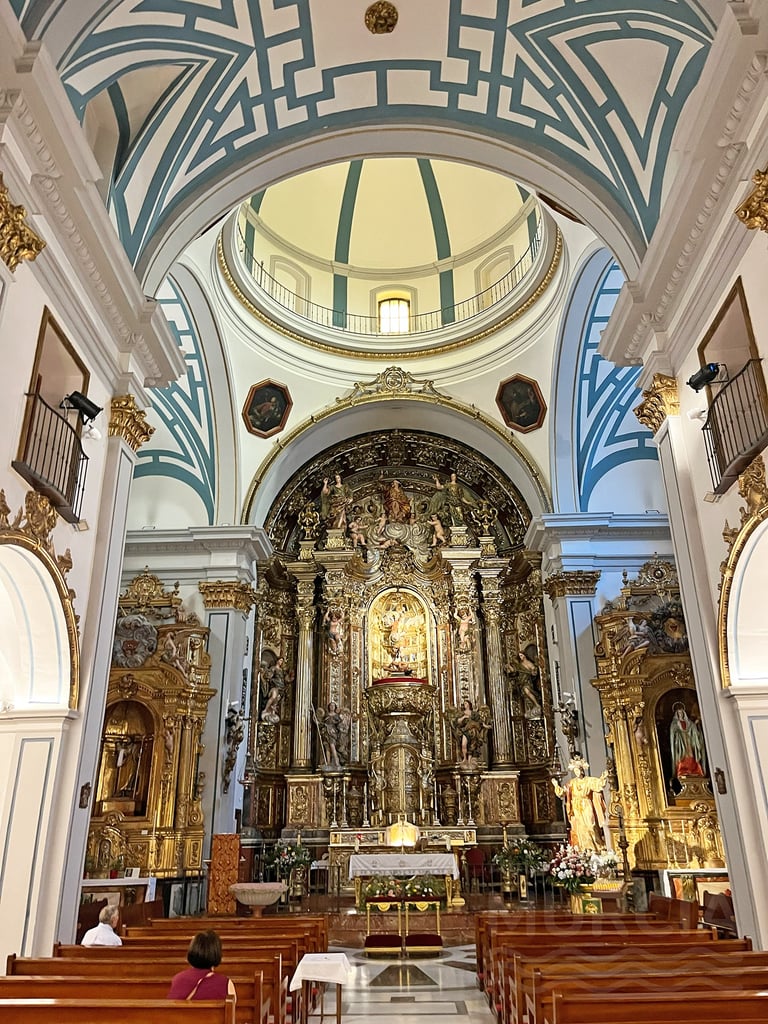
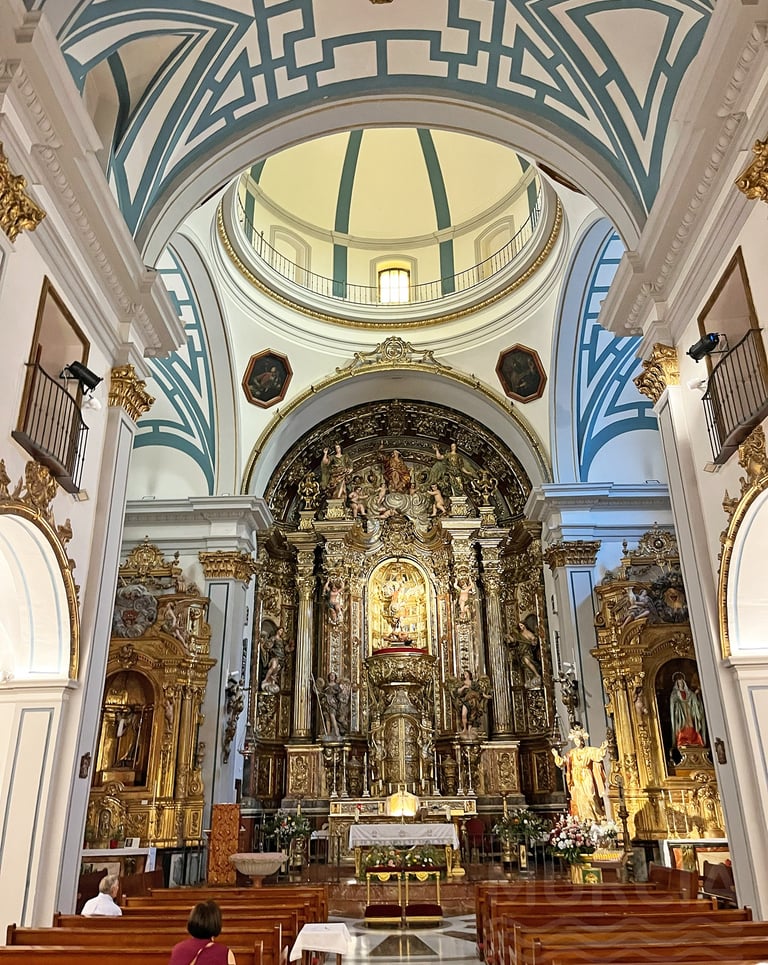
From an architectural point of view, San Miguel occupies a prominent place in the evolution of Murcian Baroque. Its layout, formed by a single nave with side chapels connected to each other, a crossing covered by a dome, and a straight chancel, constitutes one of the models that had the most influence on numerous churches built later in the Region. The width of the passages between chapels generates a spatial sensation close to that of a three-nave temple, while the interior decoration, based on gilded plasterwork, blue paintings, and plant motifs, contributes the characteristic ornamental richness of the era.
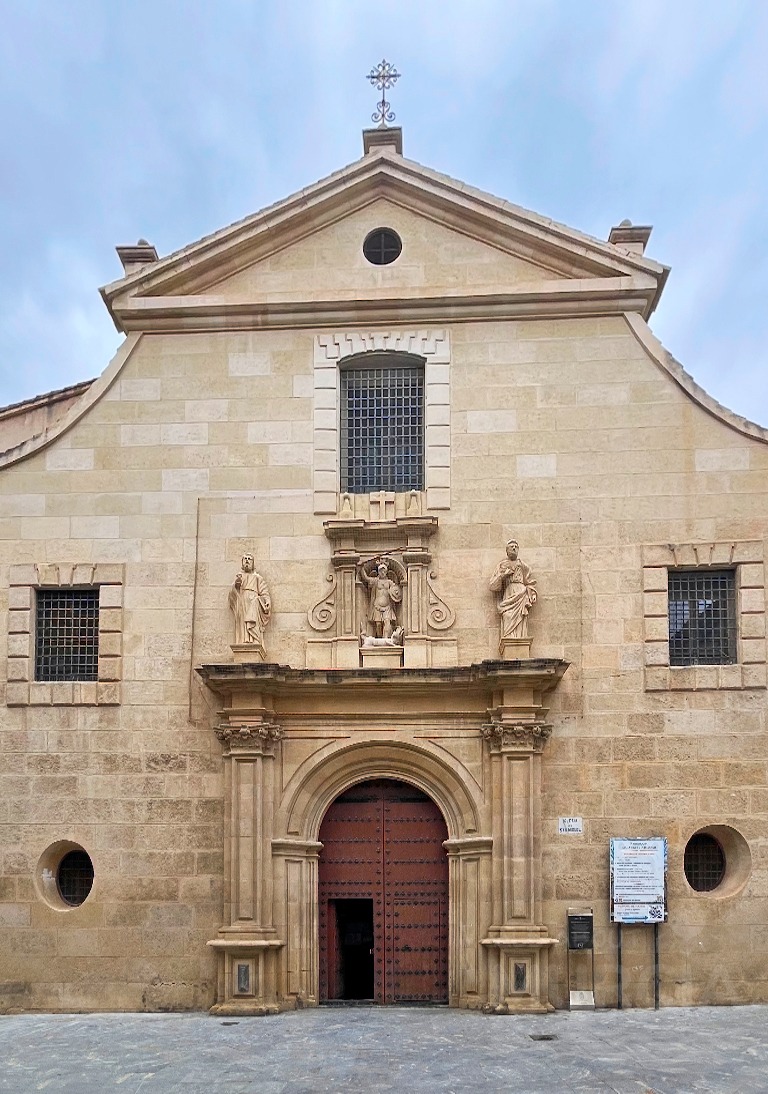
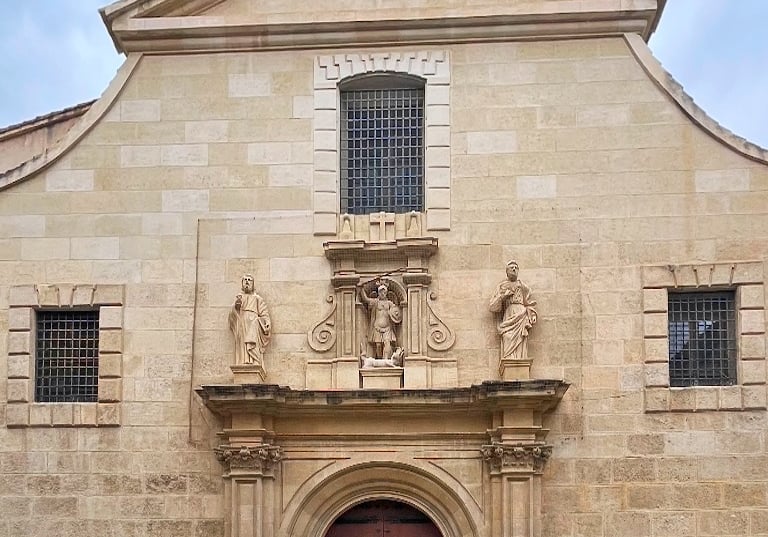
The main facade is of great simplicity and shows a composition inspired by classicism organized like a triumphal arch, with sculptures of Saint Peter and Saint Paul flanking the central niche of San Miguel. He raises his sword to finish off the monstrous animal that appears under his feet and represents evil.
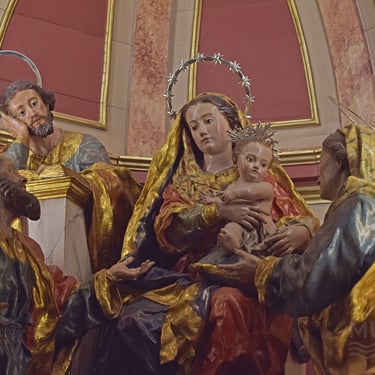
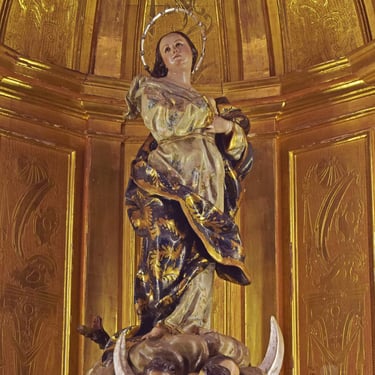
The main artistic treasure of the church is its high altar, created from 1731 by Jacinto Perales and Francisco Salzillo. Considered one of the most significant altarpieces of Murcian Baroque, it combines a complex architectural structure with high-quality sculptures, including several archangels and allegorical figures executed by Salzillo. By the same author, the side chapels house magnificent examples of his sculptural genius, such as the Holy Family, Saint Francis of Assisi, the Immaculate, or the Sorrowful one. The church also preserves several works by his father, Nicolás Salzillo, such as the San Miguel from the central niche of the high altar, or an image of Saint Jude Thaddeus.
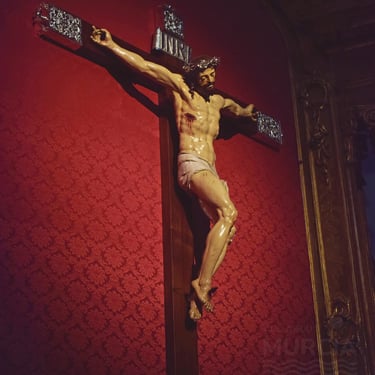
Among the exceptional sculptural heritage of this temple, the Cristo de la Misericordia also stands out, a magnificent Renaissance Christ created by Domingo Beltrán in 1581. It is smaller than life-sized and is venerated at the altar on the left side of the crossing. It has its own brotherhood for Holy Week, which processes on the evening of Good Friday.
Tour "The Best of Murcia"
The tour with everything you can't miss in Murcia. An itinerary of two hours ideal for small groups. With an official tour guide.
Church of San Miguel (Murcia)
The church of San Miguel Arcángel is one of the historical parishes of Murcia and an exceptional example of Baroque art from the 18th century in the city. Located in the old suburb of Arrixaca, its origins date back to the years following the Christian conquest, being documented as early as 1272. The medieval building was replaced by a new construction in the 17th century, but the works were severely affected by the flood of San Calixto in 1651. The current temple began to be erected in 1691 and was completed in 1712, the date when it was opened for worship.
From an architectural point of view, San Miguel occupies a prominent place in the evolution of Murcian Baroque. Its plan, formed by a single nave with lateral chapels connected to each other, a transept covered by a dome and a straight head, constitutes one of the models that exerted the most influence over numerous churches built later in the region. The width of the passages between chapels creates a spatial sensation close to that of a three-nave temple, while the interior decoration, based on gilded stuccoes, blue paintings, and plant motifs, adds the ornamental richness characteristic of the era.
The main facade is of great simplicity and shows a composition of classical inspiration organized like a triumphal arch, with sculptures of San Pedro and San Pablo flanking the central niche of San Miguel. This one raises its sword to finish off the monstrous animal that appears under its feet and that represents evil.
The main artistic treasure of the church is its main altarpiece, created from 1731 by Jacinto Perales and Francisco Salzillo. Considered one of the most important altarpiece sets of Murcian Baroque, it combines a complex architectural structure with high-quality sculptures, including several archangels and allegorical figures executed by Salzillo. From this same author, the lateral chapels house magnificent examples of his sculptural genius, such as the Holy Family, San Francisco de Asís, the Immaculate, or the Dolorosa. The church also preserves several works by his father, Nicolás Salzillo, such as the San Miguel from the central niche of the main altarpiece, or an image of San Judas Tadeo.
Among the exceptional sculptural heritage of this temple, it is also worth mentioning the Christ of Mercy, a magnificent Renaissance Christ created by Domingo Beltrán in 1581. It is smaller than life-size and receives worship at the altar on the left side of the transept. It is the titular figure of its own Holy Week brotherhood, which processes on the evening of Good Friday.