
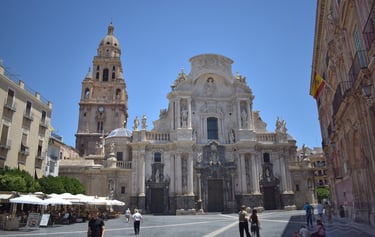
Tour "The Best of Murcia"
The tour with everything you can't miss in Murcia. An itinerary of two hours ideal for small groups. With an official tour guide.
Church of Santa Eulalia (Murcia)
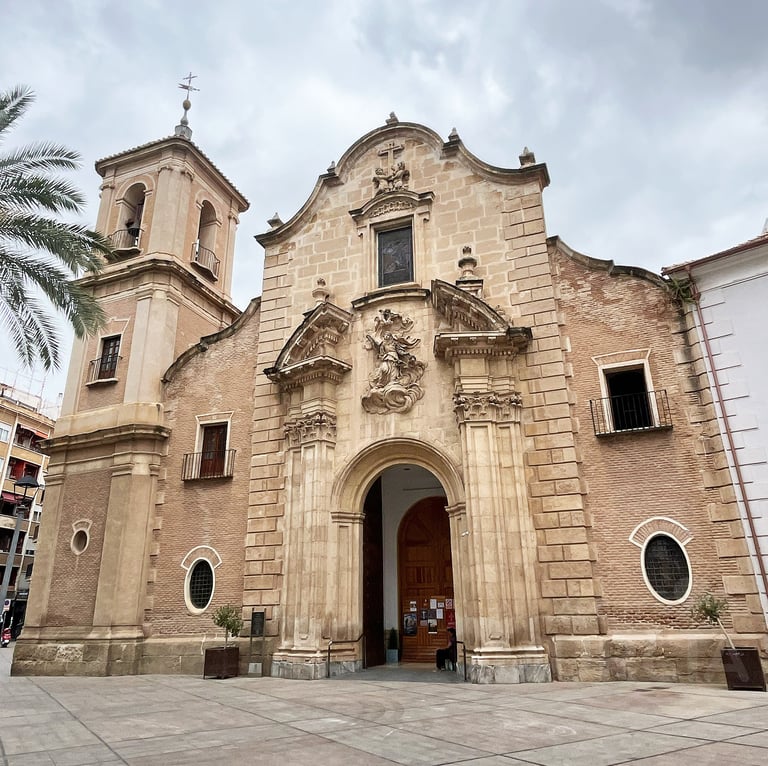
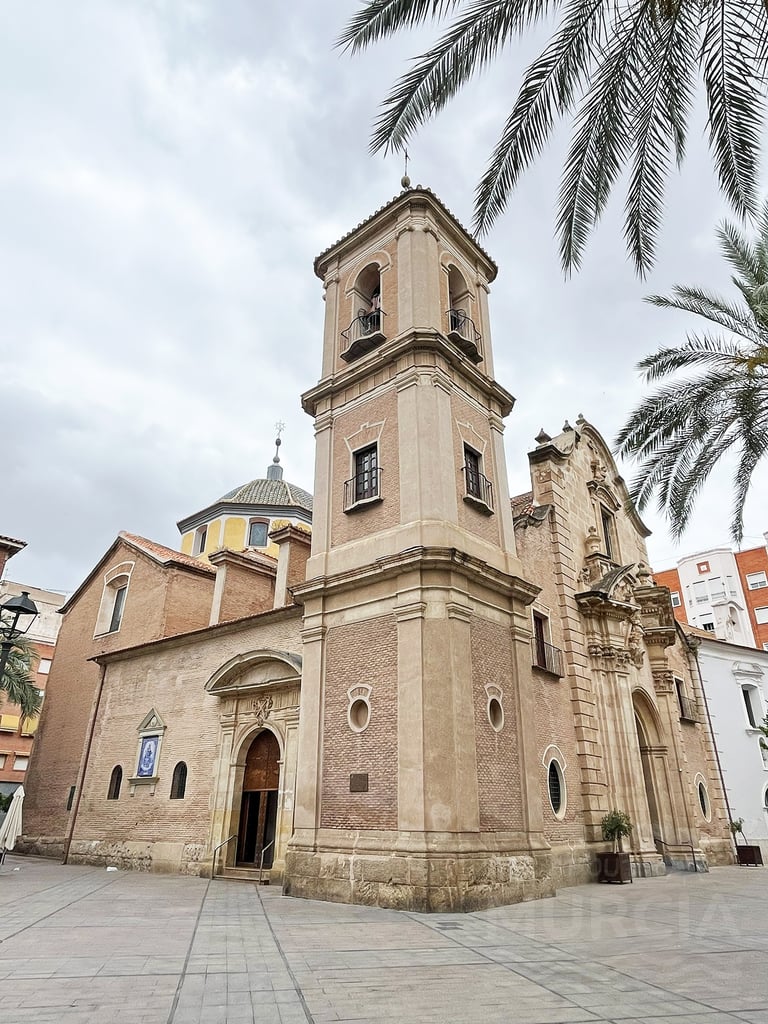
Presiding over the square bearing its name, the Church of Santa Eulalia is a magnificent example of the transition from Baroque to Rococo. Although its origin dates back to a hermitage founded by James I the Conqueror after his entry into the city in 1266, the current building, inaugurated in 1766, is a beautiful example of the splendor of the eighteenth century in Murcia. Its construction, which was prolonged for decades with interruptions, was finally made possible thanks to the persistence of the chief rationer of the Cathedral, Don Antonio Albarracín, and a generous donation from Bishop Diego de Rojas y Contreras.
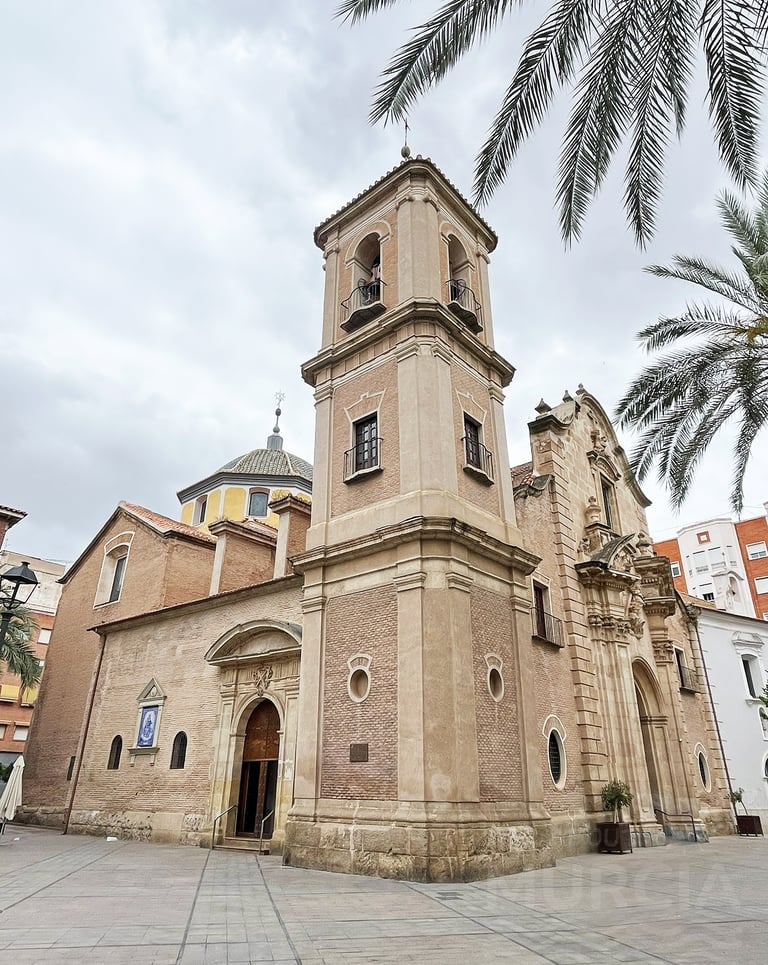
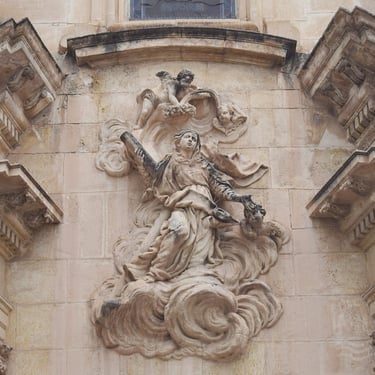
Its main facade is a jewel of the eighteenth century. Composed of three vertical bodies, it combines the nobility of the dressed stone in the center with the warm exposed brick of the lateral bodies. The entrance, contracted in 1764, is a work of art in itself, where the cajeada pilasters arranged diagonally contribute movement and depth. Above it, a broken curved pediment houses the "Apotheosis of Santa Eulalia," a relief of notable quality attributed to Pedro Federico, evoking the style of Jaime Bort. A mixtilinear crown and a large window topped by two angels holding a cross complete this theatrical entrance. Next to it, a slender tower of three bodies, slightly inclined, constitutes one of the most recognizable visual icons of the neighborhood.
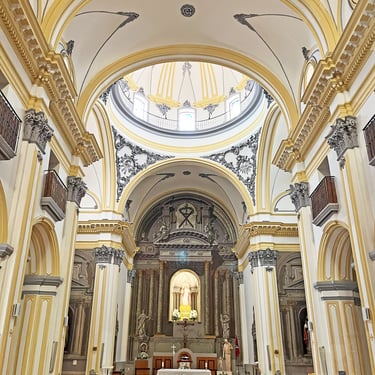
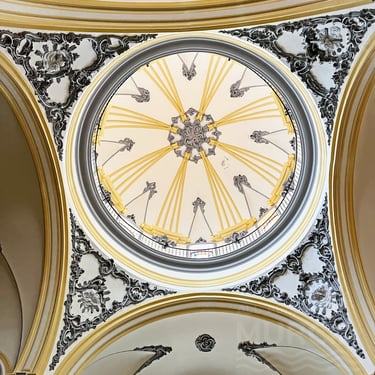
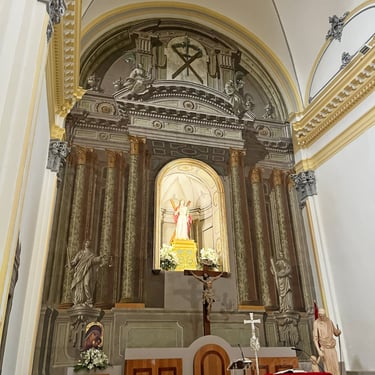
The interior, with a Latin cross plan, surprises with its elegant simplicity and light. Here Baroque becomes more subtle and intimate, leading to Rococo. In the decoration of the temple, five altarpieces painted in trompe l'oeil (trampantojo) by the Milanese painter Pablo Sistori between 1779 and 1781 stand out. These "faux architectures" create an astonishing illusion of depth, with columns that seem to be marble and figures that almost leap from their niches, achieving one of the most singular spatial experiences of Murcian art. Alongside these masterpieces, the church treasures valuable pieces of imagery, such as a "Saint Rosalia of Palermo" from the early eighteenth century, traditionally attributed to Salzillo but now considered to be the work of the French artist Antonio Dupar, or an expressive "Saint Blaise" by Salzillo himself, one of his latest and most personal creations.
Adjacent to the church is the chapel of Saint Joseph, a small temple from the eighteenth century built by the city's carpenters' guild. Very close by are the visitable remains of the ancient wall and Islamic cemetery. All of this makes the area around Santa Eulalia an enclave of great historical, artistic, and archaeological interest.
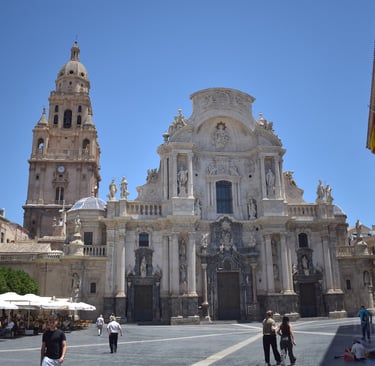
Tour "The Best of Murcia"
The tour with everything you can't miss in Murcia. An itinerary of two hours ideal for small groups. With an official tourist guide.
Church of Santa Eulalia (Murcia)
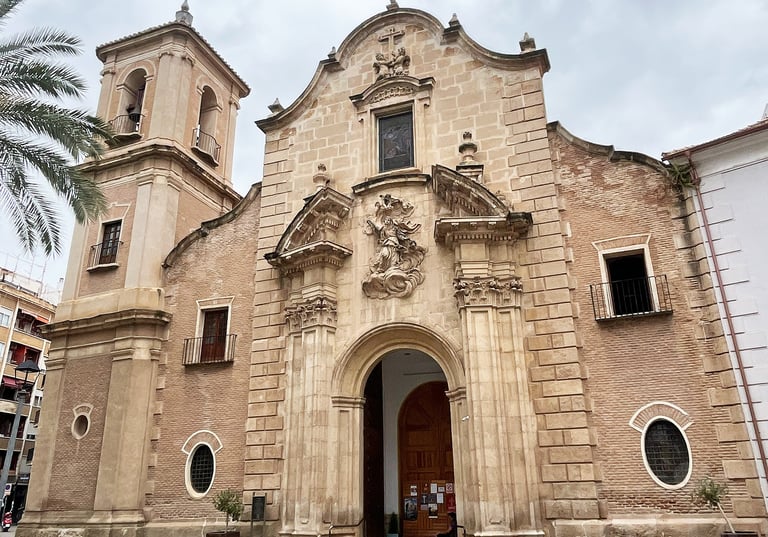
Presiding over the square that bears its name, the Church of Santa Eulalia is a magnificent example of the transition from Baroque to Rococo. Although its origin dates back to a hermitage founded by James I the Conqueror after his entry into the city in 1266, the current building, inaugurated in 1766, is a beautiful example of the splendor of the 18th century in Murcia. Its construction, which was prolonged over decades with interruptions, was finally made possible thanks to the persistence of the chief rationer of the Cathedral, Don Antonio Albarracín, and a generous donation from Bishop Diego de Rojas y Contreras.
Its main facade is a jewel of the eighteen. Composed of three vertical bodies, it combines the nobility of carved stone in the center with the warm exposed brick of the lateral bodies. The portal, contracted in 1764, is a work of art in itself, where the cajeadas pilasters arranged diagonally provide movement and depth. Above it, a broken curved pediment houses the "Apotheosis of Santa Eulalia", a relief of notable quality attributed to Pedro Federico, evoking the style of Jaime Bort. A mixed-line finish and a large window crowned by two angels holding a cross complete this theatrical facade. Next to it, a slender three-body tower, slightly tilted, constitutes one of the most recognizable visual icons of the neighborhood.
The interior, with a Latin cross plan, surprises with its elegant simplicity and light. Here Baroque becomes more subtle and intimate, giving way to Rococo. In the decoration of the temple, five altarpieces painted in trompe l'oeil (trampantojo) by the Milanese painter Pablo Sistori between 1779 and 1781 stand out. These "faux architectures" create an astonishing illusion of depth, with columns that appear to be marble and figures that almost leap from their niches, achieving one of the most singular spatial experiences of Murcian art. Alongside these masterpieces, the church treasures valuable pieces of imagery, such as a "Saint Rosalie of Palermo" from the early 18th century, traditionally attributed to Salzillo but now considered the work of the French artist Antonio Dupar, or an expressive "Saint Blaise" by Salzillo himself, one of his latest and most personal creations.
Adjacent to the church is the chapel of Saint Joseph, a small 18th-century temple built by the carpenters' guild of the city. Very close by are the visitable remains of the ancient wall and Islamic cemetery. All of this makes the surroundings of Santa Eulalia a place of great historical, artistic, and archaeological interest.


