
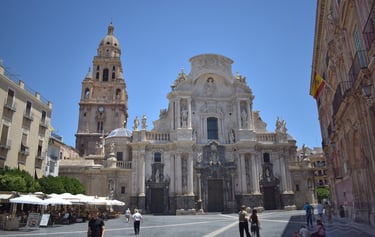
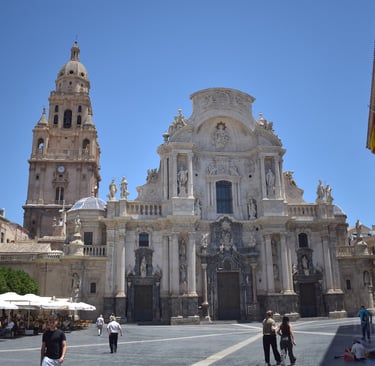
Tour "The Best of Murcia"
The tour with everything you can't miss in Murcia. An itinerary of two hours ideal for small groups. With an official tour guide.
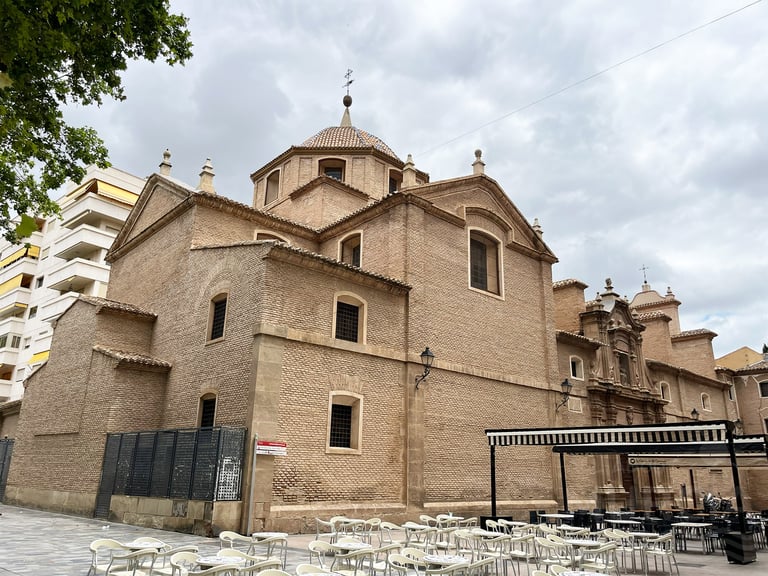
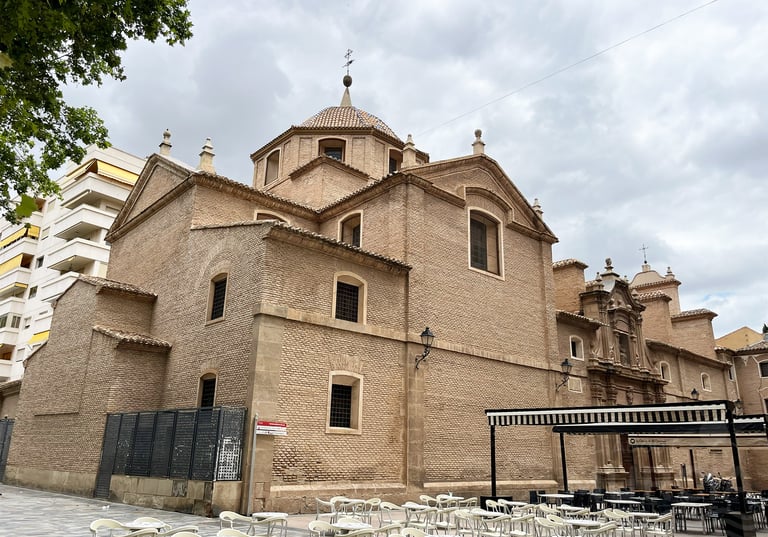
Convent of Santa Ana (Murcia)
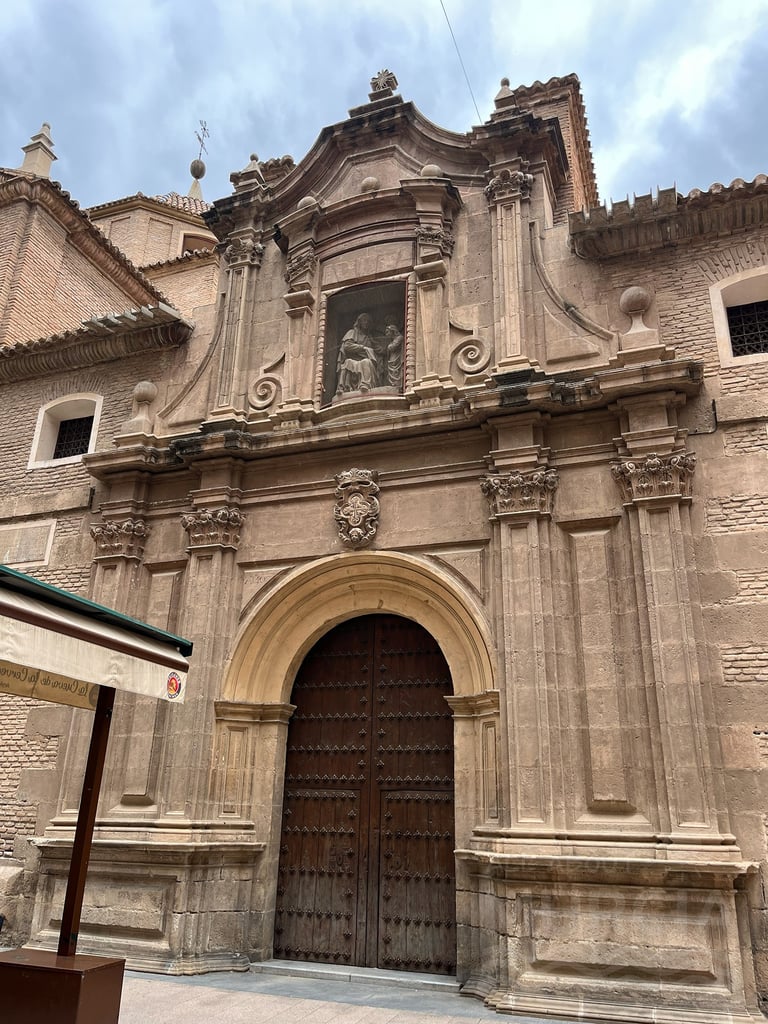
Founded in 1490 by the female branch of the Dominican Order and located in the square that bears its name, the convent of Santa Ana, popularly known as "las Anas", is one of the most representative Baroque ensembles of Murcia. Despite its remote origin, the splendid building we contemplate today dates back to the 18th century, the result of the project by the masters Fray Antonio de San José and Toribio Martínez de la Vega, constructed between 1728 and 1738. Its church, the only visitable part, is a masterful example of the Murcian Baroque, combining structural sobriety with an ornamental richness that makes it a true treasure.
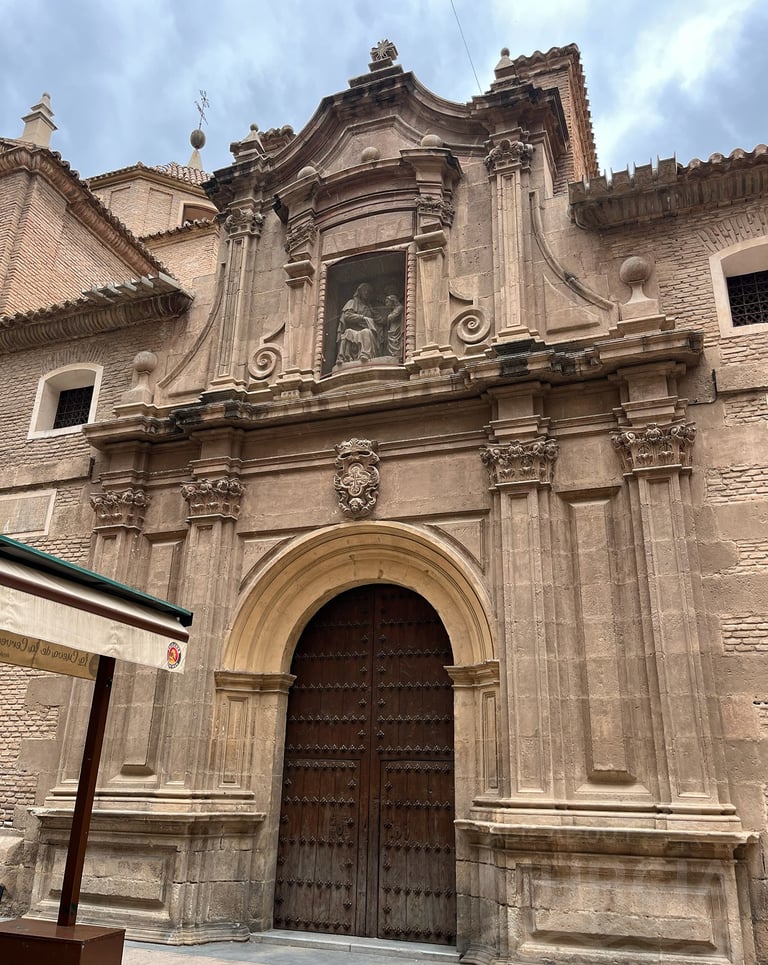
Architecturally, it responds to the successful model in the city: a Latin cross layout with a main nave and lateral chapels. The exterior, of exposed brick, appears austere and functional. The only exterior facade opens on the side of the Gospel, towards the square of Santa Ana. It is designed in the Baroque style and presents a sparse ornamentation. It consists of two bodies, with the entrance in the first body, under a semicircular arch and flanked by two pairs of Corinthian-style pilasters, resting on a padded base. Above the entrance is the emblem of the Dominican order. The second body is also framed by pilasters and adopts a mixtilinear profile at its upper part. In its center, there is a niche with the image of Saint Anne teaching the Virgin Mary to read.
In contrast to the austere exterior, inside it displays all the majesty of the 18th century. Its elevation is articulated by an elegant giant order of pilasters that magnify the space, culminating in the crossing with a slender dome over pendentives that filters the light, creating an atmosphere of solemnity and mysticism. The walls are covered with fine plasterwork and a delicate pictorial decoration of bows and vegetal motifs in blue, made by Juan Ruiz Melgarejo, that dance over the friezes and arches, marking the architectural lines with a singular grace.
The heart of the temple is its main altarpiece, a crowning work of Murcian Baroque. Made between 1738 and 1741 by José Ganga Ripoll, it features the innovative introduction of salomonic columns decorated with vine leaves and grapes. The most noteworthy aspect is that Ganga, in an audacious decision, entrusted the imagery to the young Francisco Salzillo. He created for the altarpiece a set of masterpieces, where the central shrine stands out with the emotive group of Saint Anne and the Virgin Child. The ensemble is completed with the sculptures of Saint John the Baptist, Saint Joseph, Saint Joachim, Saint John the Evangelist, and several Dominican saints, already showing the mastery and personal style that would define the genius of Murcian imagery. In its lateral chapels, there are other Baroque altarpieces, such as those attributed to the Estangueta family, which enrich the artistic legacy of this singular monastery.
Sources - More information:
María Trinidad López García. "Approach to the Convent of Santa Ana of Murcia, of Dominican nuns".


