Tour "The Best of Murcia"
The tour with everything you can’t miss in Murcia. An itinerary of two hours ideal for small groups. With an official tour guide.
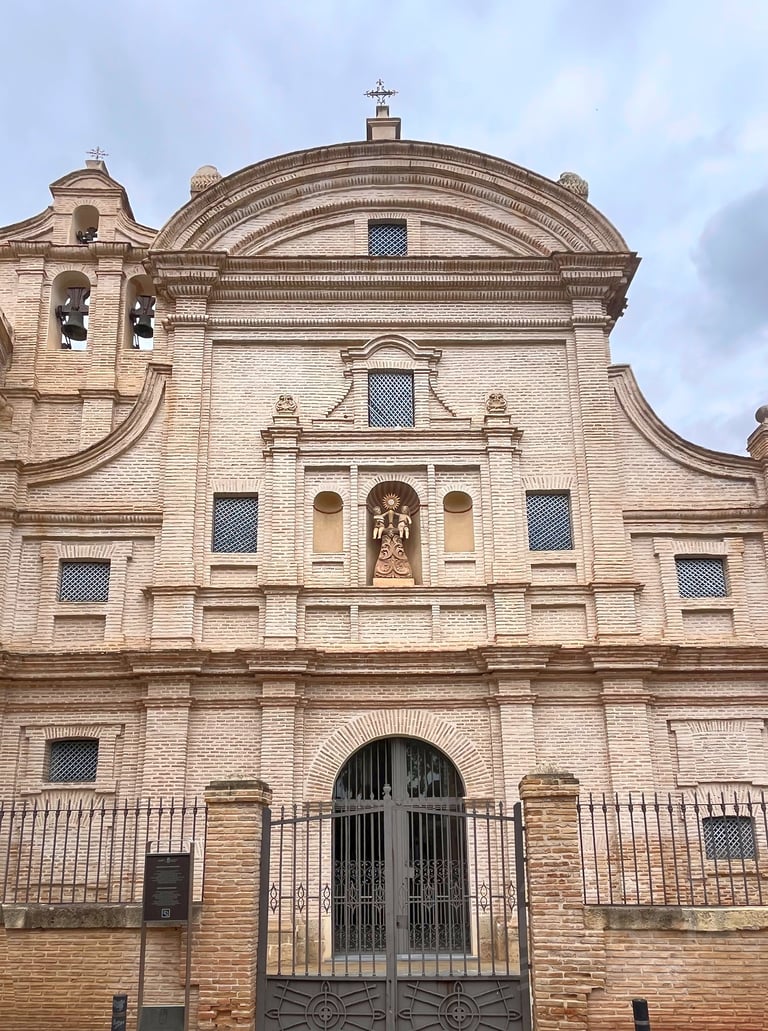
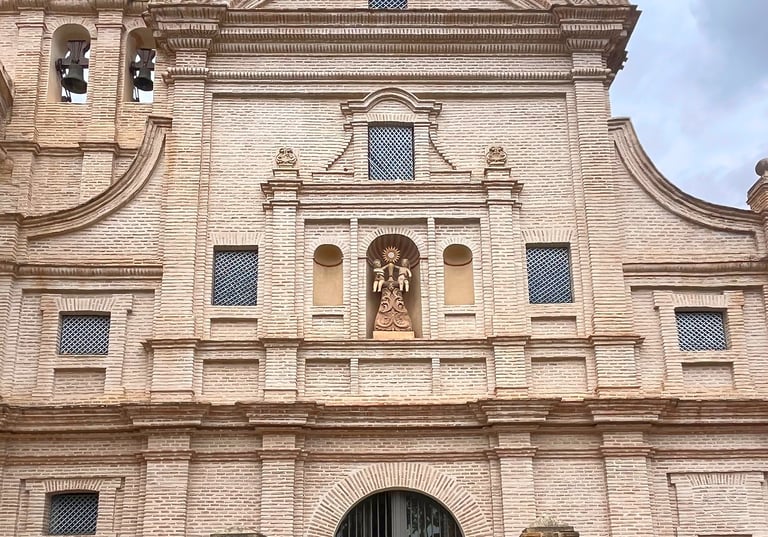
Convent of the Augustinian Nuns of Corpus Christi in Murcia
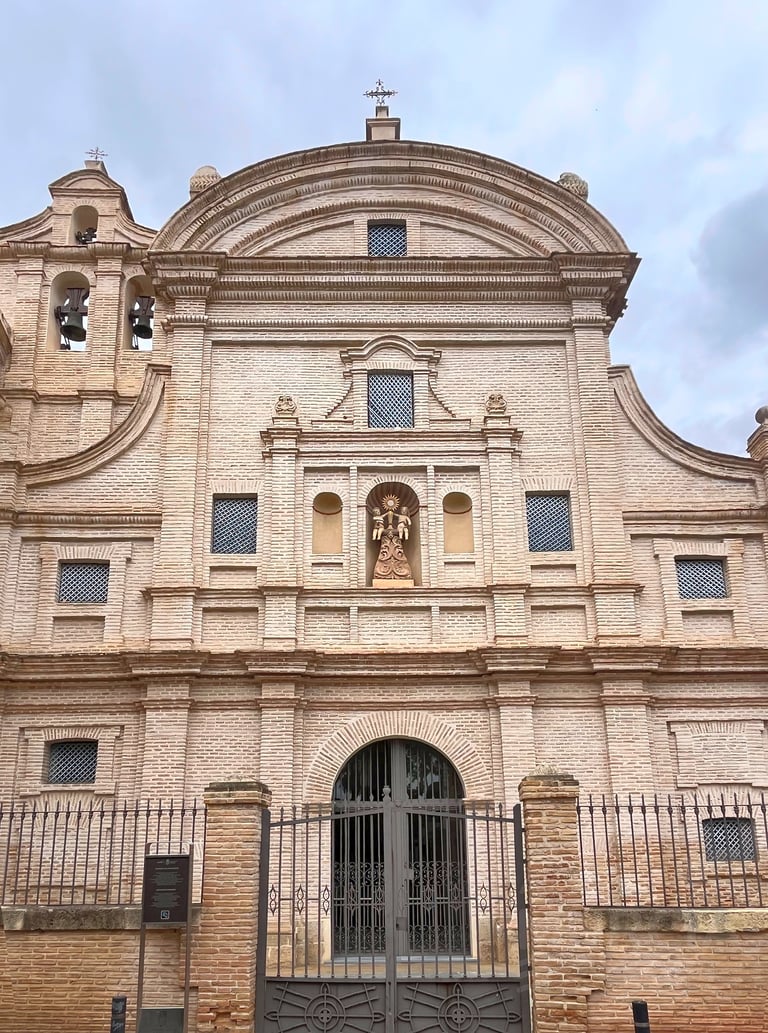
The convent of the Agustinian nuns of Corpus Christi is one of the largest and best-preserved Baroque monastic complexes in the city of Murcia, although currently only the church is open to visitors. Located in the old suburb of La Arrixaca, its origins date back to 1615, when the community founded by Sister Mariana de San Simeón arrived in the city. The current building is the result of a long construction process developed during the 17th and 18th centuries, completed in 1729 thanks to the impetus of Bishop José Tomás de Montes. Despite the transformations suffered throughout its history, the complex retains the general disposition with which it was conceived, articulated around several convent patios, monastic dependencies, and a cloister garden.
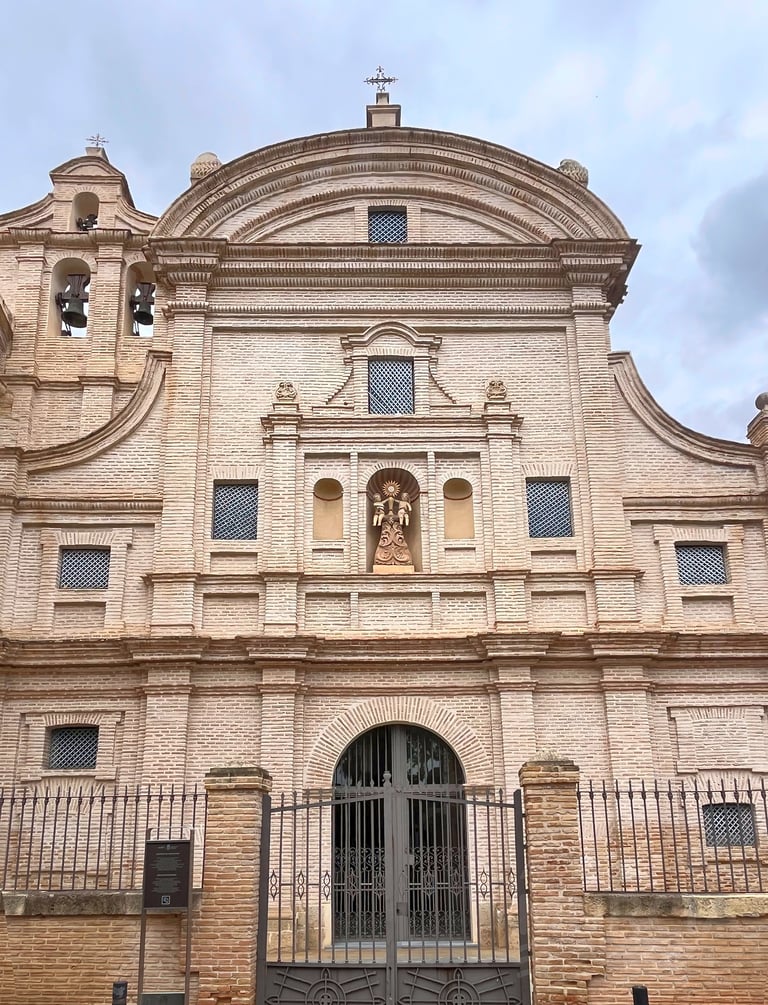
The church is one of the most interesting examples of Baroque architecture in Murcia. Its main facade, built entirely of exposed brick, responds to a characteristic composition of the first third of the 18th century. Organized in three vertical sections and two horizontal bodies, it combines a notable geometric sobriety with a careful articulation of pilasters, moldings, and niches. Above the access portal, there is a niche with a representation of the Custody, an Eucharistic symbol that gives the convent its name. On both sides, there are two smaller niches, now empty. The lateral bell gable and the octagonal dome clad in glazed tile complete the external silhouette of the complex.
The interior presents a Latin cross plan, interconnected lateral chapels, a spacious transept, and a choir directly linked to the convent cloister. The decorative richness contrasts with the austere exterior through high-relief moldings, chromatic games, and a prominent dome painted fresco by Juan Ruiz Melgarejo. The composition represents the adoration of the Mystic Lamb by a court of angels, developing an elaborate iconographic program centered on the exaltation of the Eucharist.
Among the preserved artistic works, the main altarpiece by José Ganga Ripoll stands out, presided over by a monumental Saint Augustine created by Francisco Salzillo around 1755-1760. The sculpture, larger than life, stands out for its compositional dynamism and the expressiveness of the figures representing the defeat of heresy. The temple also retains a notable Saint Cecilia by Roque López, considered one of the most outstanding works of Salzillo's disciple, as well as a Saint Michael by Antonio Dupar and the venerated Christ of Agony, an anonymous carving from the 16th century linked to conventual spirituality.
In November 2025, the news emerged that the last Augustinian nuns residing in the convent had requested their transfer to Valencia. Only four elderly sisters remained, and upon leaving, they brought an end to four centuries of the order's presence in this place.
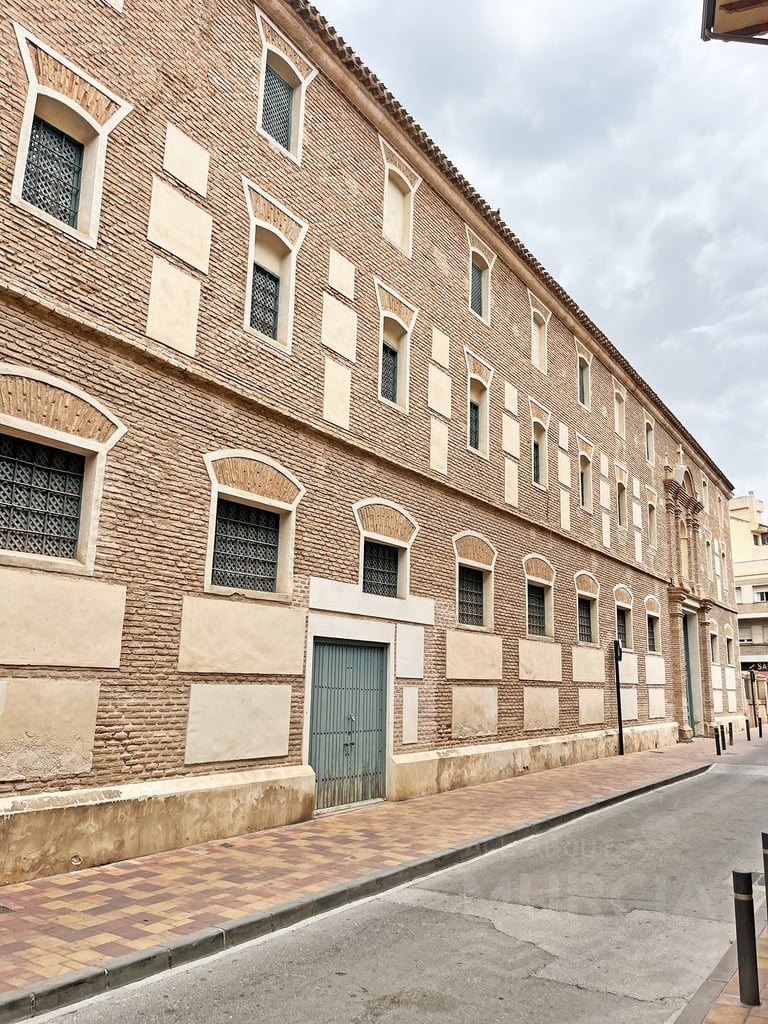
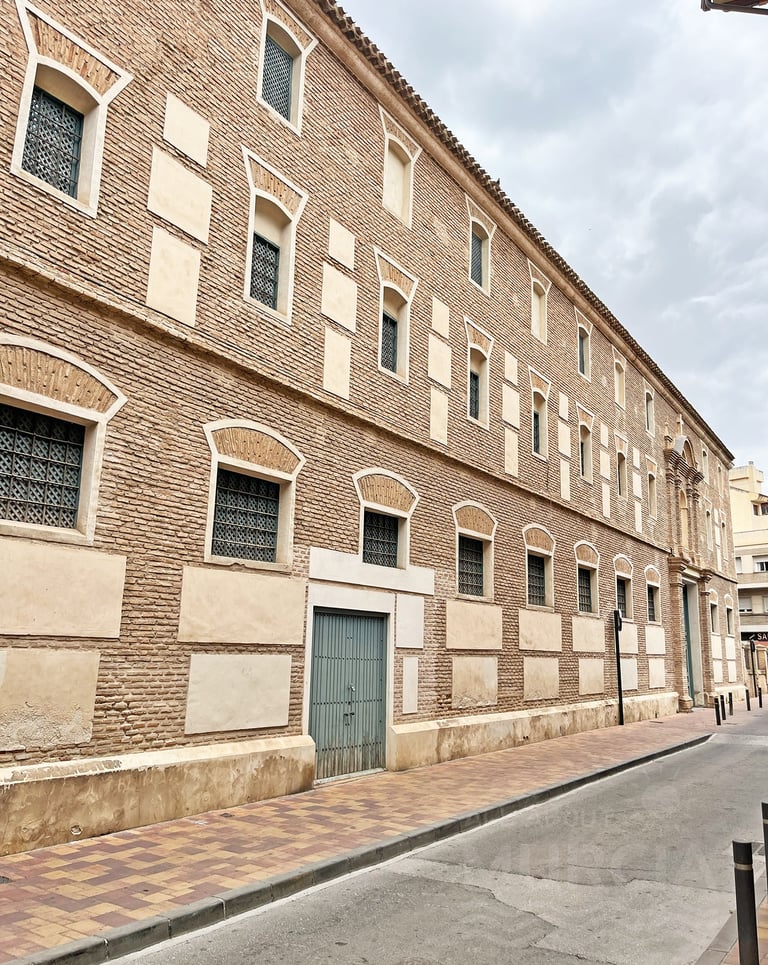
Tour "The Best of Murcia"
The tour with everything you can't miss in Murcia. An itinerary of two hours ideal for small groups. With an official tour guide.
Convent of the Augustinian Nums of Corpus Christi in Murcia
The convent of the Augustinians of Corpus Christi is one of the most extensive and best-preserved Baroque monastic complexes in the city of Murcia, although currently only the church is visitable. Located in the old suburb of Arrixaca, its origins date back to 1615, when the community founded by Sister Mariana de San Simeón arrived in the city. The current building is the result of a long construction process developed during the 17th and 18th centuries, culminating in 1729 thanks to the impetus of Bishop José Tomás de Montes. Despite the transformations undergone throughout its history, the complex retains the general layout with which it was conceived, articulated around several conventual patios, monastic dependencies, and a closure garden.
The church is one of the most interesting examples of Baroque architecture in Murcia. Its main facade, built entirely of exposed brick, follows a composition characteristic of the first third of the 18th century. Organized in three vertical aisles and two horizontal bodies, it combines notable geometric sobriety with a carefully articulated arrangement of pilasters, moldings, and niches. Above the access portal, there is a niche with the representation of the Custody, an Eucharistic symbol that gives the convent its name - On either side there are two smaller niches, now empty. The lateral bell tower and the octagonal dome covered with glazed tile complete the exterior silhouette of the complex.
The interior has a Latin cross layout, with connected lateral chapels, a spacious crossing, and a choir directly linked to the conventual closure. The decorative richness contrasts with the austerity of the exterior through highly relieved moldings, chromatic games, and a prominent dome painted in fresco by Juan Ruiz Melgarejo. The composition represents the adoration of the Mystic Lamb by a court of angels, developing an elaborate iconographic program focused on the exaltation of the Eucharist.
Among the preserved artistic works, the main altarpiece by José Ganga Ripoll stands out, presided over by a monumental Saint Augustine made by Francisco Salzillo around 1755-1760. The sculpture, larger than life, is notable for its compositional dynamism and for the expressiveness of the figures that represent the defeat of heresy. The temple also houses a remarkable Saint Cecilia by Roque López, considered one of the standout works of Salzillo's disciple, as well as a Saint Michael by Antonio Dupar and the venerated Christ of Agony, an anonymous carving from the 16th century linked to conventual spirituality.
In November 2025, it was announced that the last resident Augustinian nuns in the convent requested their transfer to Valencia. Only four elderly sisters remained, and upon their departure, they put an end to four centuries of the order's presence in this place.