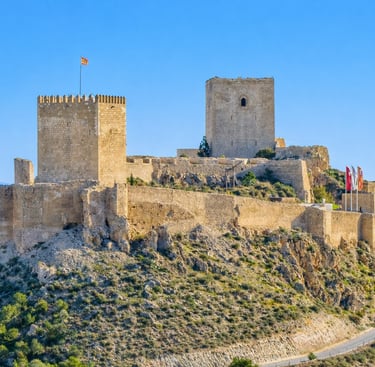
Murcia in the Modern Age
From the Catholic Monarchs to the Enlightenment of the 18th Century
The Modern Age marked a period of profound transformation in the Region of Murcia. From the consolidation of royal authority after the Middle Ages to the economic, cultural, and artistic flourishing of the 18th century. Following the end of the Reconquista, the political landscape of the Iberian Peninsula was transformed with the unification of various medieval kingdoms under the Hispanic Monarchy. From the late 15th century, Spanish expansion in the Americas would eventually shape an empire of colossal proportions.
This era witnessed moments of prosperity and crisis, demographic growth and decline, but also the creation of many of the monuments and artistic expressions that define the region today.
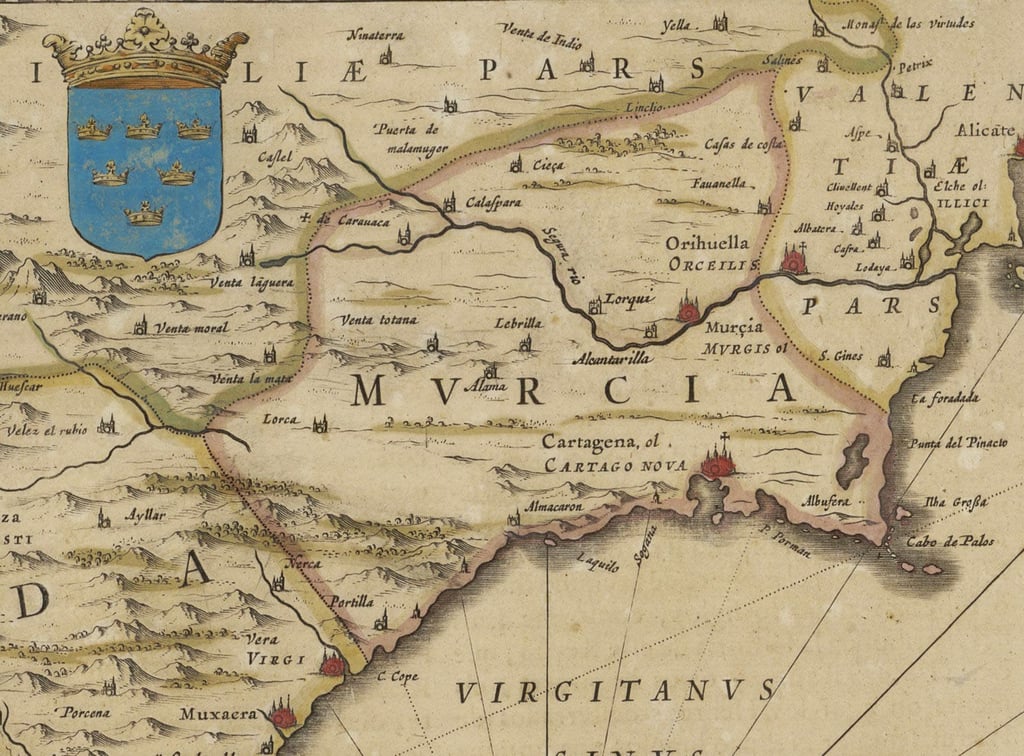
Representation of the Kingdom of Murcia in the atlas "Geographia Blaviana" by Joan Blaeu (1659). IGN.
Murcia in the 16th Century
At the end of the Middle Ages, Murcia still suffered from internal conflicts between noble lineages and urban elites. This instability came to an end under the Catholic Monarchs, who strengthened royal authority and established a more stable social and political order throughout the former Kingdom of Murcia.
In 1520, several Murcian towns joined the Revolt of the Comuneros, led in this kingdom initially by the city of Murcia and followed by Lorca, Cartagena, Caravaca, Mula, Cehegín, Moratalla and Calasparra. Unlike other areas of Castile, the revolt in Murcia was directed mainly against abuses by local oligarchies and economic grievances, rather than against King Charles I himself.
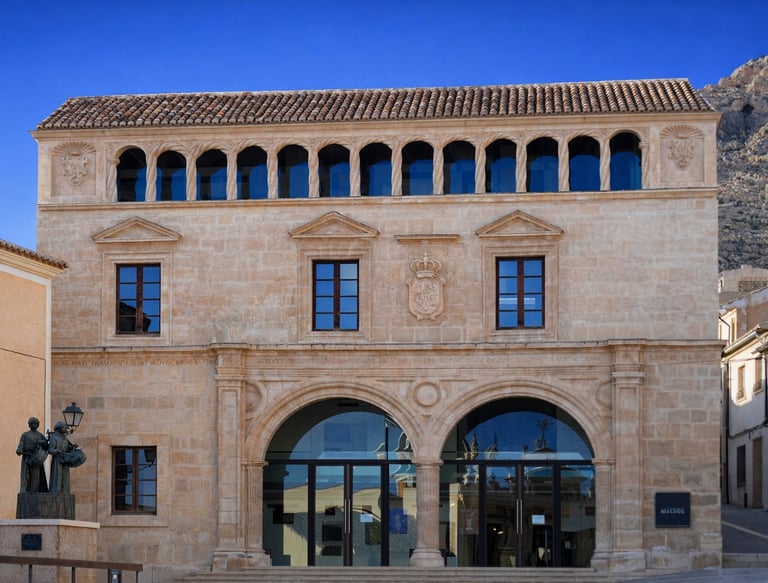
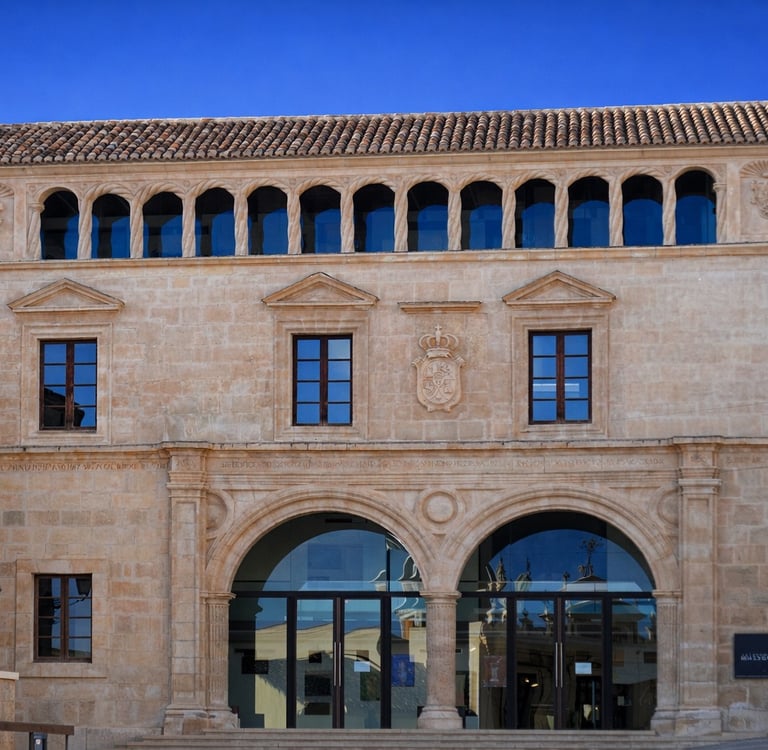
The former headquarters of the Jumilla town hall, now the Archaeological Museum, was built by the architect Julián de Alamíquez in the mid-16th century.
With the disappearance of the Nasrid frontier and the unification of the Crowns of Castile and Aragon, the region entered a phase of economic growth and demographic expansion, with population increasing by around 40%. This prosperity was driven by the silk industry, mining in Cartagena and Mazarrón, and improved agricultural exploitation in the Huerta and inland areas.
However, the coast remained insecure due to Berber piracy, prompting Philip II to order the construction of a dense network of coastal watchtowers, many of which are still preserved today.
Architecturally, this period left significant Renaissance monuments, including the College of San Esteban in Murcia, the early sections of the Cathedral Tower of Murcia, the Church of El Salvador in Caravaca, the town halls of Jumilla and Yecla, and the Collegiate Church of San Patricio in Lorca, designed by Jerónimo Quijano.

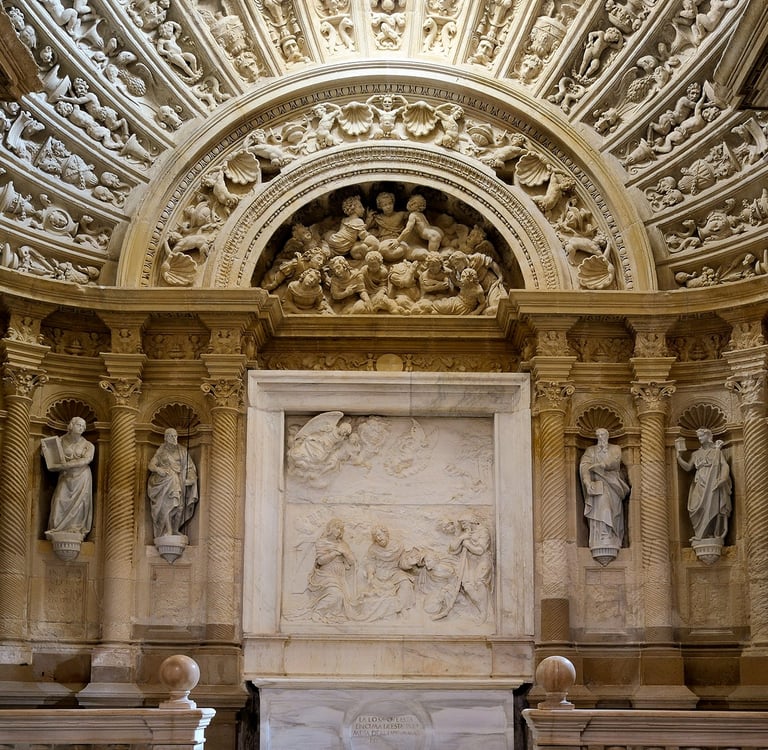
The Junterón Chapel in Murcia Cathedral is one of the most beautiful examples of Renaissance architecture in the Region of Murcia. Photo from Ñikipedia16.
Crisis and Transformation in the 17th Century
The 17th century brought serious challenges. The expulsion of the Moriscos, delayed in Murcia until 1611–1613, deeply affected regions such as the Ricote Valley, the Vega Media of the Segura and the Río Mula district. Despite attempts by the Murcian nobility to prevent it, the expulsion caused a sharp demographic and economic decline.
This crisis was worsened by the collapse of the silk market after 1630, a devastating plague in 1648 that killed nearly 30,000 people, and severe floods, including the San Calixto flood in Murcia (1651) and the San Severo flood in Lorca (1653).
Despite economic hardship, the Spanish Golden Age was a period of remarkable cultural creativity. Murcia produced or hosted significant intellectual figures such as Diego de Saavedra Fajardo, Ginés Pérez de Hita, Andrés de Claramonte, Polo de Medina and Francisco Cascales, many of whom were connected to the Seminary of San Fulgencio in Murcia city. Their works contributed to Spain’s literary, political and historical thought.
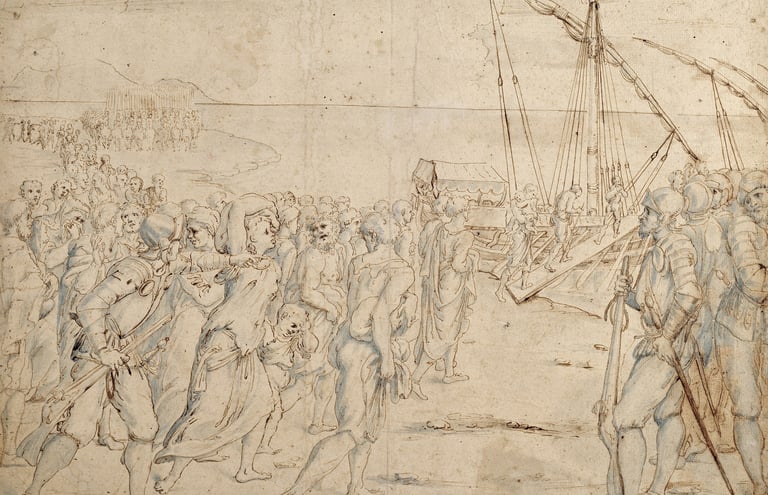
"The Expulsion of the Moriscos" by Vicente Carducho (c. 1627). Prado Museum, Madrid.

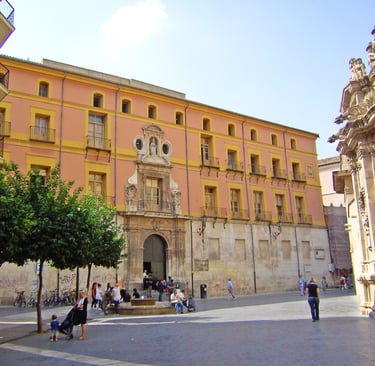
San Fulgencio Seminary, in Murcia, a few meters from the Cathedral. Photo by Atrevi87.
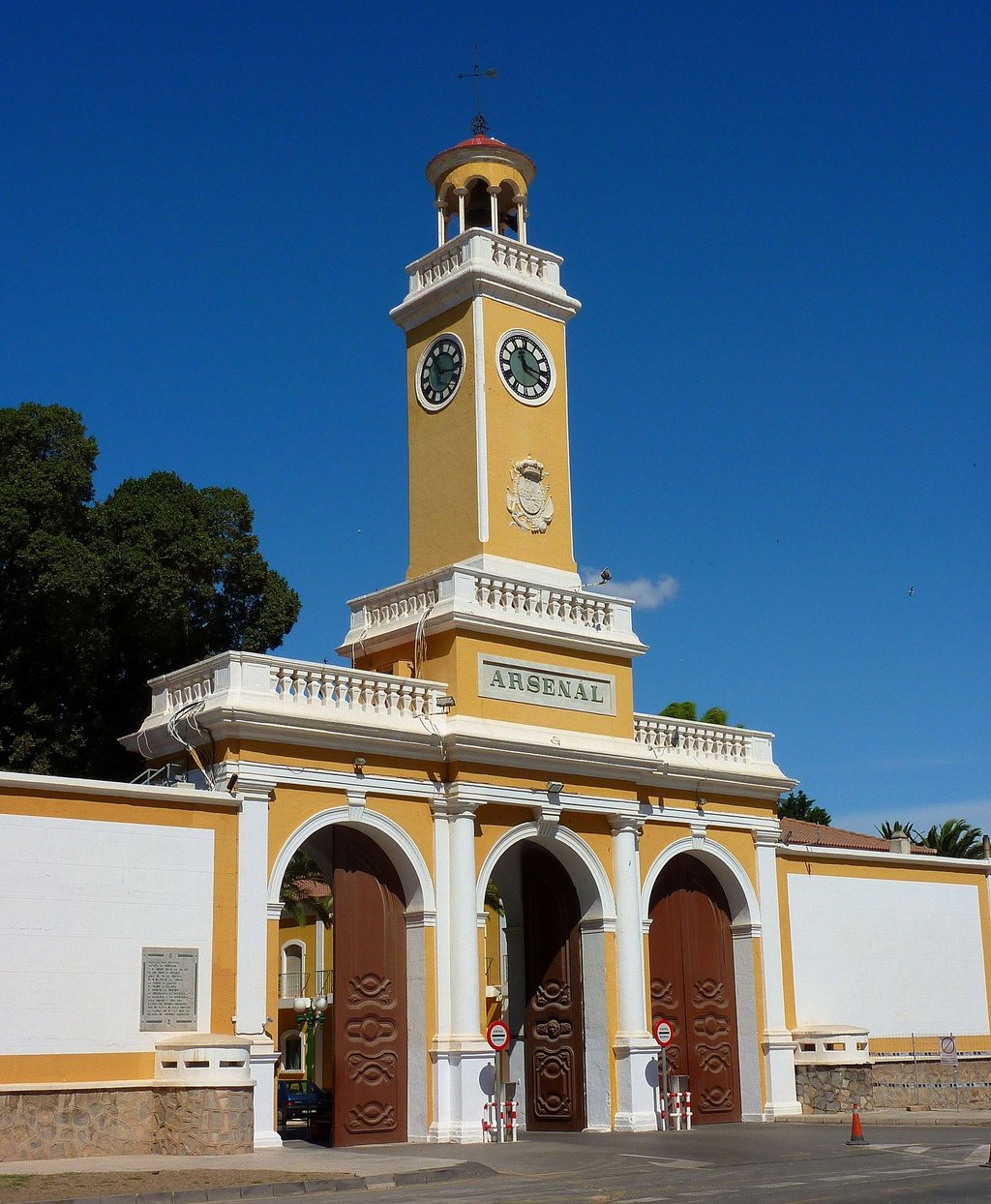
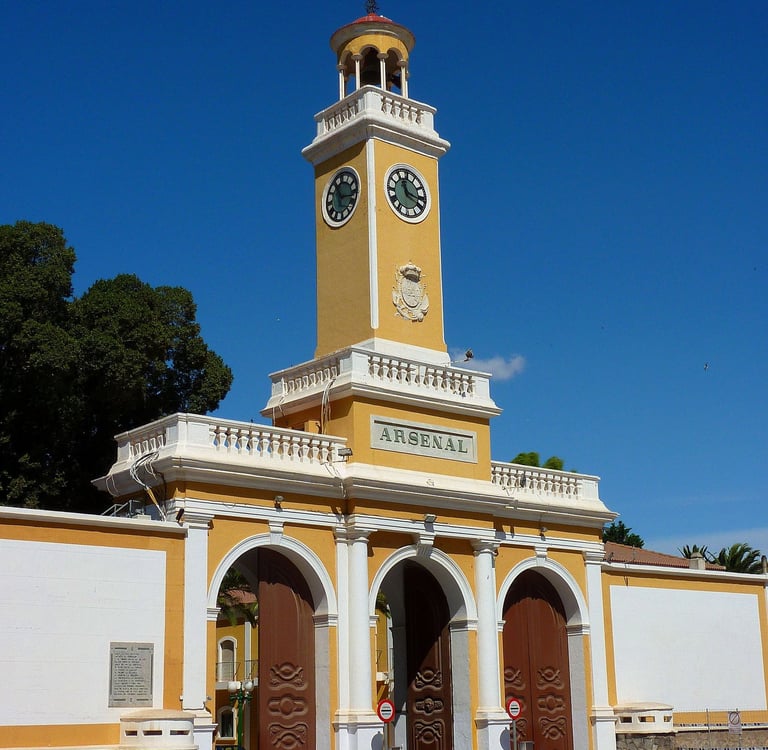
Entrance to the Cartagena Arsenal, built in the Neoclassical style in the 18th century. Photo by Outisnn.
The 18th Century: Murcia’s Century of Prosperity
The 18th century marked a turning point and is often considered the golden century of modern Murcia. The region played an active role in the War of the Spanish Succession, with key events such as the Battle of the Huerto de las Bombas (1706). The Bourbon victory was strongly supported by Cardinal Belluga, appointed Viceroy of Murcia by Philip V.
From 1720 onwards, Murcia experienced sustained population growth and economic recovery. Major hydraulic infrastructures were built, agriculture diversified and specialised, and emblematic crops such as mulberry trees (for silk) and paprika (pimentón) became characteristic of the Murcian landscape. Enlightenment-inspired projects included the Canal del Reguerón, the reconstruction of the Puentes Reservoir, the transformation of Águilas as a new port town, and the designation of Cartagena as headquarters of the Mediterranean Maritime Department, with the construction of its great Naval Arsenal.
In 1777, the Murcian statesman José Moñino Redondo, Count of Floridablanca, became Secretary of State, promoting infrastructure and reform throughout the region.
The Splendour of Murcian Baroque
The Bourbon period was exceptionally favourable for artistic development. Baroque architecture reached its height, particularly in religious buildings. In Murcia city, outstanding examples include the churches of San Miguel, San Nicolás, Santa Eulalia, San Juan de Dios, the Monastery of Los Jerónimos in Guadalupe, and above all the spectacular Baroque façade of the Cathedral of Murcia and the completion of its tower.
Elsewhere in the region, notable monuments include the façade of the Basilica of the Vera Cruz in Caravaca, the Church of El Salvador in Jumilla, and numerous convents and parish churches.
Civil architecture also flourished, with palaces in Murcia, Lorca and Mula, such as the Episcopal Palace, Palacio Fontes and Palacio Vinader, while Cartagena developed an impressive ensemble of military and neoclassical buildings, including the Walls of Charles III and the Naval Arsenal.


The façade of Murcia Cathedral is one of the most impressive 18th-century achievements in Murcia and a pinnacle of Spanish Baroque architecture. Photo by Fernando.
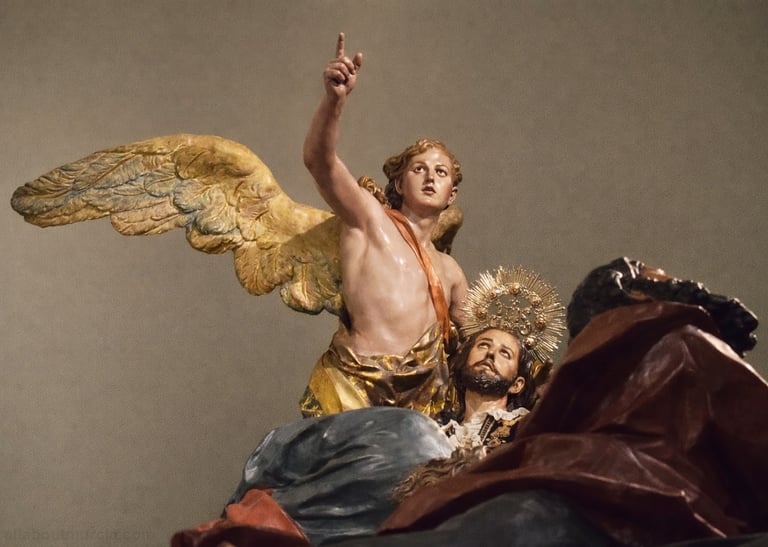
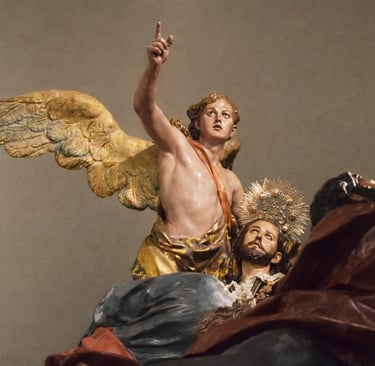
Detail of the Prayer in the Garden, one of the Holy Week "pasos" -floats- created by Salzillo. Salzillo Museum, Murcia.
This period also witnessed the rise of Francisco Salzillo, the greatest Murcian sculptor and one of the masters of late Spanish Baroque. His religious imagery, especially his Holy Week processional groups, defined the Murcian sculptural school, bridging Baroque expressiveness with Rococo elegance and early Neoclassicism.
In the city of Murcia, you'll find the Salzillo Museum, where you can admire a large part of this artist's work. In addition to the sculptures he created for the Brotherhood of Our Father Jesus, you can also admire a beautiful nativity scene with over 500 pieces of extraordinary quality.