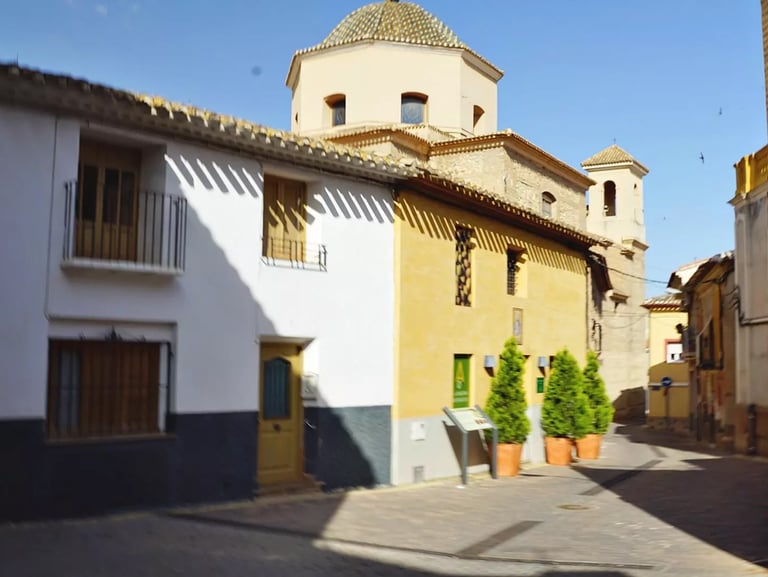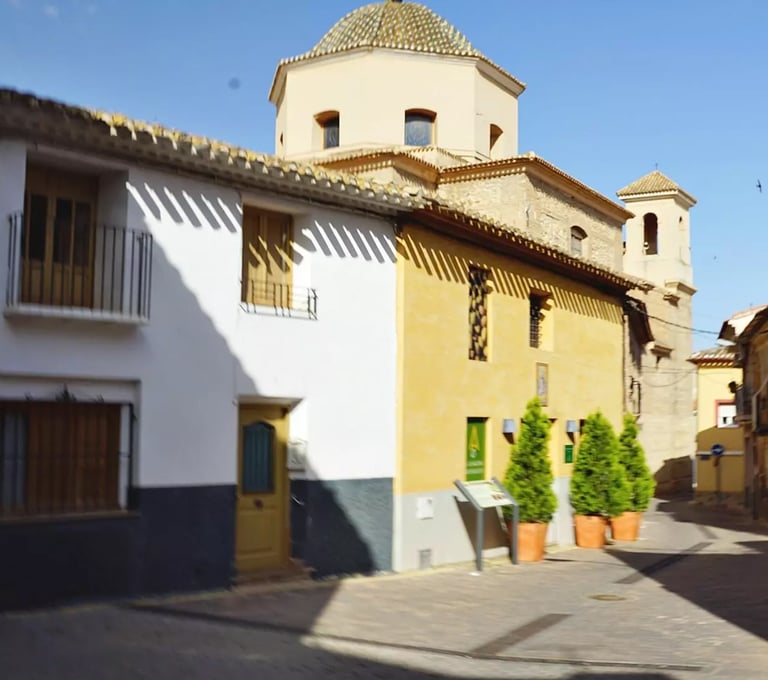
Discover the Cultural Heritage of the Region of Murcia
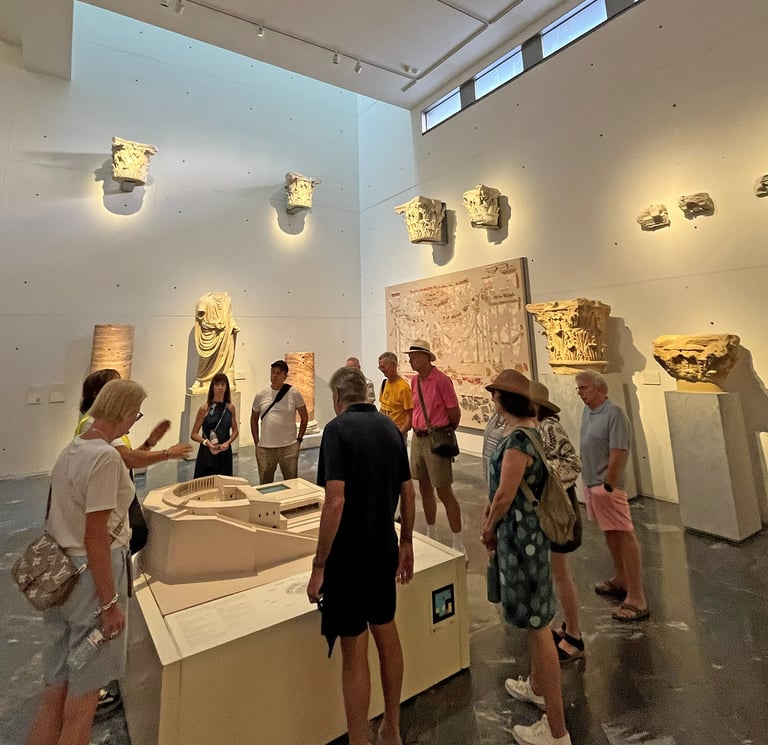
The Region of Murcia offers a rich and surprisingly diverse museum landscape that reflects its long history, artistic creativity and strong local traditions. From prehistoric archaeology to contemporary art, from sacred heritage to industrial memory, Murcian museums allow visitors to explore the region through multiple perspectives and periods.
One of Murcia’s great strengths lies in the variety and quality of its cultural institutions, many of them closely linked to archaeological sites, historic buildings or local communities. Museums are not concentrated in a single city, but spread throughout the region, making cultural visits an essential part of travelling across Murcia.
Visit Museums and Cultural Sites
Archaeological Museums
Municipal Archaeological Museums
Municipal archaeological museums present the historical evolution of their towns and surrounding territories, displaying material remains from prehistoric times to the Middle Ages. They offer a broad chronological overview and are essential for understanding local history. These are some of the most outstanding municipal archaeological museums in the Region of Murcia:
Murcia Archaeological Museum
One of the most important archaeological museums in the region, with collections ranging from prehistoric tools to Islamic artefacts, including Iberian sculpture, Roman mosaics and Visigothic remains.
Visit the official website of the Murcia Archaeological Museum
Cartagena Archaeological Museum
Focused on the ancient history of Cartagena, this museum presents Iberian, Roman and Byzantine remains that help explain the city’s role as a major Mediterranean port.
Visit the official website of the Cartagena Archaeological Museum
Lorca Archaeological Museum
Explores the long history of Lorca, with special emphasis on its medieval past as a frontier city between Christian and Islamic territories.
Visit the official website of the Lorca Archaeological Museum
Caravaca Archaeological Museum
Presents the archaeological heritage of the northwest of Murcia, from prehistoric settlements to the Christian Middle Ages.
Visit the official website of the Caravaca Archaeological Museum
Jumilla Archaeological Museum
Housed in a beautiful 16th-century Renaissance palace, originally the Jumilla Town Hall, it boasts an important collection of prehistoric art and is notable for its collection of Iberian artifacts, primarily from the Coimbra del Barranco Ancho site, one of the most important in the Region of Murcia.
Visit the official website of the Jumilla Archaeological Museum
Yecla Archaeological Museum
Opened in 1983, it is housed in an 18th-century stately home. It contains an interesting collection of artifacts found in the municipality, dating from Prehistory to the Middle Ages.
Visit the official website of the Yecla Archaeological Museum
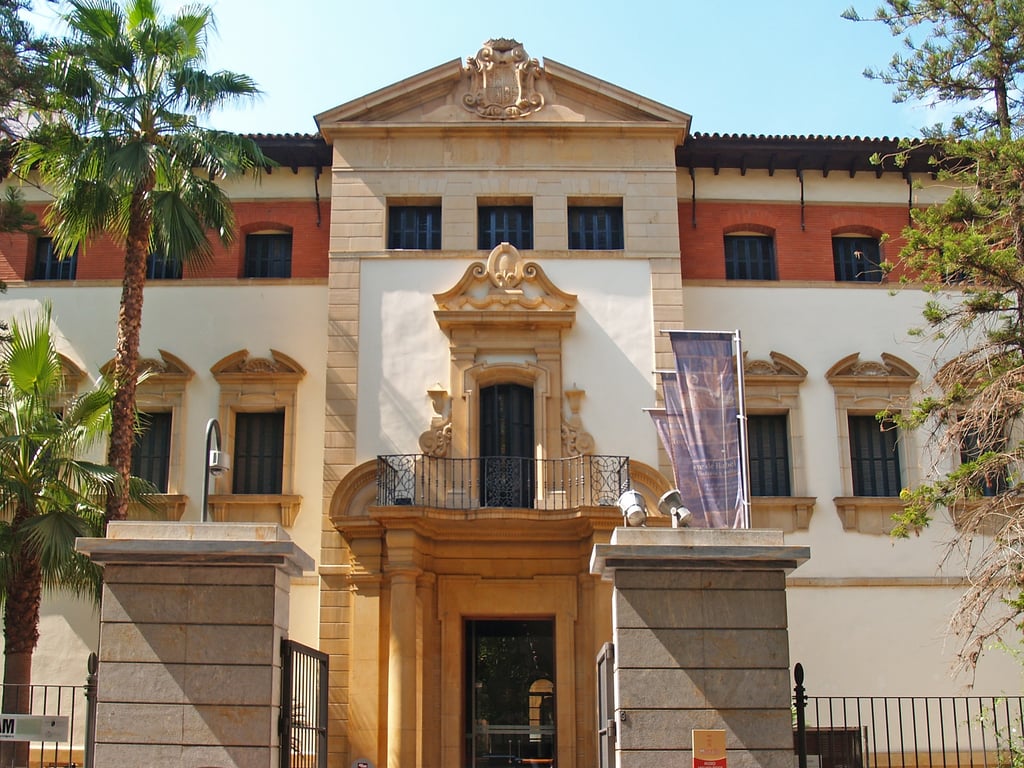
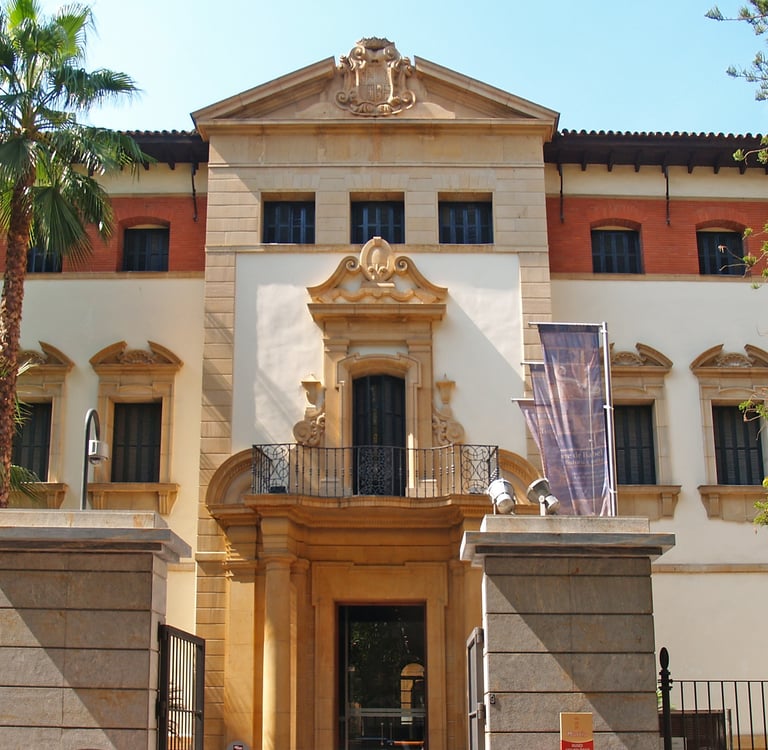
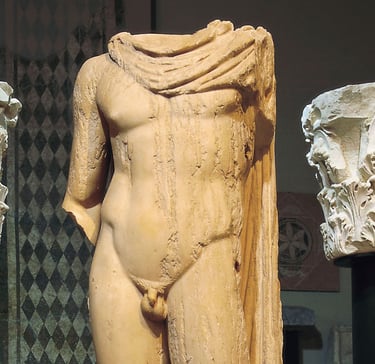
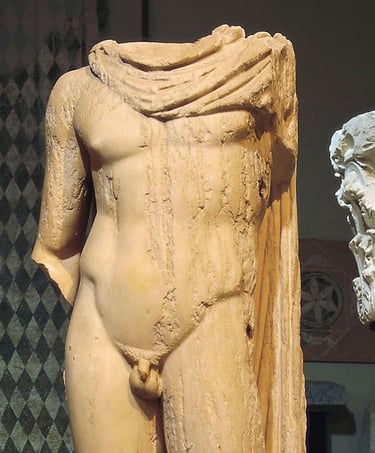
Murcia Archaeological Museum


Lorca Archaeological Museum. Photo: Ymblanter.
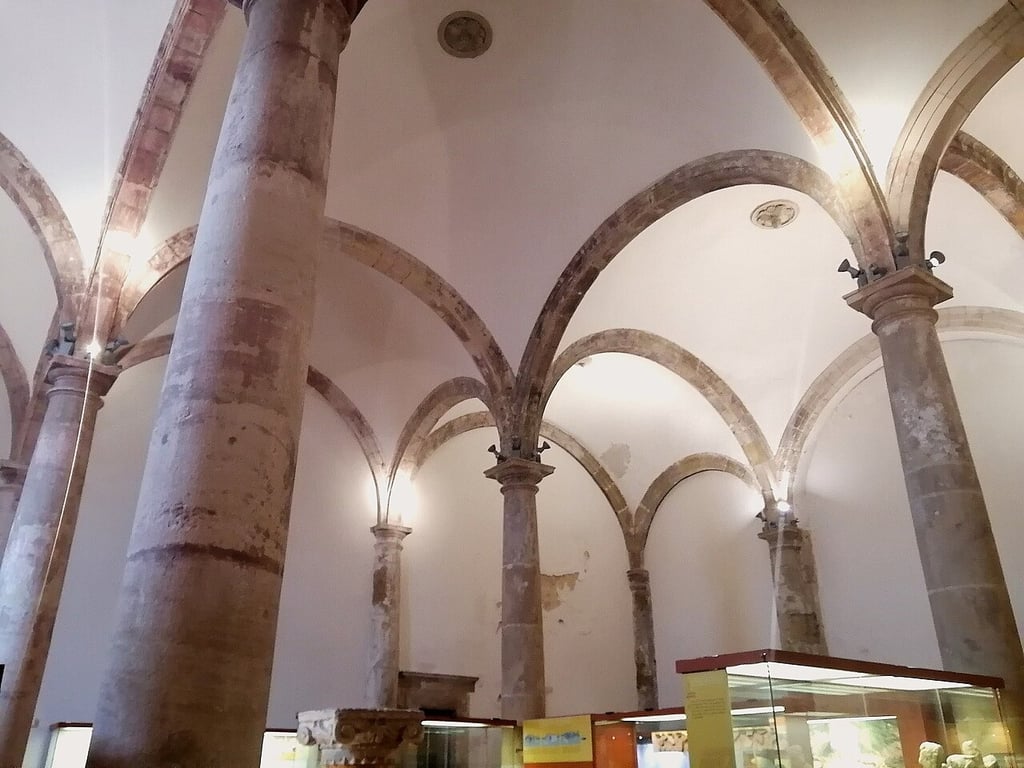
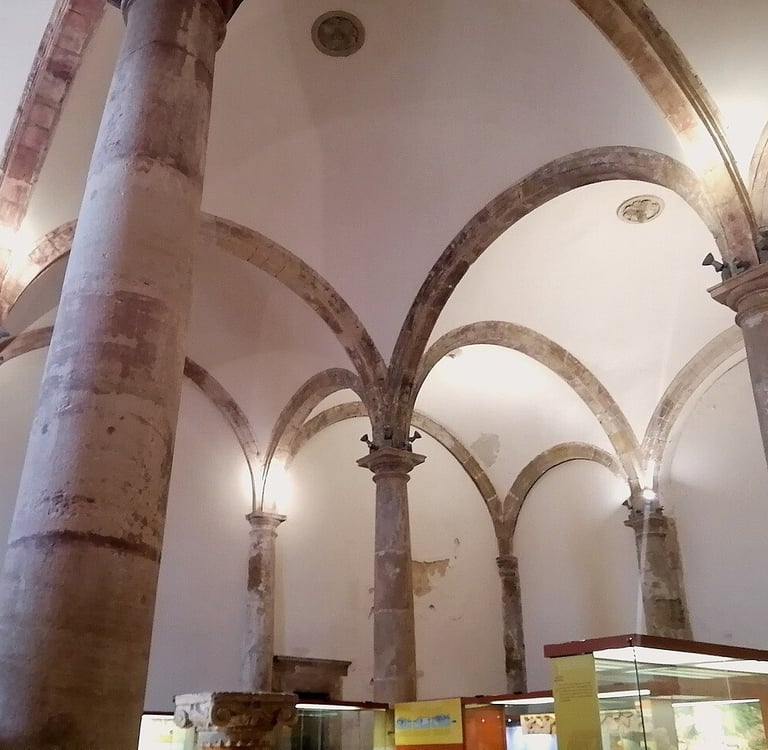
Interior of the Archaeological Museum in Caravaca, housed in a former 16th-century church. Photo by Anidae.
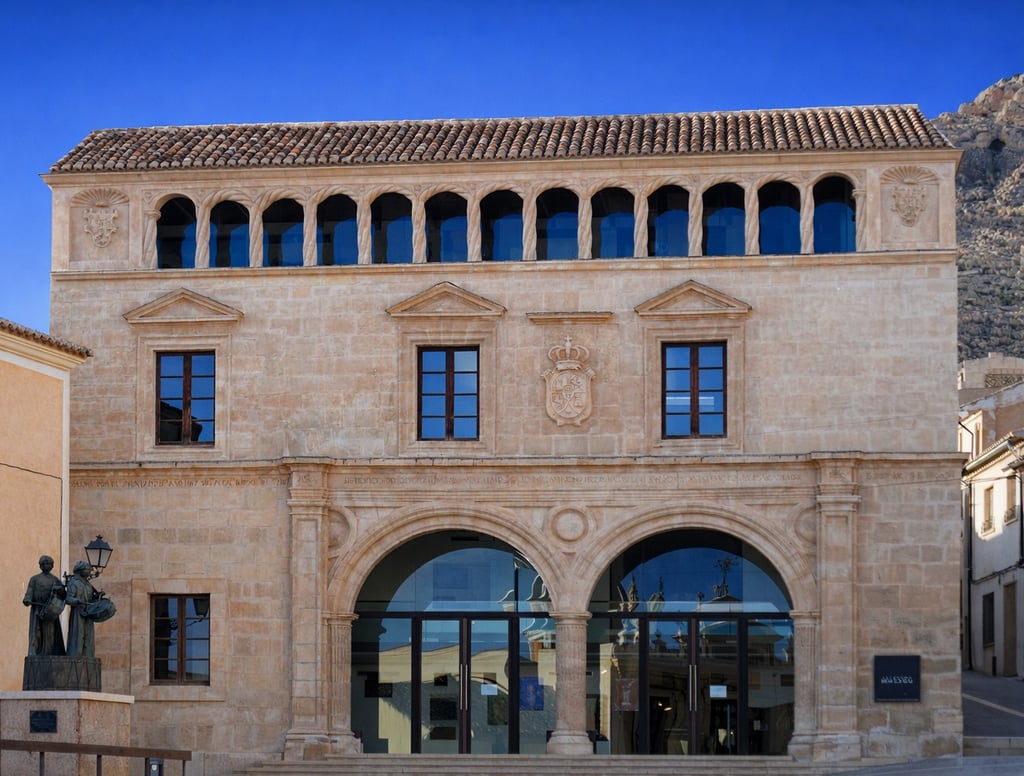
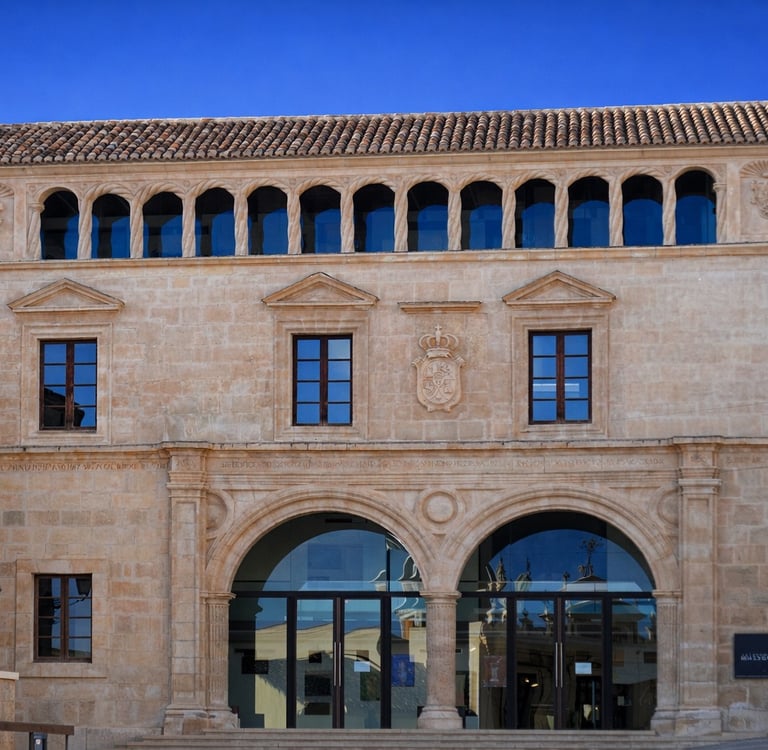
Jumilla Archaeological Museum.
Site Museums
These museums are closely linked to specific archaeological sites and focus on explaining them in depth. These are some of the most outstanding monographic archaeological museums in the Region of Murcia:
Roman Baths Museum of Águilas
Built around preserved Roman bath structures, this museum illustrates everyday life in Roman Águilas and the importance of water and leisure in antiquity.
Visit the official website of the Roman Baths Museum of Águila
Roman Theatre Museum, Cartagena
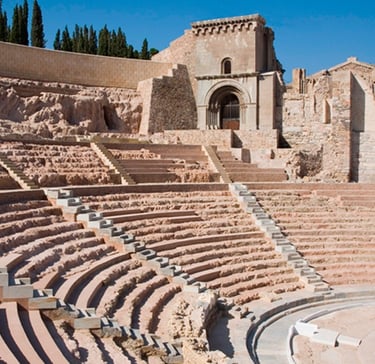
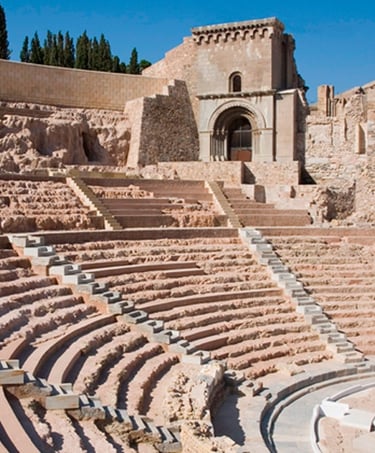
One of Spain’s most impressive site museums, it explains the Roman Theatre of Cartagena and the urban life of Carthago Nova through sculpture and architecture.
Visit the official website of the Roman Theatre Museum
Roman Forum Museum, Cartagena
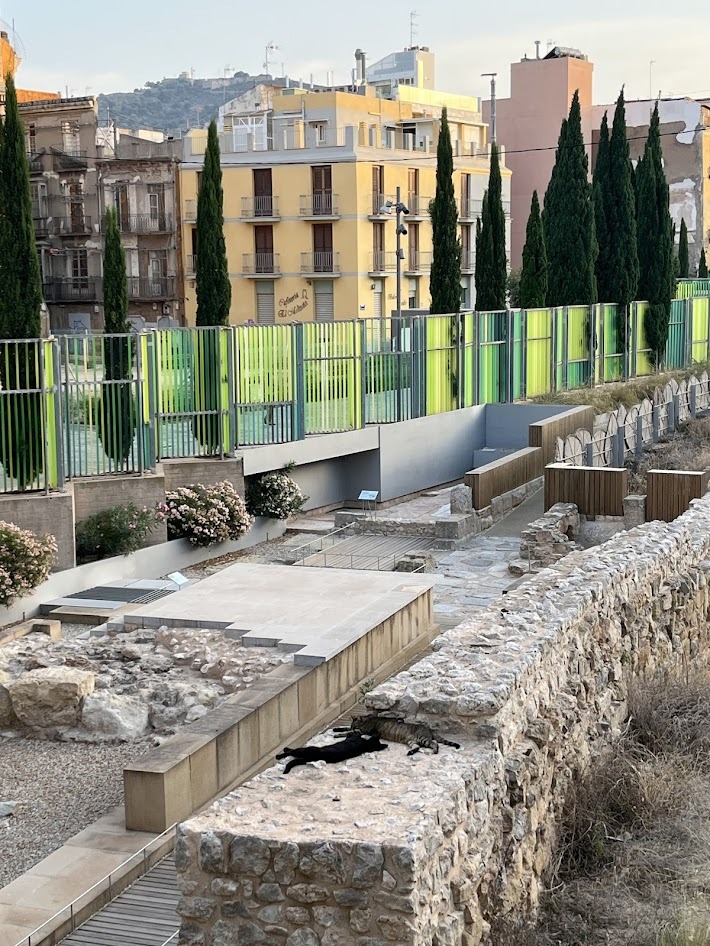
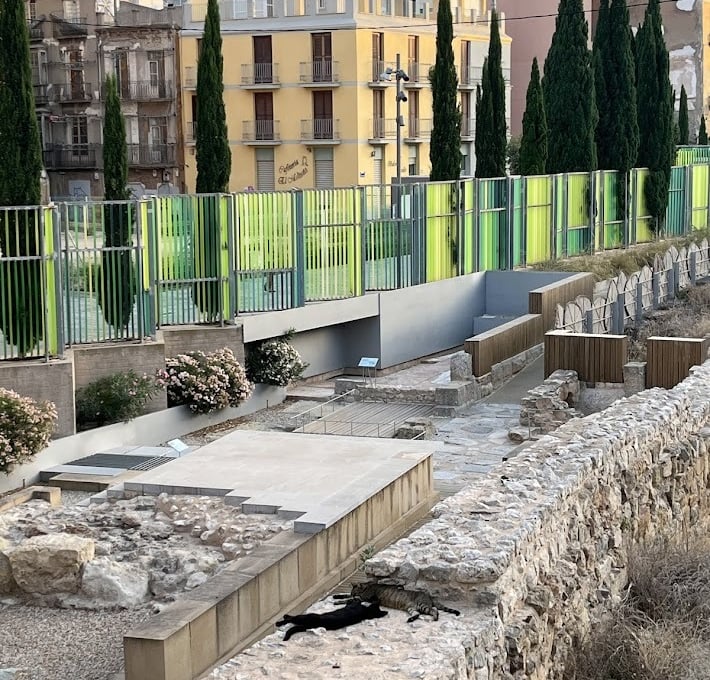
Dedicated to the civic centre of Roman Cartagena, this museum showcases streets, baths and public buildings from the heart of the ancient city.
Visit the official website of the Roman Forum Museum
Fortaleza del Sol Interpretation Centre, Lorca
Located within Lorca’s medieval castle, this centre explains the fortress and the city’s strategic role as a frontier stronghold.
Visit the official website of the Fortaleza del Sol
Siyâsa Museum, Cieza
Houses artefacts and refined plasterwork from the Islamic city of Medina Siyasa, offering insight into daily life in medieval Al-Ándalus.
Visit the website of the Siyâsa Museum
Islamic Wall Visitor Centre, Murcia
Interprets the remains of Murcia’s medieval Islamic fortifications and explains the city’s origins and early urban development.
Visit the official website of the Islamic Wall Visitor Centre
El Cigarralejo Museum, Mula
One of the finest Iberian museums in Spain, featuring grave goods, ceramics and sculptures from a major Iberian settlement and necropolis.
Museum of the Roman Forum in Cartagena.
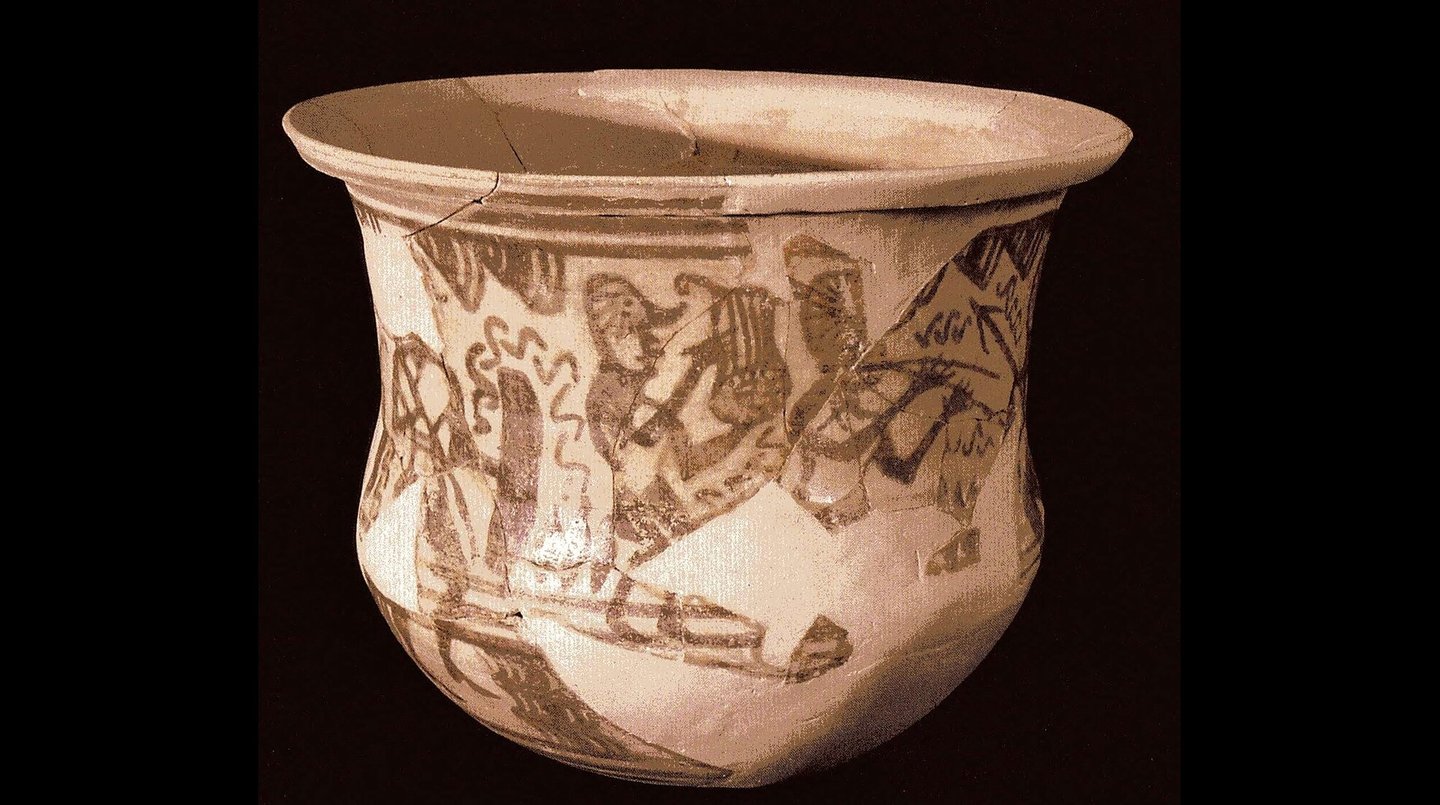

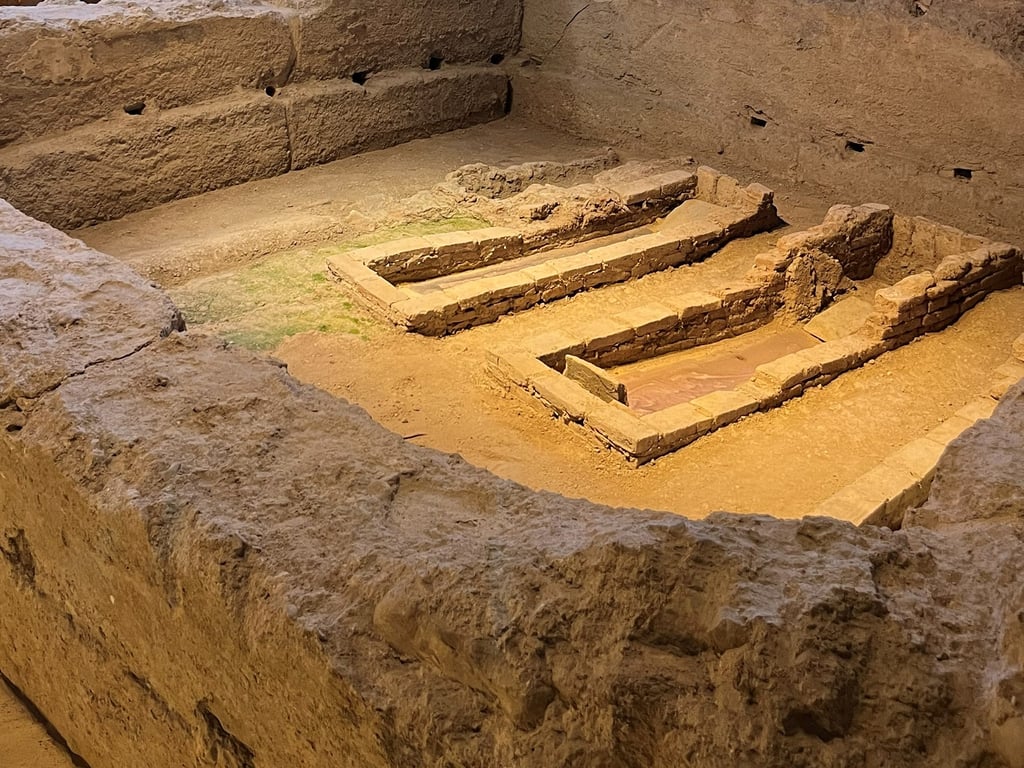
Iberian krater from the 3rd century BC in the Cigarralejo Museum, Mula.
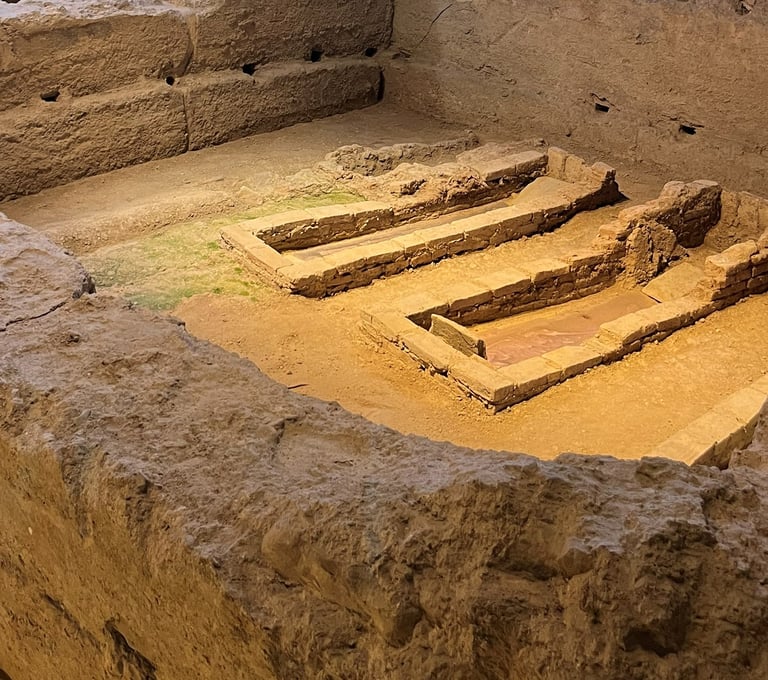
Medieval burial area in the Interpretation Centre of the Islamic Wall of Murcia.
Museums of Sacred Art
Sacred art museums preserve religious heritage linked to devotion, pilgrimage and artistic patronage. There are religious art museums in practically every municipality in the Region. These are some of the most notable:
Santa Ana Monastery Museum, Jumilla
Displays religious artworks and liturgical objects connected to monastic life and devotion in the Jumilla area.
Visit the official website of the Santa Ana Monastery Museum
Vera Cruz Museum, Caravaca de la Cruz
Focused on the Holy Cross and the pilgrimage tradition of Caravaca, with religious art and historical objects.
Visit the official website of the Vera Cruz Museum
Murcia Cathedral Museum
Exhibits liturgical treasures, paintings and sculptures related to the long history of Murcia Cathedral.
Visit the official website of the Murcia Cathedral Museum
San Juan de Dios Church-Museum, Murcia
A Baroque masterpiece combining architecture, sculpture and sacred collections in one of Murcia’s most remarkable churches.
Visit the official website of the San Juan de Dios Church-Museum
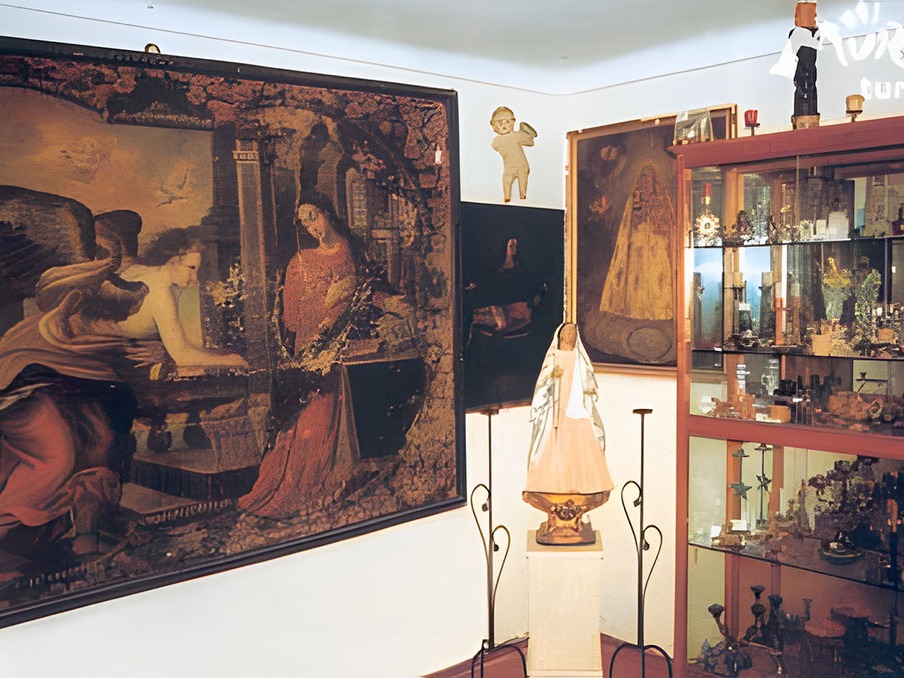
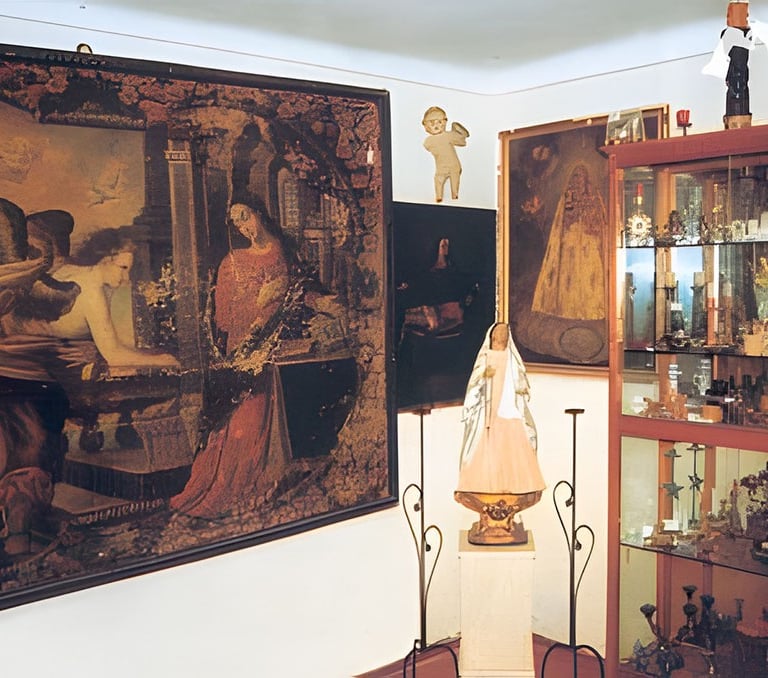
Santa Ana Monastery Museum, Jumilla
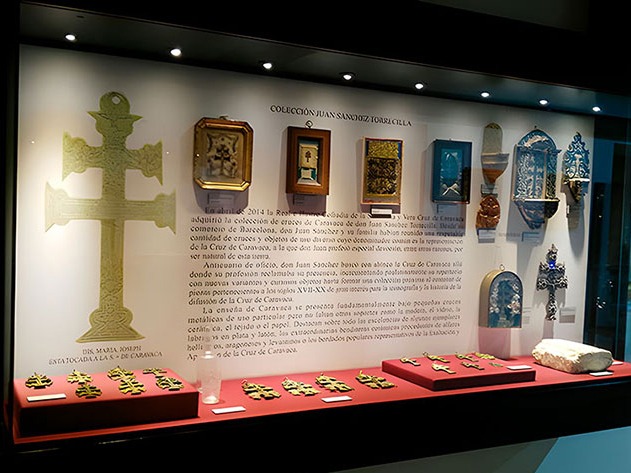
Vera Cruz Museum, Caravaca de la Cruz
Fine Arts Museums
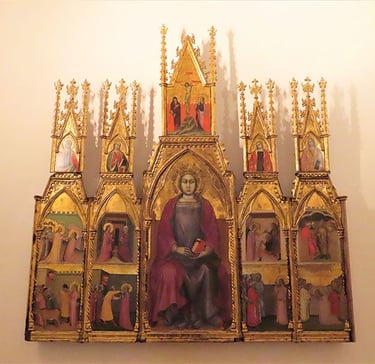
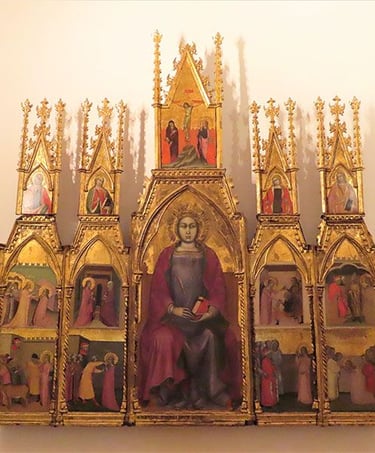
These museums showcase Murcia's artistic creativity, from Gothic painting to contemporary art. Here are some of the most important Fine Arts museums in the Region:
Museum of Fine Arts of Murcia (MUBAM)
It exhibits painting and sculpture from the 15th to the 20th centuries, with a strong regional focus. It is the most important painting collection in the Region of Murcia.
Visit the official website of the Murcia Museum of Fine Arts (MUBAM)
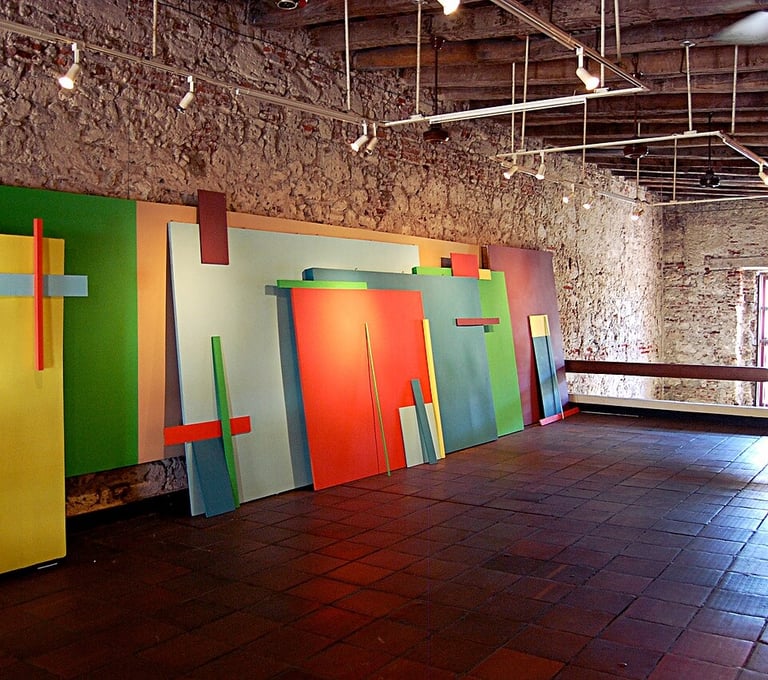
Regional Museum of Modern Art (MURAM), Cartagena
Dedicated to modern and contemporary art, it is located in a beautiful early 20th-century building, one of the most outstanding examples of modernist architecture in Cartagena.
Visit the official website of the Regional Museum of Modern Art (MURAM)
Salzillo Museum, Murcia
Dedicated to Francisco Salzillo, Murcia's leading Baroque sculptor, and to Holy Week imagery. In the museum, you can admire the wooden carvings that make up the floats used in Holy Week processions and a monumental nativity scene with more than 500 figurines.
Visit the official website of the Salzillo Museum
Ramón Gaya Museum, Murcia
Explore the work and thought of the painter and intellectual Ramón Gaya, the most prominent painter in Murcia during the 20th century.
Visit the official website of the Ramón Gaya Museum
Antonio Campillo Museum, Ceutí
Focusing on modern sculpture and the artistic legacy of Antonio Campillo, a sculptor from Murcia born in this town.
Visit the official website of the Antonio Campillo Museum
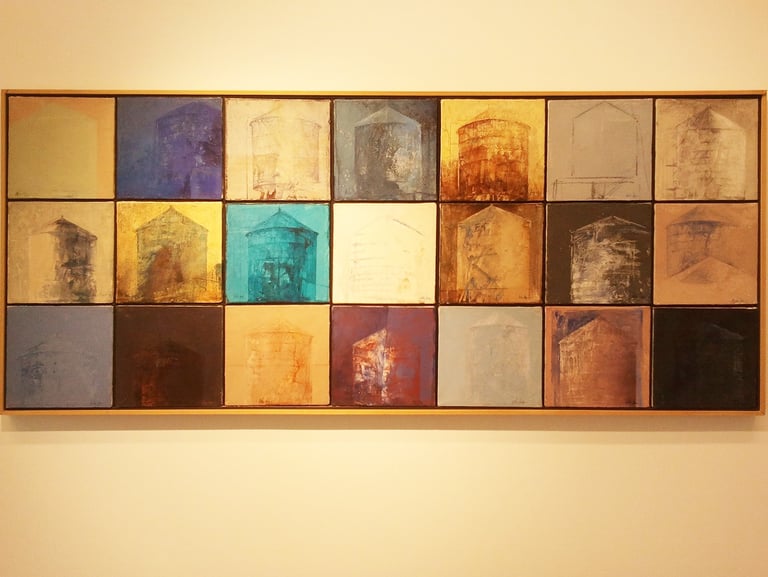
Pedro Cano Foundation Museum, Blanca
Exhibits contemporary works by Pedro Cano alongside international artists. They also play a vital role in enriching the cultural life of Blanca, with events such as concerts, book clubs, and guided tours.
Visit the official website of the Pedro Cano Foundation Museum
Casa Pintada Foundation - Cristóbal Gabarrón Museum, Mula
In a splendid 18th-century palace, the work of contemporary painter Cristóbal Gabarrón is exhibited, in addition to hosting temporary exhibitions by other artists and a busy cultural program.
One of the rooms of the MURAM museum in Cartagena. Photo by Matiasmaggio.

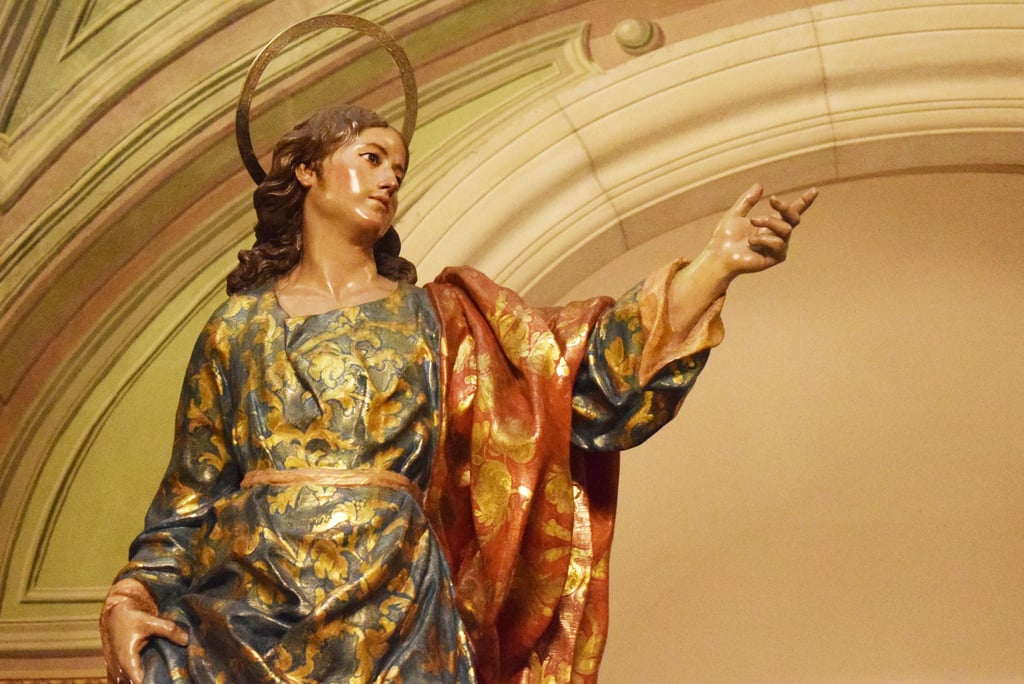
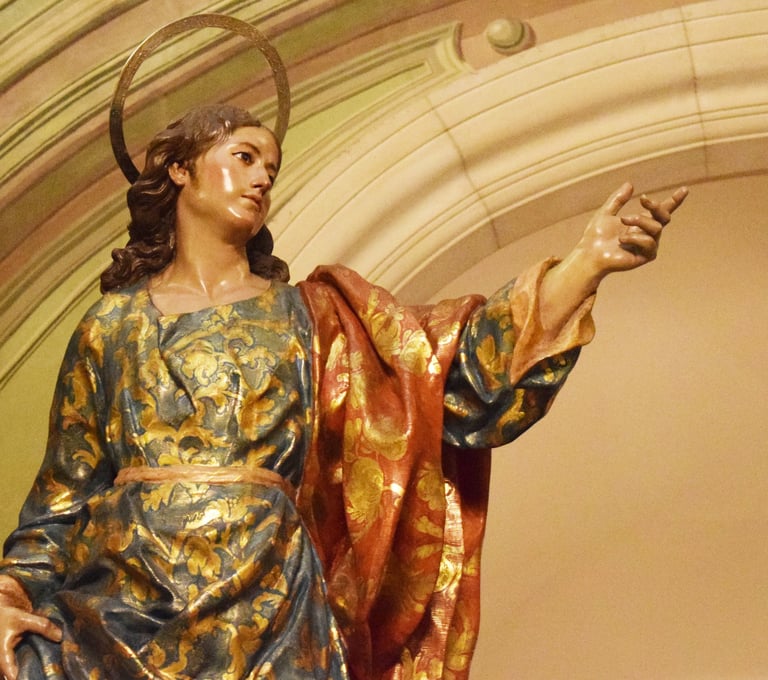
Saint John, one of Francisco Salzillo's masterpieces, exhibited in his museum in Murcia.
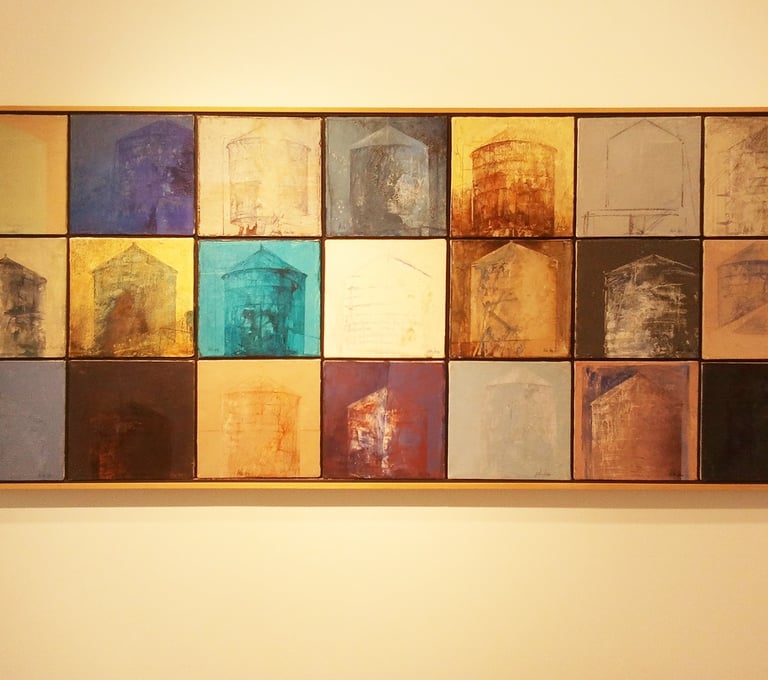
Composition by Pedro Cano, exhibited at his Foundation - Museum in Blanca.
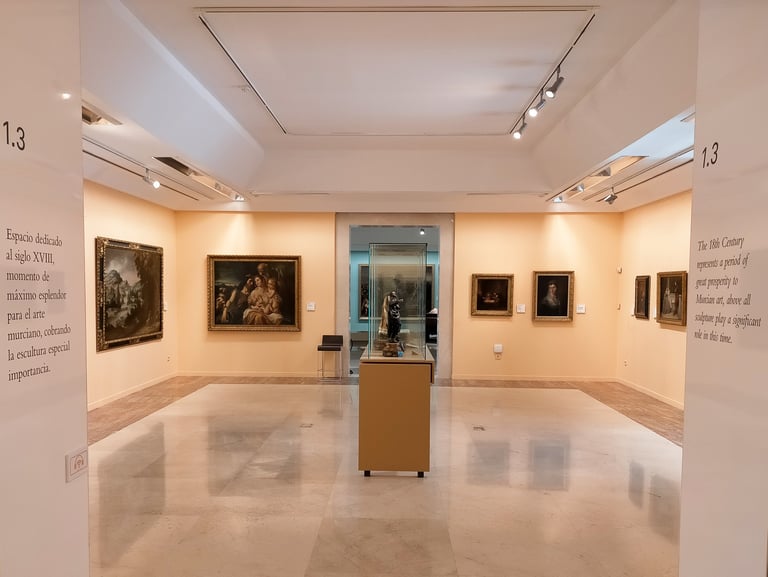
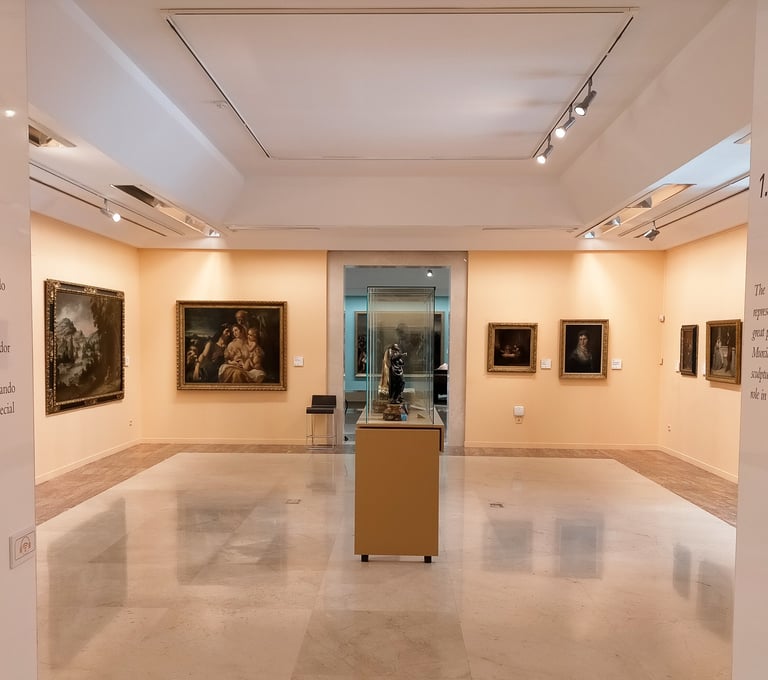
Room dedicated to 18th-century painting in the Museum of Fine Arts of Murcia. Photo from Wikimedia.
Ethnographic Museums
These museums preserve traditional ways of life, crafts and rural culture. Many of them originate from private collections that are eventually opened to the public due to their appeal. These are some of the most outstanding in the Region of Murcia:
Huerta Ethnological Museum, Alcantarilla
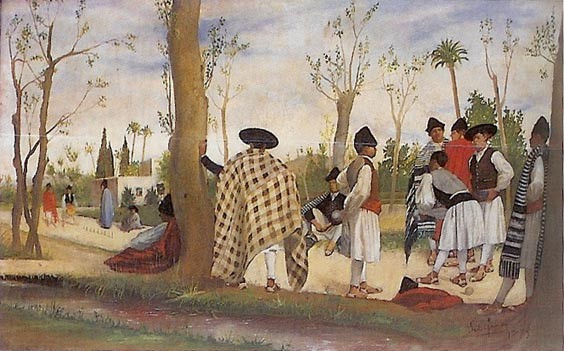
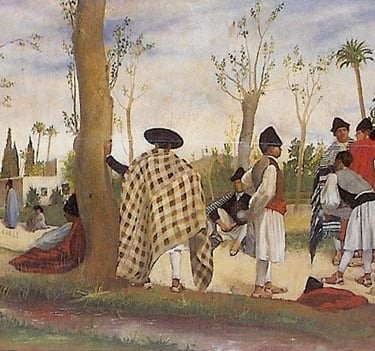
Dedicated to agricultural traditions and daily life in the Huerta of Murcia. It is located near a waterwheel with elements dating back to the 15th century, which was part of the irrigation system in the area.
Visit the official website of the Huerta Ethnological Museum
Medina Nogalte Heritage Complex, Puerto Lumbreras
Interprets medieval frontier life and settlement patterns. Surrounding a 12th-century Islamic castle are a series of caves, inhabited for centuries. These caves have been themed to showcase different aspects of life in the municipality, such as traditional crafts and education.
Visit the official website of the Nogalte Castle Visitor Centre
San Javier Museum
Housed in a former Civil Guard barracks, it presents an overview of the municipality's history organized into three main areas: land, sea, and air. There is a section dedicated to the General Air Academy, which is located in San Javier.
Visit the official San Javier Museum website
Carlos Soriano Ethnographic Museum, El Llano, Molina de Segura
This is a former manor house converted into a museum. Many of its rooms remain as they were originally, showcasing what life was like in 19th-century Murcia.
Visit the official Carlos Soriano Museum website
Fuente Álamo Museum
Opened in 2007, it is one of the most important municipal museums in the Region. It combines an area dedicated to ethnography with another exhibiting the winning paintings from the Villa de Fuente Álamo Painting Competition, which has been held since 1973.
Visit the official website of the Fuente Álamo Museum
Los Molinos del Río Hydraulic Museum, Murcia
This is one of the largest mill complexes in Europe, originally from the 18th century and masterfully restored by Juan Navarro Baldeweg between 1985 and 1989.

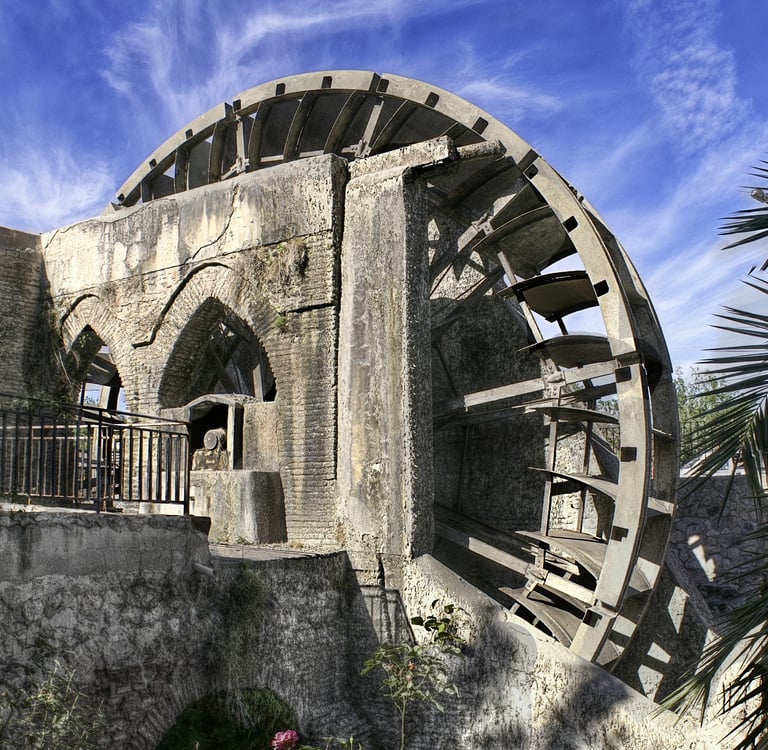
Waterwheel for irrigation near the Museo de la Huerta, Alcantarilla. Photo by Pedro J Pacheco.
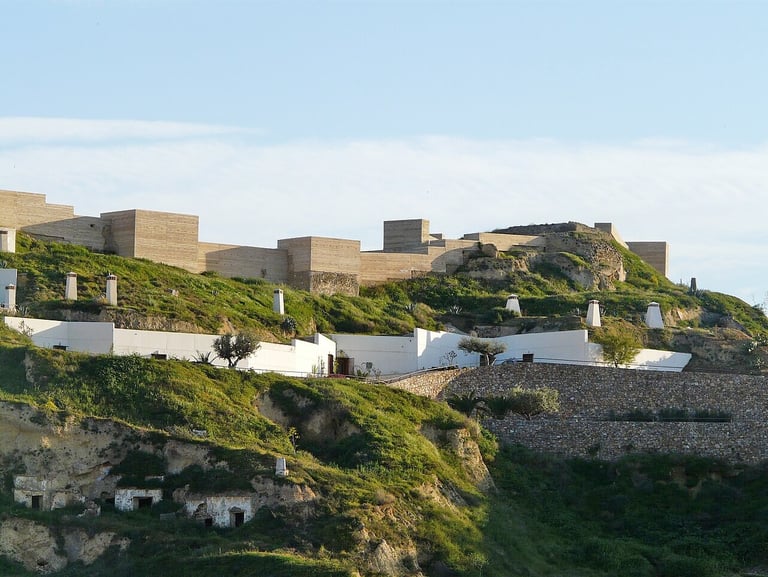
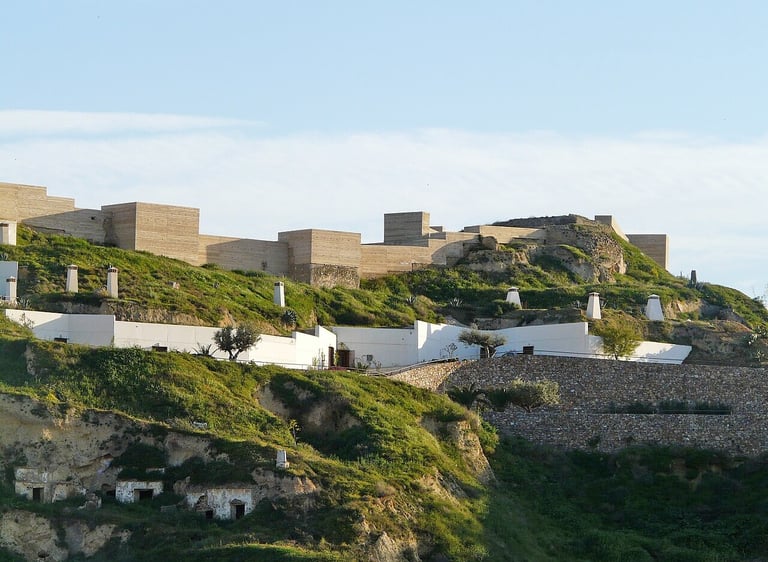
Medieval castle and caves that are part of the Medina Nogalte Heritage Complex, in Puerto Lumbreras. Photo by Wikipuerto.
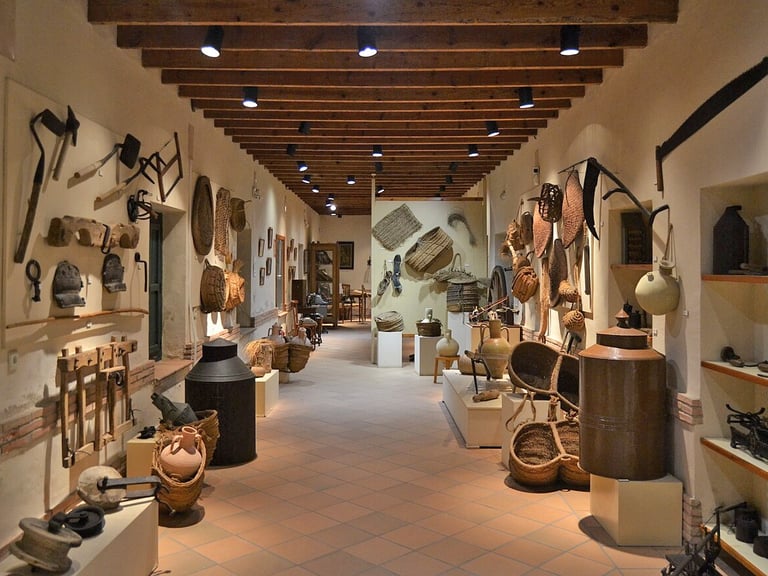
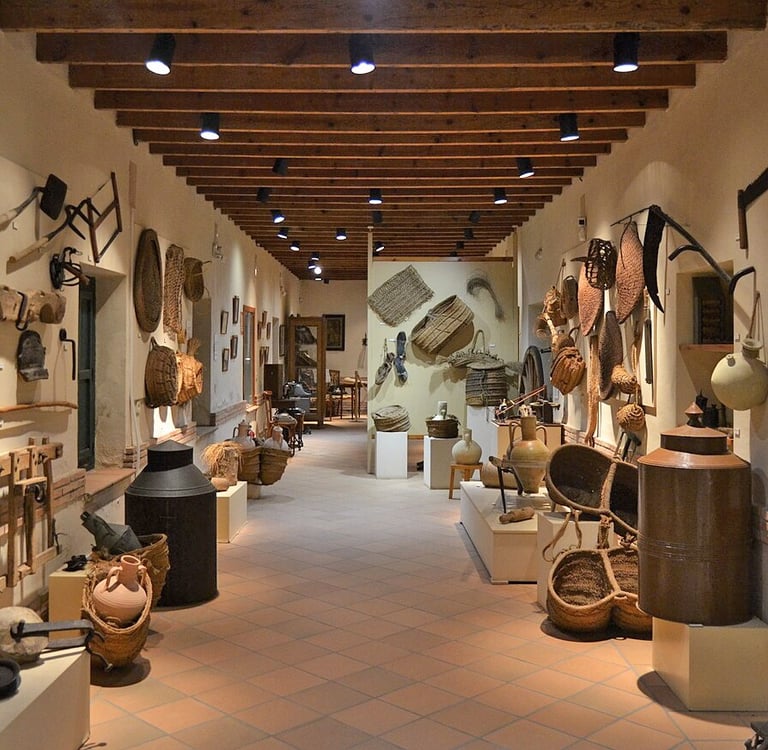
Room dedicated to ethnography in the San Javier Museum. Photo by Joanbanjo.
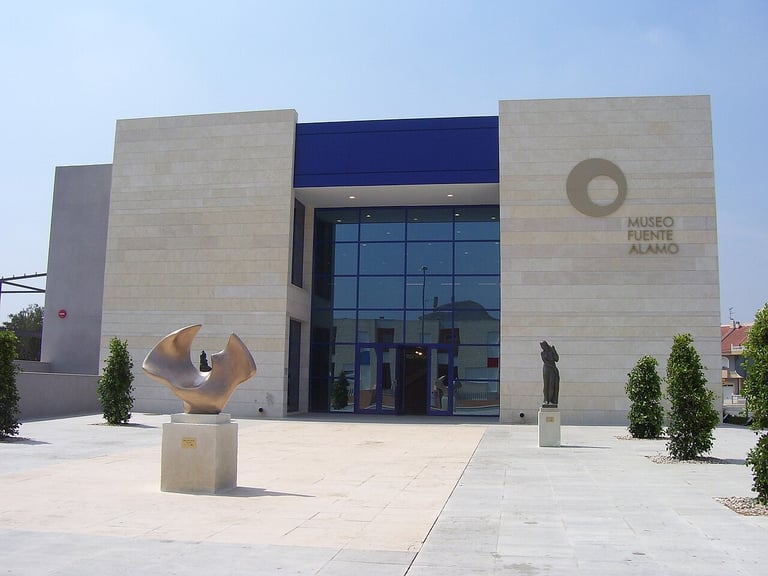
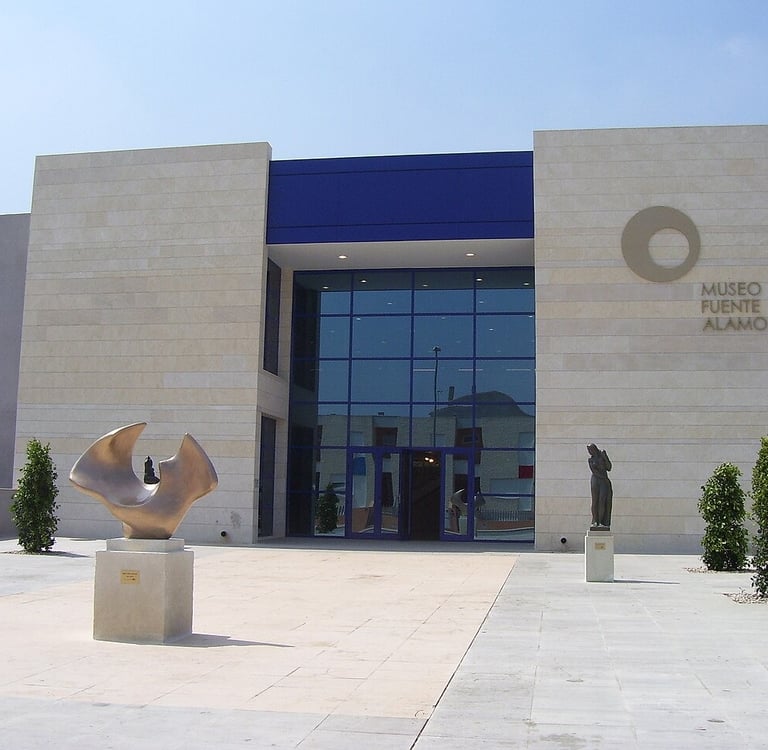
Main facade of the Fuente Álamo Museum.
Monographic Museums
Monographic museums in the Region of Murcia focus on specific themes, traditions or institutions that have played a key role in shaping local identity. From science and popular culture to military history, gastronomy and festivals, these museums offer specialised perspectives that complement archaeological and art collections.
Museo del Fútbol Aguileño
Dedicated to the history of football in Águilas, this museum explores the social and sporting impact of the game in the town. It displays memorabilia, photographs, trophies and documents linked to local clubs and players, highlighting football as a key element of collective identity.
Museo de la Fiesta de Caravaca de la Cruz
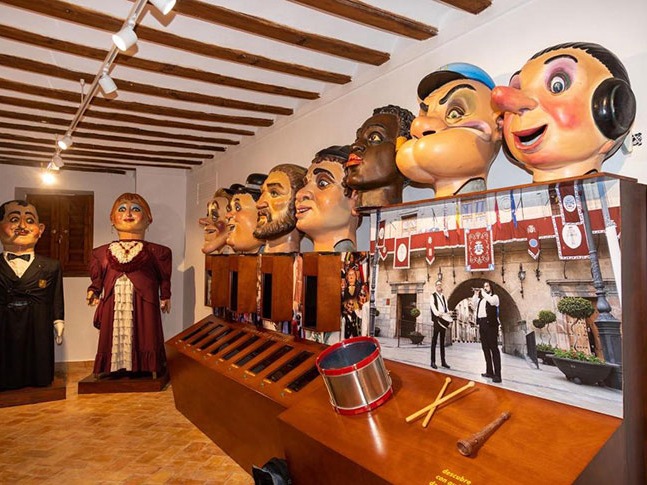
This museum explains the famous Fiestas de la Vera Cruz, focusing especially on the Caballos del Vino tradition. Through audiovisual resources, costumes and historical objects, it explores the symbolic, cultural and emotional importance of these celebrations for Caravaca and its inhabitants.
Visit the official website of the Museo de la Fiesta de Caravaca de la Cruz
Museo de la Ciudad (Murcia)
Located in a historic building, the Museum of the City offers an overview of Murcia’s urban history from Islamic foundations to the present. Its collections include archaeological remains, models, artworks and documents that explain the city’s social, cultural and architectural evolution.
Visit the official website of the Museo de la Ciudad
Museo de la Artillería (Cartagena)
Housed in a former military complex, this museum showcases the history of artillery in Spain, with a strong focus on Cartagena’s strategic role. Cannons, uniforms, technical models and documents illustrate the development of military technology over the centuries.
Visit the official website of the Museo de la Artillería
Museo Naval (Cartagena)
The Naval Museum of Cartagena explores Spain’s maritime and naval history, closely linked to the city’s role as a major Mediterranean naval base. Exhibits include ship models, navigation instruments, maps and historical documents related to the Spanish Navy.
Visit the official website of the Museo Naval de Cartagena
Refugio-Museo de la Guerra Civil (Cartagena)
This museum preserves underground air-raid shelters used during the Spanish Civil War. Through original spaces, photographs and explanatory panels, it offers a powerful insight into civilian life, fear and resilience during bombing raids on Cartagena.
Visit the official website of the Refugio-Museo de la Guerra Civil
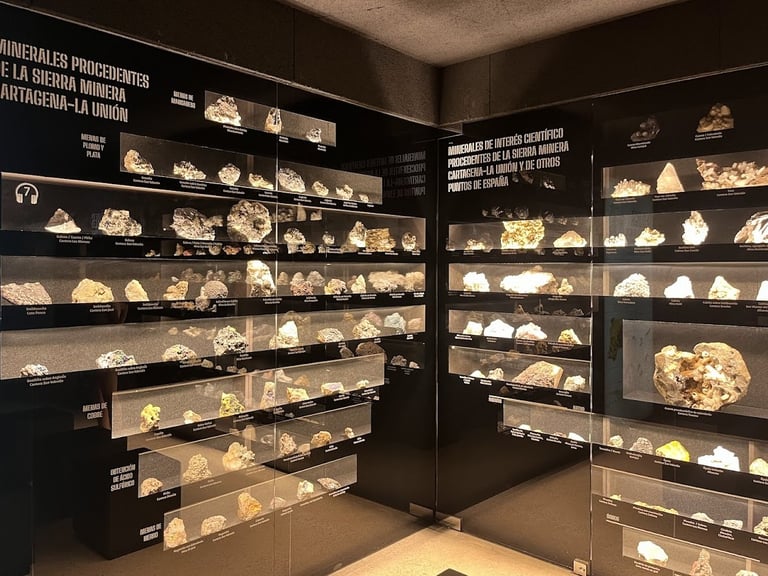
Museo Minero (La Unión)
Dedicated to the mining heritage of the Sierra Minera, this museum explains the geological, industrial and social history of mining. Tools, machinery and personal testimonies reveal the harsh working conditions and cultural impact of mining on the local community.
Museo de la Fiesta, Caravaca de la Cruz.
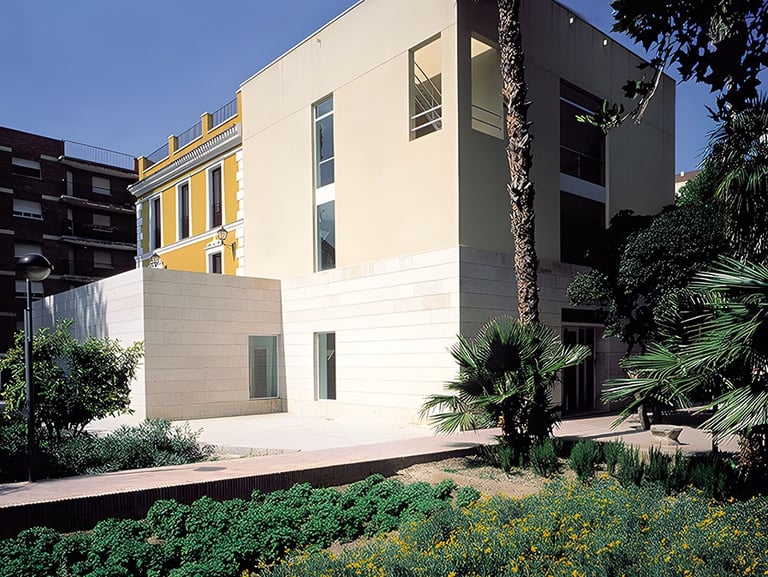
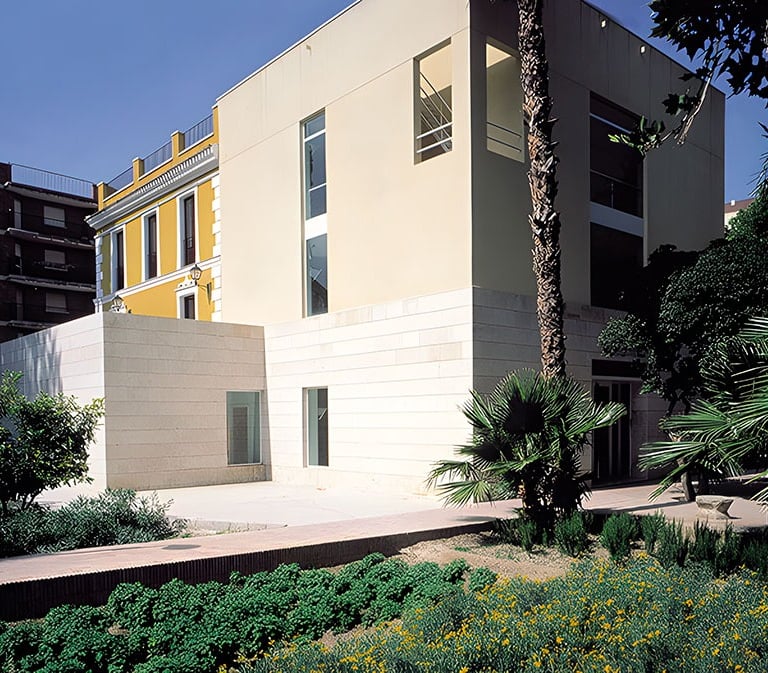


Museo de la Ciudad, Murcia.
Isaac Peral's submarine (1888), considered the first submarine in history, is the jewel of the Naval Museum of Cartagena.
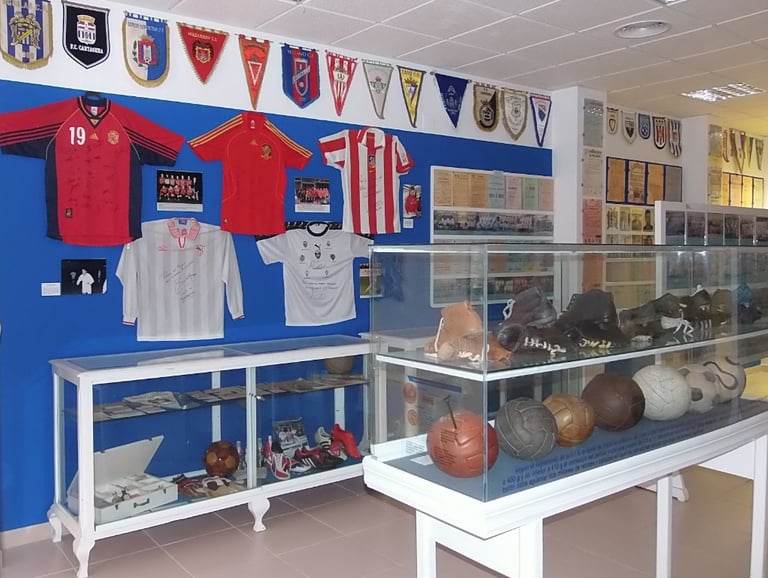
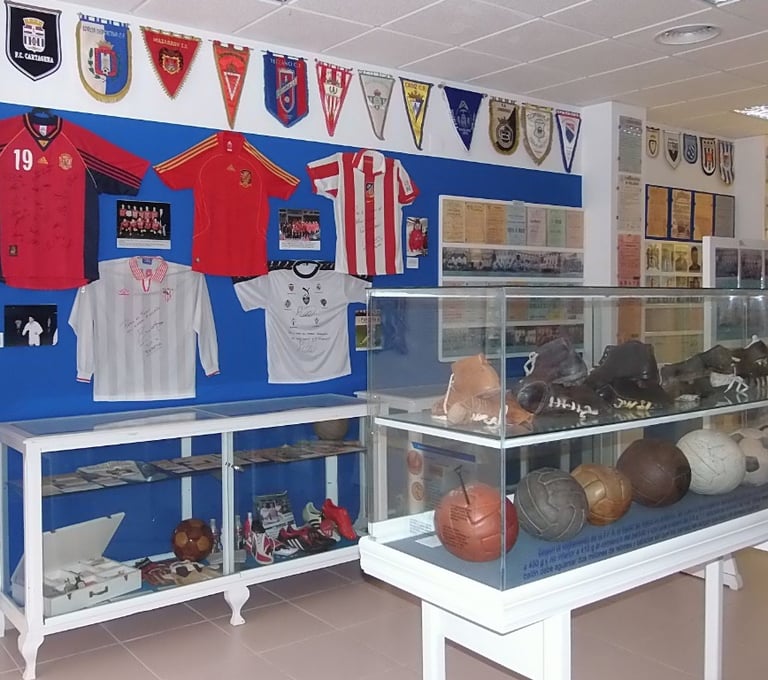
Museo del Fútbol Aguileño.
Museo del Arroz (Calasparra)
This museum is devoted to the cultivation of Calasparra rice, one of the region’s most emblematic products. It explores traditional farming techniques, irrigation systems and the cultural significance of rice in local gastronomy and rural life.
Visit the official website of the Museo del Arroz de Calasparra
Museo Aeronáutico (Los Alcázares)
This museum explores the history of military aviation in Spain, closely linked to the nearby air base. Aircraft, engines and historical displays illustrate the technological evolution of aviation and its strategic role throughout the 20th century.
Museo de la Ciencia y el Agua (Murcia)
An interactive science museum focused on scientific education and environmental awareness. Special emphasis is placed on water, sustainability and the Segura River, combining hands-on exhibits with educational programmes for all ages.
Visit the official website of the Museo de la Ciencia y el Agua
Museo Taurino (Murcia)
Dedicated to bullfighting as a cultural tradition, this museum presents costumes, posters, artworks and personal objects of famous bullfighters. It explores the historical, artistic and social dimensions of bullfighting in the Region of Murcia.
Museo de la Almazara Santiaguista (Pliego)
This small museum preserves a historic olive oil mill linked to the Order of Santiago. It explains traditional olive oil production processes and highlights the importance of olive cultivation in the rural economy of the area.
Visit the official website of the Museo de la Almazara Santiaguista
Museo de la Universidad de Murcia
The University of Murcia Museum showcases scientific instruments, artworks and historical collections linked to academic life. It reflects the university’s role in education, research and cultural development since its foundation in the early 20th century.
Visit the official website of the Museo de la Universidad de Murcia
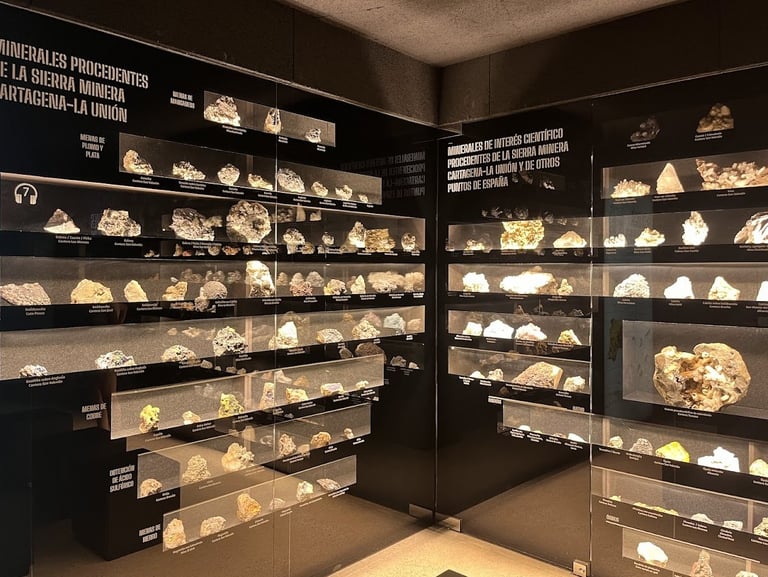
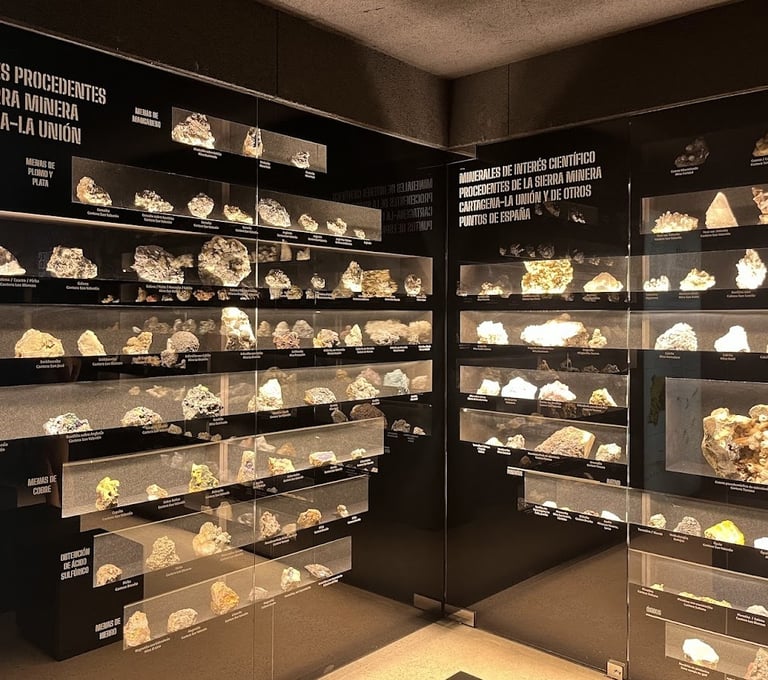
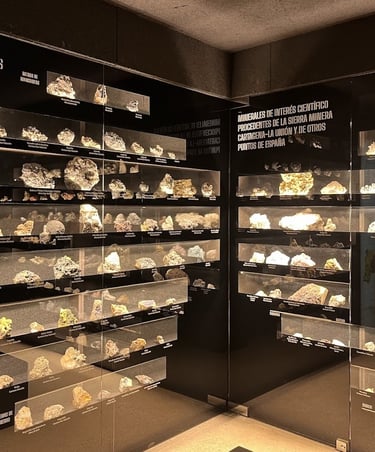
Area dedicated to geology in the Mining Museum, La Unión.
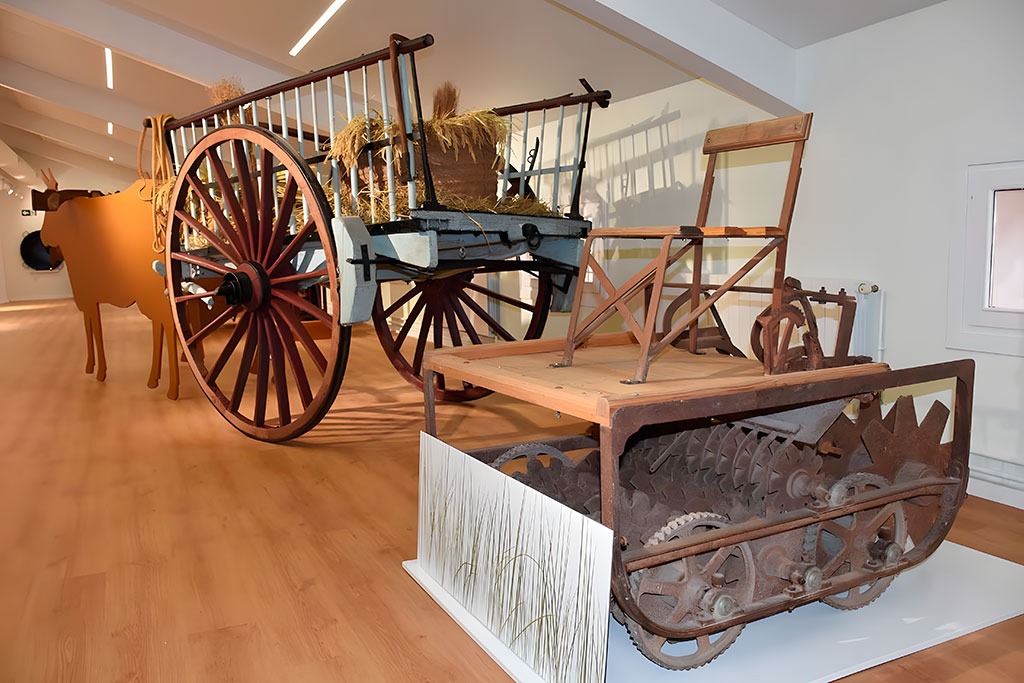
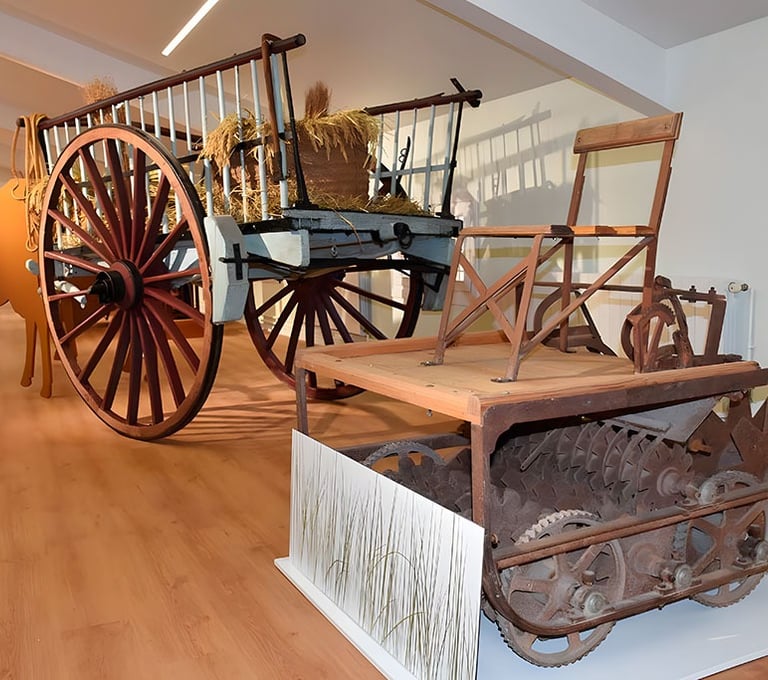
One of the rooms of the Museo del Arroz (Calasparra)
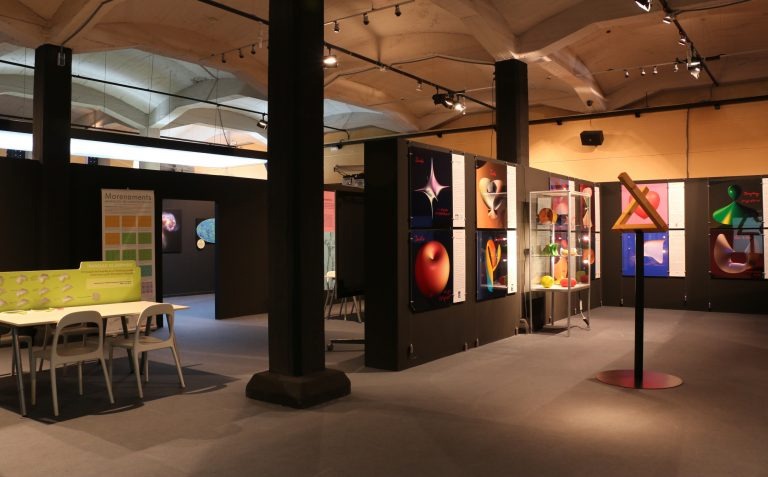
Museum of Science and Water, Murcia.