Tour "The Best of Murcia"
The tour with everything you can't miss in Murcia. An itinerary of two hours ideal for small groups. With an official tour guide.
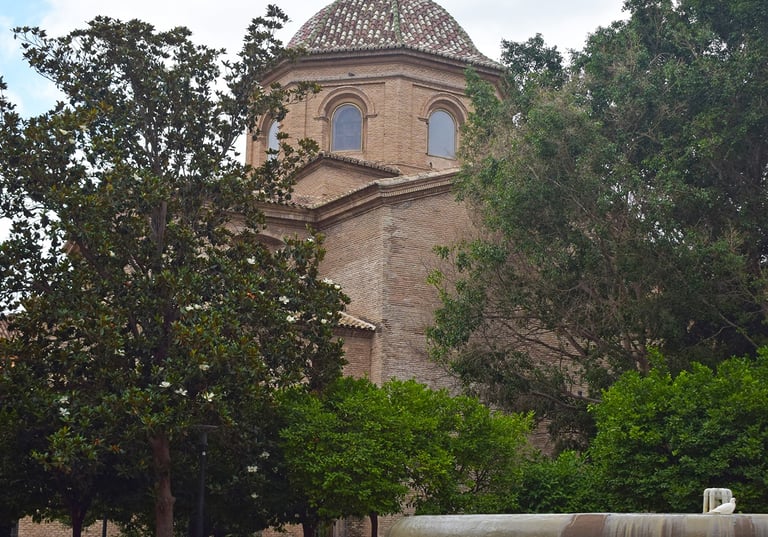
Church of San Nicolás de Bari (Murcia)
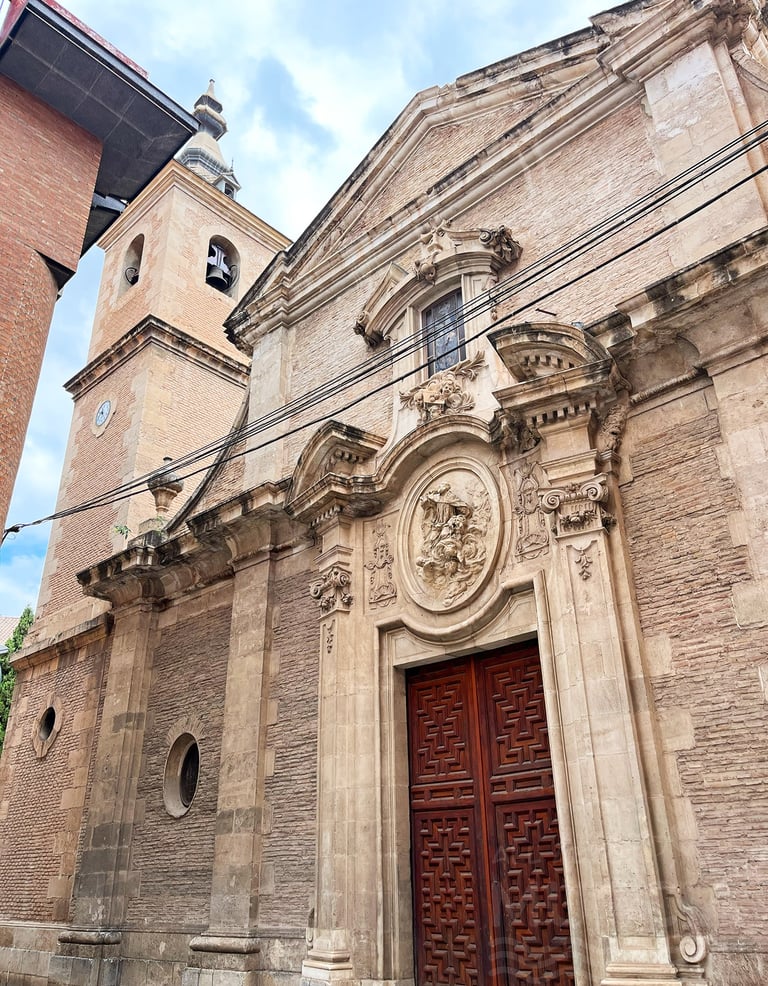
Located in the heart of the historic center of Murcia, the church of San Nicolás is a magnificent example of 18th-century Baroque architecture in the city. Although its origins date back to a medieval mosque and it was one of the eight parishes registered in 1272, the splendid building we see today is due to the vision and patronage of physician and writer Diego Mateo Zapata. Persecuted by the Inquisition, Zapata fully funded its reconstruction between 1736 and 1743 on the ruins of the previous temple, creating not only a house of God but also a monument to his redemption.
The project is attributed to the Jerónimo friar Fray Antonio de San José, who conceived a harmonious and spacious area, following the traditional layout of a Latin cross with side chapels. His authorship is recognized in the taste for "oblique" solutions and geometric precision, an intellectual style that would influence other constructions of the time. The final phase of the work was carried out by architect José Pérez Descalzo, trained at the Court, who introduced a more refined language closer to Rococo, particularly visible in the façades and the tower.
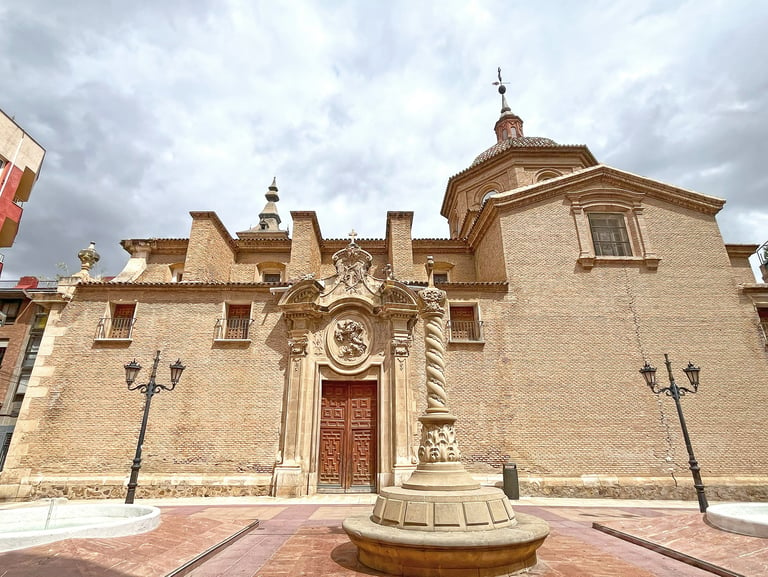
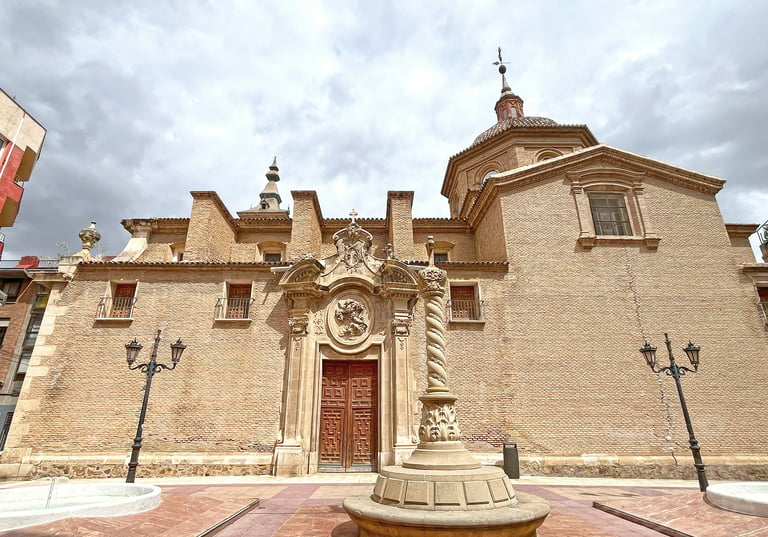
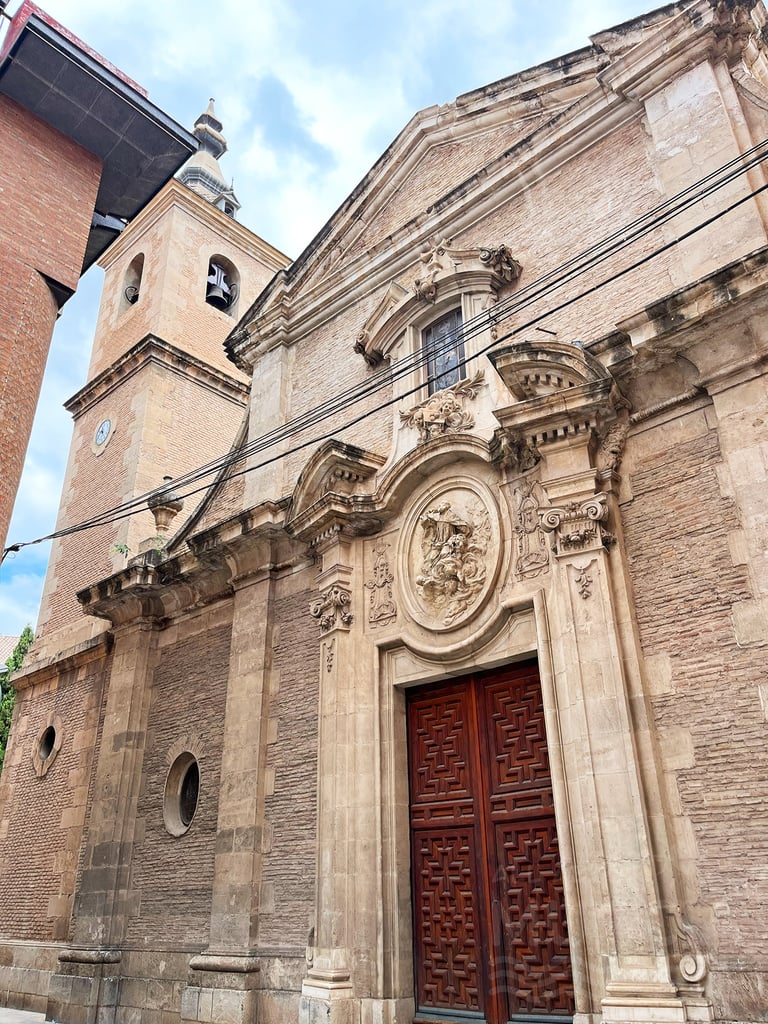
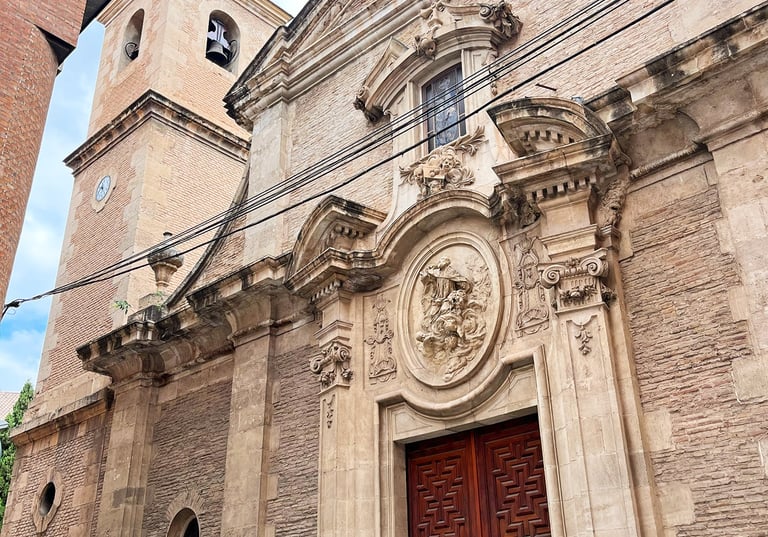
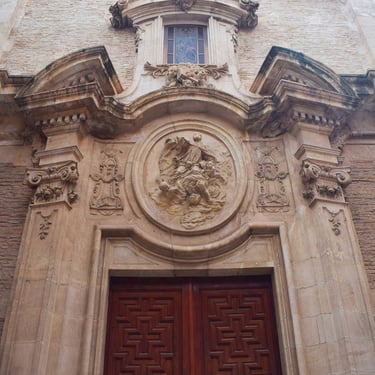
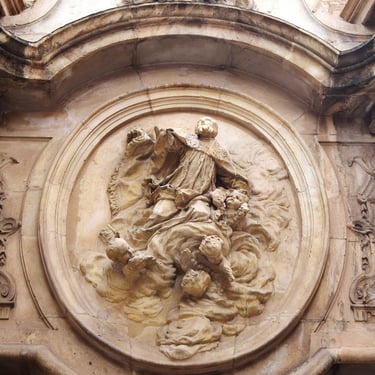
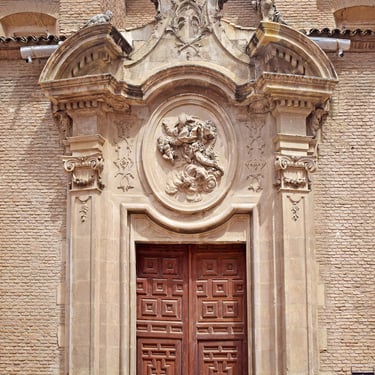
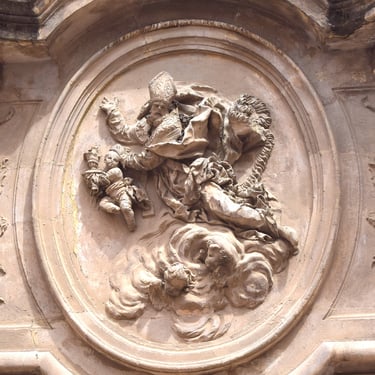
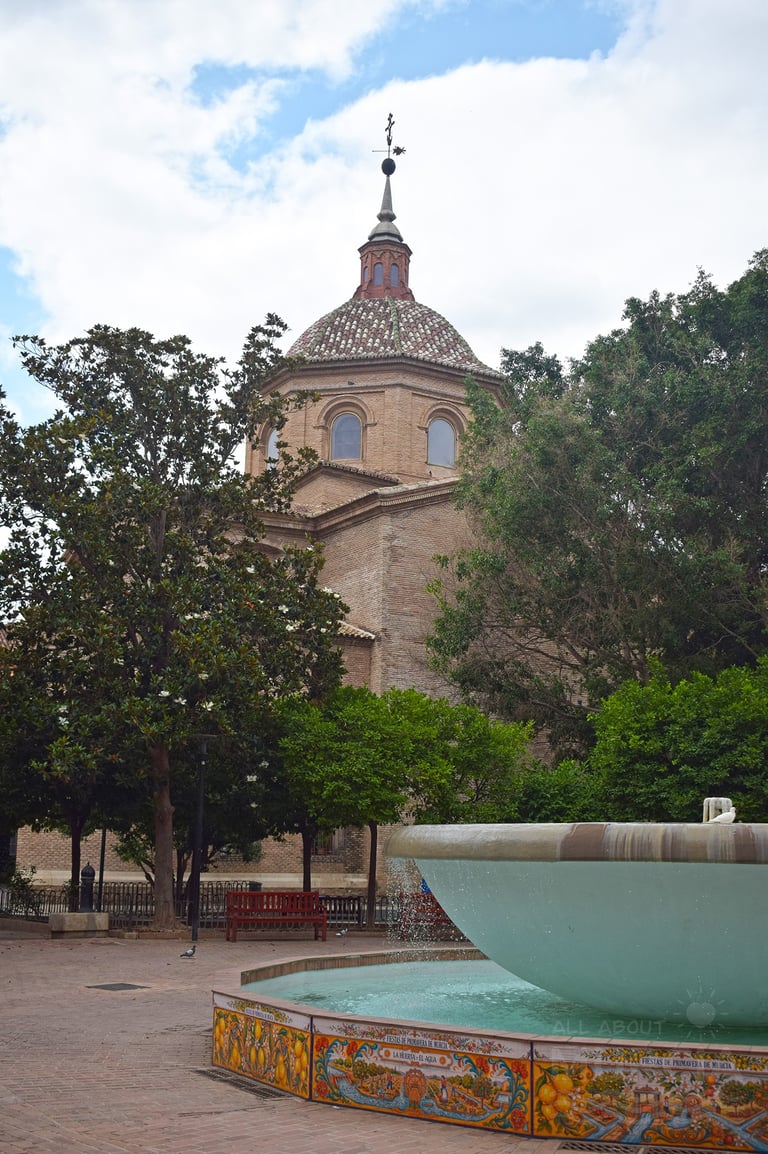
The exterior stands out for its elegant octagonal dome with a curved-reverse profile (cúpula levantina), majestically rising over the urban landscape. However, it is on its two façades where Baroque architecture displays all its theatricality. Both present a very similar structure: the lintelled entrance is framed by pilasters with a curious diagonal position relative to the door plane, adding dynamism and effects of light and shadow. They support a broken curved pediment, from which a small second body is elevated, also formed by curved lines. Between the pediment and the entrance are two medallions depicting glorification scenes of Saint Nicholas of Bari, in which the saint appears in a celestial environment, elevated among angels.
Its quality and fineness have led on occasion to consider Francisco Salzillo as a possible author, although no stone work by this artist exists for comparison. The general lines of the façades and their dynamism show a clear influence from the front of the Cathedral, which has led some authors to suggest the possibility that its architect, Jaime Bort, also intervened in San Nicolás.
The interior culminates this work of art. The main altarpiece, completed in 1750, is a monumental structure of successive concave forms that evokes the cathedral façade. Its authorship is associated with José Pérez, but it is undeniably influenced by the genius of Bort. The church treasures a valuable sculptural heritage, from the "Christ of Amparo," traditionally attributed to Francisco Salzillo, to masterpieces from the Granada school such as a "Saint Joseph" and an "Immaculate" by Pedro de Mena, and a "Saint Anthony of Padua" by Alonso Cano, transforming it into a museum of Baroque imagery.
Tour "The Best of Murcia"
The tour with everything you can’t miss in Murcia. An itinerary of two hours ideal for small groups. With an official tour guide.
Church of San Nicolás de Bari (Murcia)
Located in the heart of the historic center of Murcia, the church of San Nicolás is a magnificent example of Baroque architecture of the 18th century in the city. Although its origins date back to a medieval mosque and it was one of the eight parishes recorded in 1272, the splendid current building is due to the vision and patronage of the physician and writer Diego Mateo Zapata. Persecuted by the Inquisition, Zapata fully financed its reconstruction between 1736 and 1743 on the ruins of the previous temple, creating not only a house of God but also a monument to his redemption.
The project is attributed to the Jerónimos friar Fray Antonio de San José, who devised a harmonious and large space, following the classical scheme of a Latin cross with side chapels. His authorship is recognized in the taste for "oblique" solutions and geometric precision, an intellectual style that would influence other constructions of the time. The final phase of the work was led by the architect José Pérez Descalzo, trained at the Court, who introduced a more refined language closer to the Rococo, visible especially in the facades and the tower.
The exterior stands out for its elegant octagonal dome with a curved-concave profile (cúpula levantina), rising majestically above the urban landscape. However, it is in its two facades where the Baroque exhibits all its theatricality. Both present a very similar structure: the arched entrance is framed by pilasters with an unusual diagonal position concerning the plane of the door, adding dynamism and effects of light and shadow. They support a broken curved pediment, from which a small second body rises, also formed by curved lines. Between the pediment and the entrance are two medallions depicting scenes of glorification of Saint Nicholas of Bari, in which the saint appears in a celestial environment, elevated among angels.
Its quality and fineness have occasionally led to thinking of Francisco Salzillo as a possible author, although there is no confirmed stonework by this author to compare. The general lines of the facades and their dynamism present a clear influence from the facade of the Cathedral, which has led some authors to indicate the possibility that its architect, Jaime Bort, also intervened in San Nicolás.
The interior culminates this work of art. The main altarpiece, completed in 1750, is a monumental structure of successive concaves that evokes the cathedral facade. Its authorship is associated with José Pérez, but it is undoubtedly influenced by the brilliant Bort. The church treasures a valuable sculptural heritage, from the "Christ of the Amparo," traditionally attributed to Francisco Salzillo, to masterpieces of the Granada school like a "Saint Joseph" and an "Immaculate" by Pedro de Mena, and a "Saint Anthony of Padua" by Alonso Cano, making it a museum of Baroque imagery.