The "Best of Murcia"
The tour with everything you cannot miss in Murcia. An itinerary of two hours ideal for small groups. With an official tour guide.
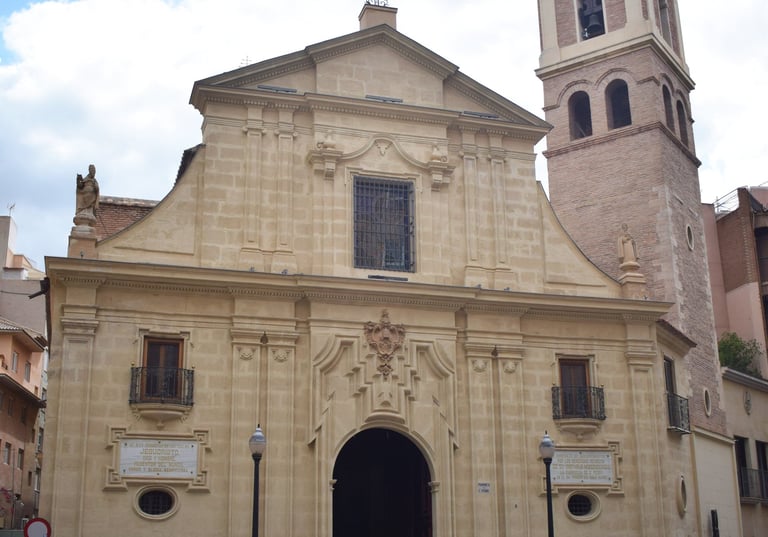
Church of San Pedro (Murcia)
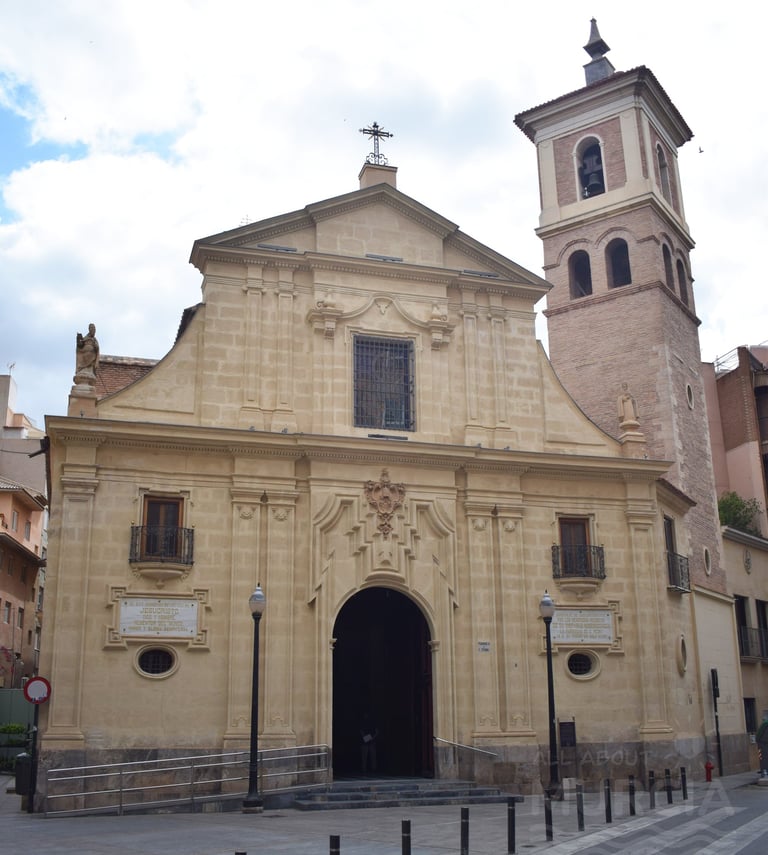
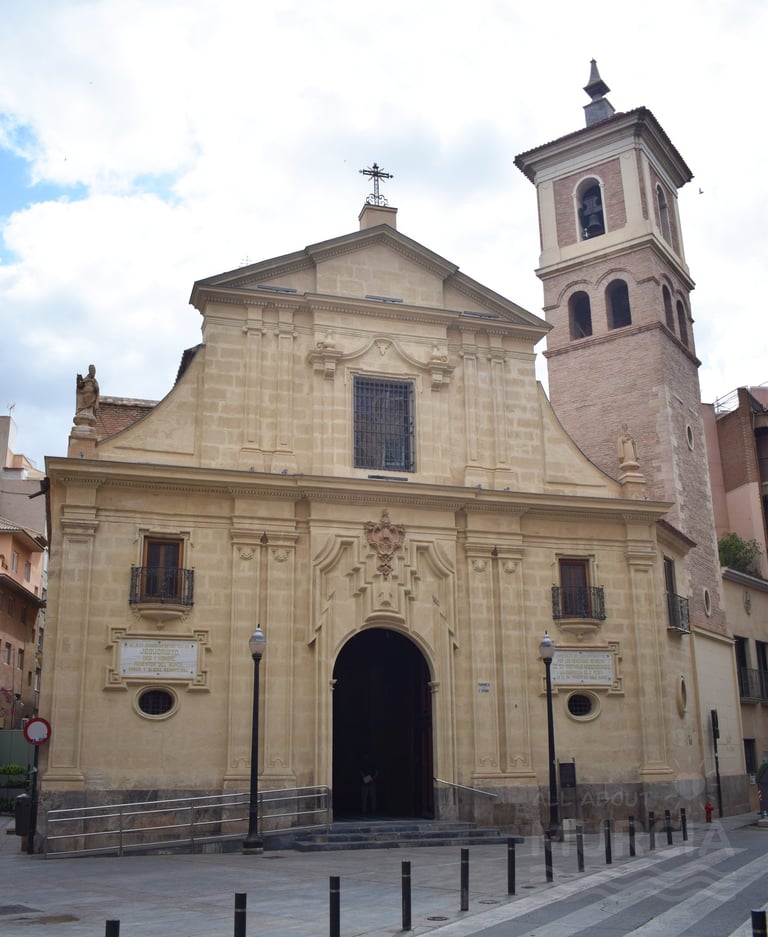
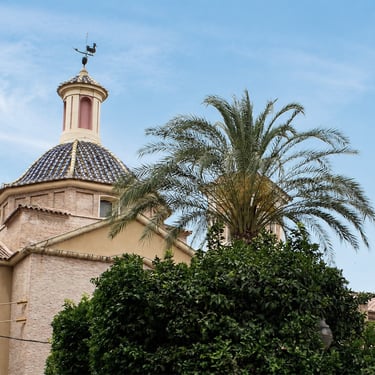
Saint Peter's Church (iglesia de San Pedro) is one of the oldest historic parishes in Murcia. It stands on the site of an ancient mosque mentioned in the Book of Distribution by Alfonso X in 1272, transformed into a Christian temple after the city was conquered by James I in 1266. Very few details are known about that first medieval church, although it is known that from the late 15th century it was linked to the Saavedra family, who established their burial place here. The current building began to be erected in the early 17th century and was deeply remodeled during the first half of the 18th century, acquiring its current baroque appearance. The two façades were commissioned in 1611 from the master stonemason Diego de Ergueta, while the interior reforms undertaken from 1732 granted the temple much of its definitive shape.
The surroundings of Saint Peter's Church are one of the landmarks included in the itinerary of our walking tour "The Best of Murcia", the ideal way to not miss any of the must-sees of the city. Do not hesitate to contact us to request more information or to book.
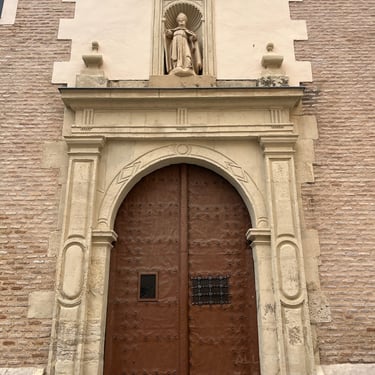
The church follows the usual model of Murcian religious architecture of the 17th and 18th centuries, with a single nave, lateral chapels connected to each other, a crossing, and a straight head. The main façade, facing the square of San Pedro, presents a composition of Renaissance tradition reinterpreted by the Baroque, with mixtilinear frames, a papal shield, and the sculptures of Saint Peter and Saint Paul crowning the whole. Simpler is the lateral façade that faces the Plaza de las Flores, of Doric order and topped by a niche with the image of Saint Nicholas. The bell tower is one of the most singular elements of the building, as its alignment with Calle Jara Carrillo has led to the possibility that it occupies the structure of an ancient Islamic minaret, a hypothesis that cannot be documented. Due to its similarity with the bell tower of Saint Stephen's Church, the first body of the tower is dated to the 16th century, while the upper part seems to be an addition from the 18th century.
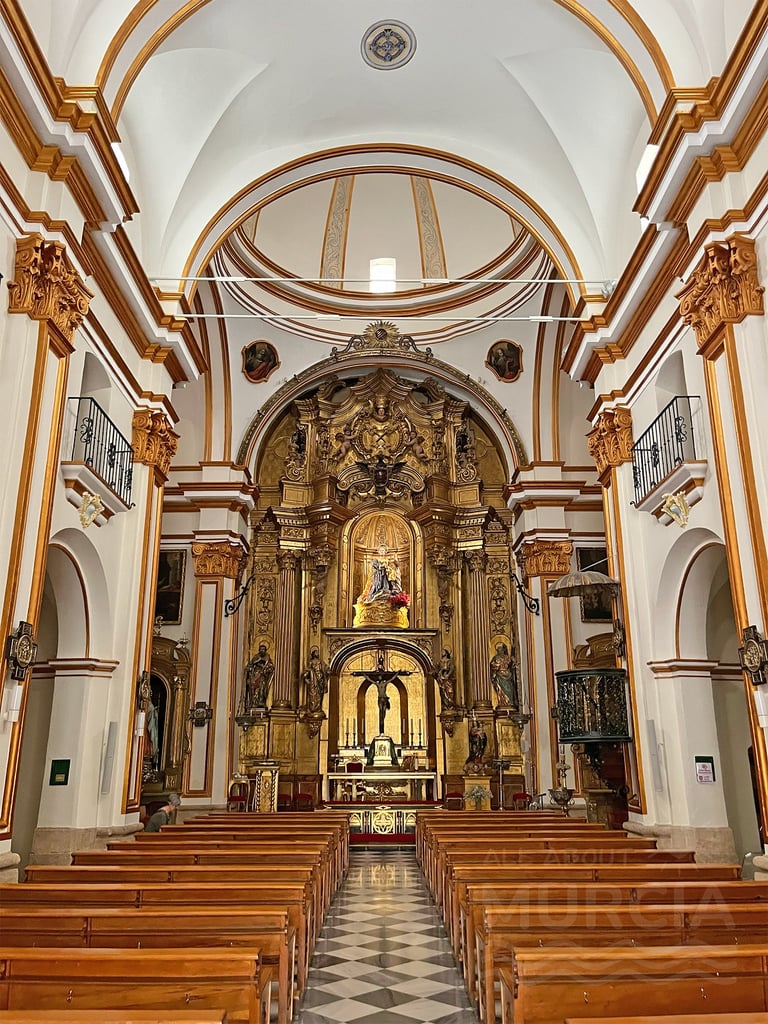
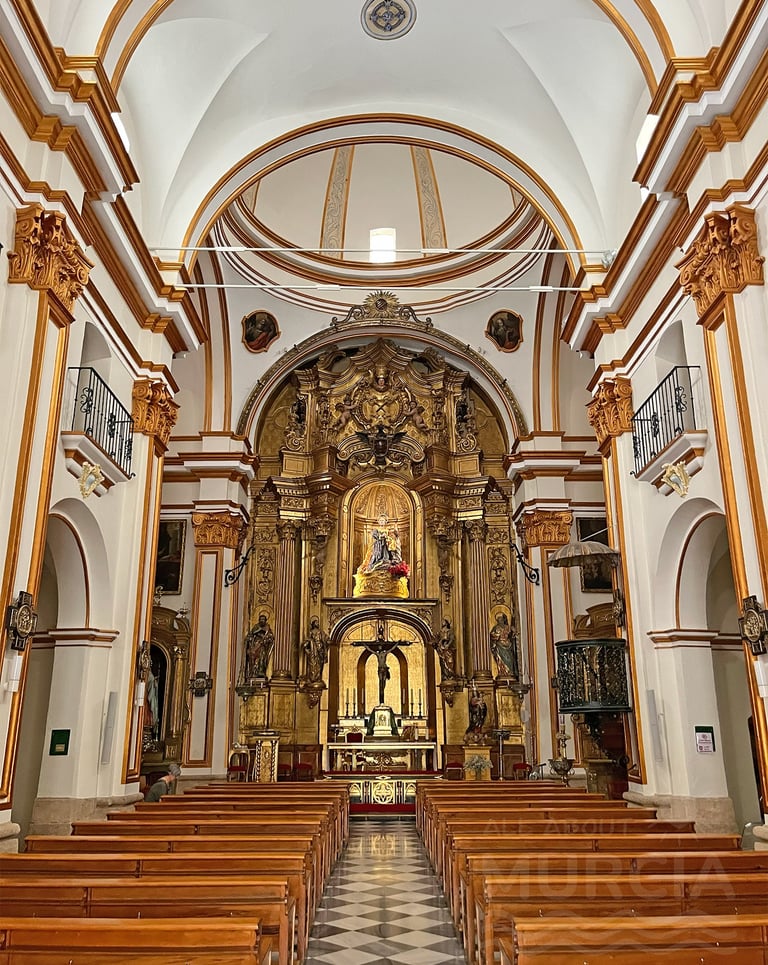
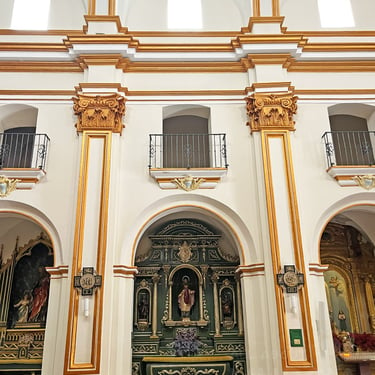
The interior stands out for the spaciousness of the nave, covered by vaults traversed by transverse arches and dominated by a dome over squinches decorated with paintings. The main chapel is presided over by a magnificent altarpiece made by Nicolás de Rueda in 1765, one of the most prominent works of Murcian altarpiece art, clearly influenced by the façade of the Cathedral. In it, two of the best sculptures by Francisco Salzillo are venerated: the Christ of Hope (1755), patron of the homonymous brotherhood, and Saint Peter Repentant (1780), patron of the parish.
Among the rich artistic heritage of this parish, some works can be highlighted, such as the Dolorosa by Salzillo, an early Saint Barbara by the same author, the images of Saints Crispin and Crispinian, located in the main altarpiece, and two baroque canvases attributed to Nicolás Villacís that represent Saint Nicholas and Saint Jerome.
Tour "The Best of Murcia"
The tour with everything you can't miss in Murcia. An itinerary of two hours ideal for small groups. With an official tour guide.
Church of San Pedro (Murcia)
Saint Peter's Church (iglesia de San Pedro) is one of the oldest historical parishes in Murcia. It stands on the site of an ancient mosque mentioned in the Book of Distributions by Alfonso X in 1272, transformed into a Christian temple after the conquest of the city by Jaime I in 1266. Very few details are known about that first medieval church, though it is known that from the late 15th century it was linked to the Saavedra family, who established their burial place here. The current building began to rise in the early 17th century and was profoundly remodeled during the first half of the 18th century, acquiring its current Baroque appearance. The two façades were commissioned in 1611 from the master stonemason Diego de Ergueta, while the interior reforms undertaken from 1732 gave the temple much of its definitive form.
The surroundings of Saint Peter's Church are one of the landmarks included in the itinerary of our walking tour "The Best of Murcia", the ideal way to not miss any of the city's must-sees. Don't hesitate to contact us for more information or to make a reservation.
The church follows the usual model of Murcian religious architecture of the 17th and 18th centuries, with a single nave, lateral chapels connected to each other, a transept, and a straight chancel. The main façade, facing the Plaza de San Pedro, presents a composition of Renaissance tradition reinterpreted by Baroque, with mixed-line frames, a pontifical coat of arms, and sculptures of Saint Peter and Saint Paul crowning the whole. The side façade facing the Plaza de las Flores is simpler, of Doric order, and topped by a niche with the image of Saint Nicholas. The bell tower is one of the most distinctive elements of the building, as its alignment with Jara Carrillo Street has led to the possibility that it takes advantage of the structure of an ancient Islamic minaret, a hypothesis that cannot be documented. Due to its similarity to the bell tower of Saint Stephen's Church, the first body of the tower has been dated to the 16th century, while the upper part seems to be an addition from the 18th century.
The interior stands out for the spaciousness of the nave, covered by vaults adorned with transverse arches and dominated by a dome on decorated pendentives. The main chapel is presided over by a magnificent altarpiece made by Nicolás de Rueda in 1765, one of the most outstanding works of Murcian altarpiece art, clearly influenced by the façade of the Cathedral. In it are two of the best sculptures by Francisco Salzillo: the Christ of Hope (1755), the titular of the homonymous brotherhood, and the Repentant Saint Peter (1780), patron of the parish.
Among the rich artistic heritage of this parish, some works stand out, such as the Weeping Madonna by Salzillo, an early Saint Barbara by the same author, the images of Saints Crispin and Crispinian, located in the main altarpiece, and two Baroque canvases attributed to Nicolás Villacís representing Saint Nicholas and Saint Jerome.